Best 2 Man Tent 2026: Five Picks Compared for UK Campers
Ask a British camper what they most often sleep under and the answer will usually be a 2 man tent.
Best 2 Man Tent 2026: Five Picks Compared for UK Campers
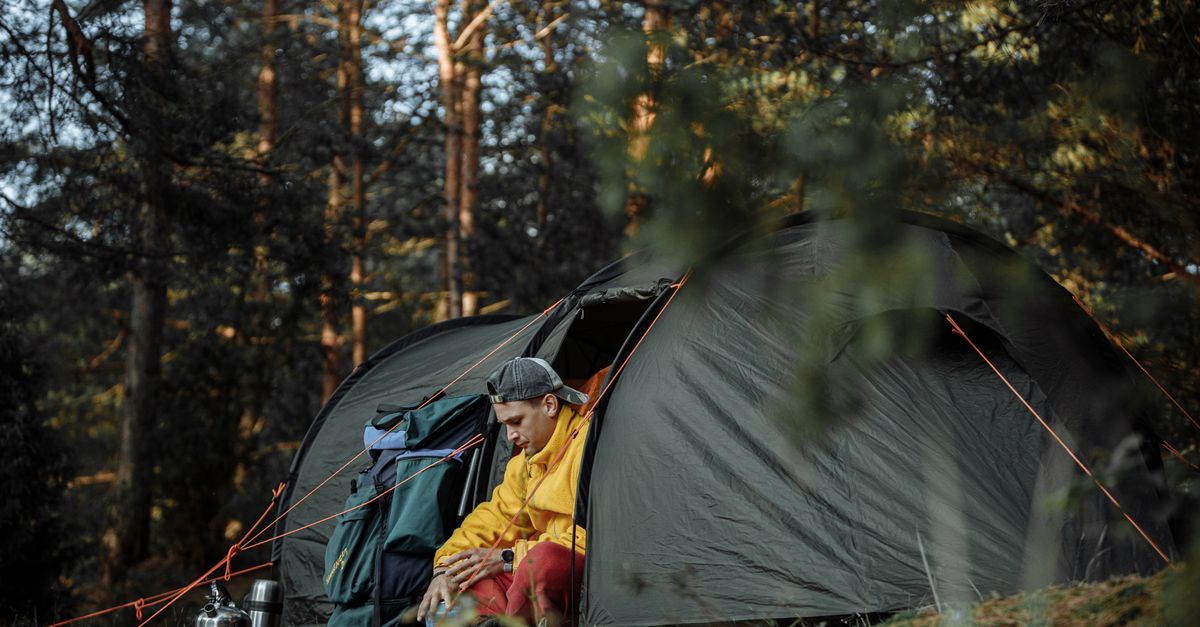
Ask a British camper what they most often sleep under and the answer will usually be a 2 man tent. It is the default shelter of the British outdoors — the weekender pitched on a Dorset campsite, the shelter strapped to a rucksack for a ridge day in Snowdonia, and increasingly the shelter solo campers buy on purpose.
There is a good reason for that, and it has little to do with “two people.” As Go Outdoors puts it candidly in its own 1–2 person buying guide, a two-berth tent is frequently the right choice for a solo camper with a rucksack and assorted gear, precisely because it offers the space and comfort a single-skin shelter cannot. Once you understand that, every spec in this category makes more sense.
This guide compares five of the most sensible 2026 buys in the UK market, spanning roughly £30 festival domes to a premium silnylon shelter at around £450–£500. It is built from manufacturer spec sheets (Vango, MSR), retailer buying guidance (Go Outdoors, Cotswold Outdoor), and the aggregate owner consensus on UKCampsite.co.uk — not from field testing. Prices are hedged approximations checked against 2026 listings at Go Outdoors, Amazon UK and Cotswold Outdoor, and they shift constantly between seasons and promotions, so always confirm live pricing before you commit.
Quick Picks at a Glance
| Model | Best for | Weight | Waterproofing | Approx. price (2026) |
|---|---|---|---|---|
| Milestone 2 Man Dome | Budget festivals and first trips | around 2.4 kg | 2,000 mm HH | around £30–£35 |
| Quechua MH100 2P (Decathlon) | Solid budget all-rounder | around 2.1 kg | 2,000 mm HH | around £45–£55 |
| Coleman Darwin 2+ | Hill-grade weather on a mid-range budget | around 2.7 kg | 3,000 mm HH | around £60–£70 |
| Vango Banshee 200 | Backpacking and genuine two-adult sleeping | around 1.8 kg | 3,000 mm flysheet / 6,000 mm groundsheet | around £100–£120 |
| MSR Hubba Hubba NX 2 | Serious wild campers who count grams | around 1.54 kg trail / around 1.8 kg packed | Seam-sealed silnylon (around 1,200 mm listed; not comparable to polyester HH) | around £450–£500 |
What to Look For in a 2 Man Tent
Before comparing specific models, it pays to understand the compromises every two-berth tent makes. Concentrate on these four things and you will avoid the classic “it looked bigger in the photo” mistake.
Space: the 140 cm reality check
Here is the arithmetic that explains the entire category. Two standard 60 cm-wide camp mats laid side by side measure exactly 120 cm. A typical 2 man tent floor is around 140 cm × 210 cm — which leaves roughly 10 cm of spare width on each side of the mats. Zero margin, shoulders touching, and every item of gear banished to the porch.
If two full-size adults plan to share, ignore the vague “2–3 man” label and look for a floor width of at least around 150 cm, ideally closer to 160 cm, plus two doors so neither sleeper has to climb over the other in the night. Peak height tells its own story: a typical budget dome stands around 105 cm high, which means sitting up to change clothes is fine and standing up is not on the cards.
Weight and packed size: matching the tent to the walk
A tent that lives happily in a car boot can feel like a punishment after four hours on a hill, so weight is the solo camper’s key spec. A useful rule of thumb for 2026: under around 1.5 kg is serious backpacking territory; roughly 1.5–2.5 kg is fine for shorter hikes and campsite-to-campsite trips; anything over about 2.5 kg is really a car-camping or festival tent.
The Vango Banshee 200, at approximately 1.8 kg, sits squarely in the band retailers describe as “backpacking” and anchors this guide’s weight comparisons. By contrast, the Coleman Darwin 2+ weighs in at around 2.7 kg — roughly 0.9 kg heavier than the Vango — which tells you instantly where its priorities lie.
Weather protection: hydrostatic head, explained
Every UK tent listing throws a number at you — 2,000 mm, 3,000 mm, 6,000 mm — and it refers to the hydrostatic head (HH): a laboratory measure of how tall a column of water the fabric can withstand before it soaks through, tested under the ISO 811 method. There is no mandatory UK standard for tent hydrostatic head; the figure on a box is manufacturer self-reported, not a certification, which is why seam-taping matters at least as much as the headline number.
Two thresholds are worth memorising. Around 2,000 mm is adequate for festivals and a mild UK summer, in the language of Go Outdoors’ own buying guide. For year-round UK hills, Cotswold Outdoor’s tent guide treats 3,000 mm and above as the standard. The gap between them is the difference between a tent that shrugs off a June downpour and one you would trust through an October gale on the Brecon Beacons.
Poles and doors: dome versus tunnel
Pole geometry dictates how a tent pitches and how it behaves in wind. A dome tent — the Milestone and Quechua models here are budget examples — uses crossing poles to create a self-supporting-ish shape that pitches quickly and stands without fuss. A tunnel tent such as the Vango Banshee 200 uses parallel hoops, which gives far more usable lengthwise space and usually a porch per door, but it is a different pitching proposition: tunnel tents genuinely require pegging and tensioned guy lines. A beginner who skips the guys will watch the fabric flap; a correctly guyed tunnel is a far more stable shelter in exposed conditions.
The Best 2 Man Tents for 2026, Compared
Milestone 2 Man Dome — around £30–£35
Best for: first-time campers, festival-goers, and anyone who wants the cheapest reliable way into camping.
The Milestone 2 Man Dome is the entry point of this guide, and its key numbers tell you exactly what that means. Weight is around 2.4 kg; the flysheet hydrostatic head is 2,000 mm; the manufacturer listing gives a floor of 150 cm × 210 cm and a peak height of 105 cm. It is a classic dome pitch: quick to put up, no pole geometry to master, and easy to dry out before packing.
Its standout strength is the floor. At 150 cm wide, it is actually around 10 cm wider than the 140 cm category norm, which turns the brutal mat arithmetic above into something slightly more forgiving — roughly 15 cm of spare width on each side of two 60 cm mats rather than 10 cm. For the price, that is a genuine difference rather than a spec-sheet illusion.
The honest caveat is the weight and the waterproofing ceiling. At around 2.4 kg it is a car-boot or festival tent, not a hiking shelter, and 2,000 mm HH is adequate for typical June and July festival ground rather than a year-round hill tent.
Verdict: the cheapest sensible way into a 2 man tent, with a wider-than-average floor that makes it better value than its price suggests.
Where to buy: typically stocked by Go Outdoors and listed on Amazon UK, with Milestone Camping’s own catalogue as a further reference point.
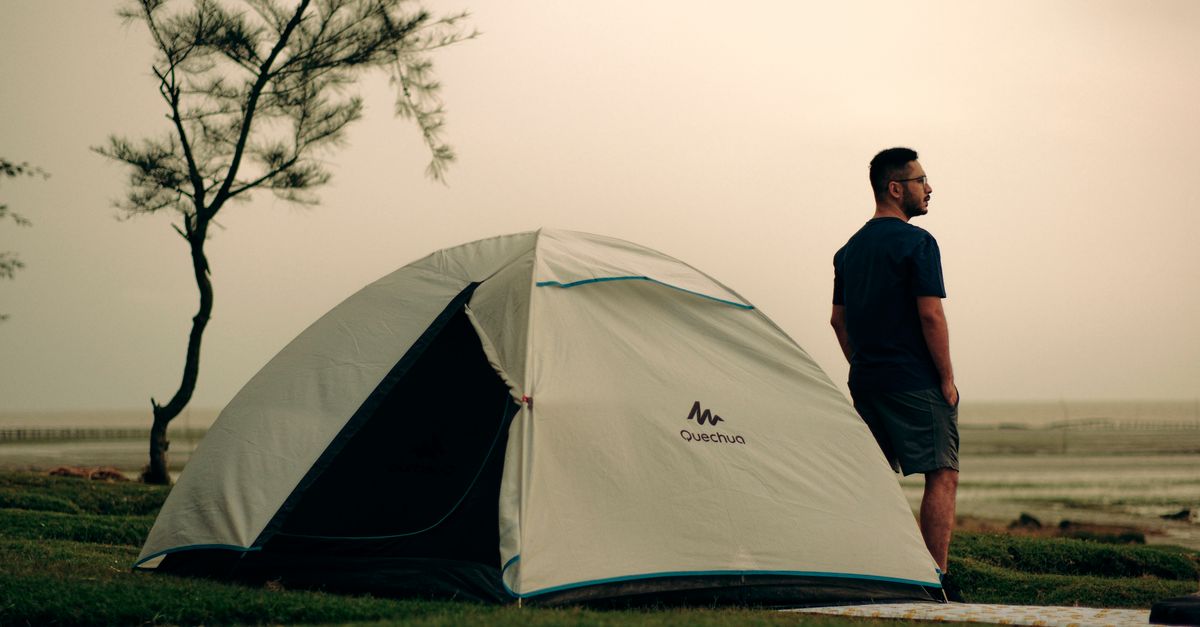
Quechua MH100 2P (Decathlon) — around £45–£55
Best for: budget buyers who want a dependable dome from a major retailer rather than the very cheapest listing online.
Decathlon’s Quechua MH100 2P is the other half of this guide’s budget pairing. Weight is around 2.1 kg, hydrostatic head is 2,000 mm, and the price typically lands between £45 and £55 — a step up from the Milestone, but still firmly in disposable-festival-tent territory. The MH100 is not trying to be a mountain tent; it is trying to be a dependable, no-surprises dome for campsite and festival use, and at that job it succeeds.
Its strength is the combination of weight and price: at around 2.1 kg it undercuts many pricier domes while coming from a retailer with a huge own-brand range behind it, so spares and replacements are easy to find. As with the Milestone, the 2,000 mm rating aligns exactly with what Go Outdoors advises for festivals and mild UK summer conditions.
The caveat is the same ceiling. For Snowdonia, the Brecon Beacons or the Scottish Highlands, a 2,000 mm flysheet is below the 3,000 mm-plus standard Cotswold Outdoor recommends for year-round hills, so this remains a lowland and festival tent in practice.
Verdict: the pick of the budget domes if you want a recognised brand and a slightly lighter carry for a modest price premium.
Where to buy: Quechua is Decathlon’s own brand, so the MH100 2P is available exclusively through Decathlon stores and Decathlon’s website.
Coleman Darwin 2+ — around £60–£70
Best for: car campers and festival campers who want hill-grade waterproofing without paying hill-grade prices.
The Coleman Darwin 2+ is the non-obvious value pick of this guide, and it deserves a closer look than its modest price suggests. Weight is around 2.7 kg, which immediately tells you this is not a backpacking tent, and the hydrostatic head is 3,000 mm. Here is the number that matters: roughly £60–£70 buys you the same 3,000 mm flysheet rating as the Vango Banshee 200, at a typical saving of around £30–£60 depending on the day’s listings. It undercuts Vango on price while matching it on headline waterproofing.
That makes the Darwin 2+ the sensible choice for anyone whose camping is car-based but whose destinations include exposed UK sites — the sort of camper who wants the Cotswold Outdoor “year-round hills” standard without the backpacking premium. The 3,000 mm figure is also the threshold Mountaineering Scotland’s kit guidance treats as a minimum for upland conditions.
The honest caveat is the weight. At around 2.7 kg, it is roughly 0.9 kg heavier than the Banshee 200 and around 1.2 kg heavier than the MSR Hubba Hubba NX 2’s trail weight — fine for a hatchback boot, wearisome on a rucksack. Buy it as a fortified festival-and-campsite tent, not as a walking tent.
Verdict: the smart mid-range compromise: genuine 3,000 mm weatherproofing at a price that undercuts the hiking-oriented competition.
Where to buy: widely listed by Go Outdoors, Amazon UK and Cotswold Outdoor, among the retailers used to check 2026 pricing.
Vango Banshee 200 — around £100–£120
Best for: backpackers who want a genuinely sleepable two-adult tent, and solo walkers who want room for themselves plus a full rucksack.
The Vango Banshee 200 is the most frequently recommended two-berth tent on UK camping forums, and the reasons are concrete. Weight is around 1.8 kg — squarely in the weight band retailers call “backpacking” — and the flysheet hydrostatic head is 3,000 mm, sourced from Vango’s own spec page. The groundsheet goes further still at 6,000 mm, triple the budget domes’ 2,000 mm figure and double the flysheet’s own rating. The price typically sits between £100 and £120.
The Banshee’s geometry is where it wins. It is a tunnel tent, not a dome, which means near-vertical inner walls and a usable width of 130 cm at sleeping height rather than a dome’s tapering profile. Owner consensus on UKCampsite.co.uk regularly cites the Banshee 200 as genuinely sleepable for two adults — a rare claim in this category — and the separate porch per door means each sleeper gets their own entrance and their own dry space for gear. Two doors, two porches, no climbing over your partner at 3 a.m.
The caveat is pitching discipline, and it is worth stating plainly for beginners: a tunnel tent requires guy lines. The Banshee’s stability comes from being pegged out and guyed taut, not from the frame alone, and a tunnel pitched slack will flap and gather water in ways a dome will not.
Verdict: the best all-round 2 man tent in this guide for walkers — light enough to carry, tough enough for UK hills, and one of the few two-berth tents two adults can genuinely share.
Where to buy: typically available from Go Outdoors and Amazon UK, with Cotswold Outdoor among the retailers checked for 2026 pricing.
MSR Hubba Hubba NX 2 — around £450–£500
Best for: serious wild campers and gram-counters who want a premium, freestanding, two-door shelter that will last a decade of trips.
The MSR Hubba Hubba NX 2 is the premium end of this guide, and it demands one important correction up front. Per MSR’s published spec sheet, the trail weight is approximately 1.54 kg — not the sub-1.5 kg figure often repeated in forum chatter — with a packed weight of around 1.8 kg. At roughly £450–£500, it costs more than the Vango Banshee 200 and the Coleman Darwin 2+ combined, so the question is what that money buys.
The answer is a freestanding, two-door shelter built for serious use. Its flysheet is made from silnylon — silicone-coated nylon — and here is the spec-sheet trap most buyers miss. MSR’s spec treats the flysheet as seam-sealed rather than hydrostatic-head-rated in the way a polyester flysheet is, and while listings sometimes quote a figure in the region of 1,200 mm, that number is not directly comparable with the 2,000 mm or 3,000 mm HH ratings on polyester tents. Silnylon’s water resistance comes from the silicone coating and factory seam-sealing rather than from a thick waterproof layer, so a low-looking HH figure on a premium tent is not a sign of weakness — but buyers comparing spec sheets naively will assume it is.
The freestanding design and twin doors make it exceptionally practical for wild camping, where pitching options are limited and two occupants each want their own exit. The caveat, beyond price, is understanding the material: silnylon behaves differently from coated polyester, and campers who do not grasp that distinction will misread the very spec sheet they are relying on.
Verdict: the ultimate UK wild-camping 2 man tent for those who can justify the premium — featherlight, freestanding, two-door, and built to far higher manufacturing standards than its price-adjacent rivals, as long as you understand that silnylon does not play the HH numbers game.
Where to buy: Cotswold Outdoor and Ultralight Outdoor Gear are the primary UK stockists per current 2026 availability — verify live stock before relying on either.
UK Buying Notes: Standards, Festivals and Hills
Three UK-specific realities shape every buying decision in this category.
No mandatory standard. There is no UK regulation governing tent hydrostatic head. HH figures on UK boxes are manufacturer self-reported results from the ISO 811 test method, not independent certifications. That is why a reputable brand’s 3,000 mm claim is worth more than an unknown importer’s 5,000 mm boast, and why seam-taping should always be checked in the listing.
Festival ground is budget-dome territory. For Glastonbury, Download and Latitude — all typical June and July events — the Milestone 2 Man Dome or Quechua MH100 2P are entirely appropriate choices. Their 2,000 mm rating is adequate for typical festival ground in those months, and at around £30–£55 they are close enough to disposable that a muddy weekender is not a financial disaster.
The hills demand more. For Snowdonia, the Brecon Beacons and the Scottish Highlands, Mountaineering Scotland’s kit guidance sets a practical minimum of a 3,000 mm-plus flysheet and a taped groundsheet floor. The Coleman Darwin 2+ and Vango Banshee 200 both meet that flysheet threshold, with the Banshee’s 6,000 mm groundsheet adding a significant extra layer of defence against wet ground.
2 Man Tent FAQ
Will two adults actually fit in a standard 2 man tent?
A typical 2 man tent floor measures around 140 cm × 210 cm. Two 60 cm camp mats take up exactly 120 cm of that width, leaving around 10 cm per side — so two adults can lie down, but shoulders will touch and all gear must live in the porch. For genuine two-adult comfort, look for roughly 150 cm of floor width (ideally 160 cm) and two doors, or follow UKCampsite.co.uk owner consensus and consider the Vango Banshee 200, whose 130 cm inner width is regularly described as genuinely sleepable for two.
What does the hydrostatic head figure on a tent listing actually mean?
Hydrostatic head (HH) measures how tall a column of water a fabric can withstand before water soaks through, tested under the ISO 811 method — so a 2,000 mm fabric resists a 2-metre column of water. It is not a certification: there is no mandatory UK standard for tent HH, and the figure is self-reported by the manufacturer. Treat it as a comparative guide between similar fabrics rather than an absolute guarantee of dryness.
How many mm of hydrostatic head do I need for a 2 man tent in the UK?
Around 2,000 mm is adequate for festivals and a mild UK summer, matching the language of Go Outdoors’ buying guide, and is fine for typical June and July events such as Glastonbury, Download and Latitude. For year-round UK hills, Cotswold Outdoor’s tent guide treats 3,000 mm and above as the standard, and Mountaineering Scotland’s kit guidance recommends a 3,000 mm-plus flysheet with a taped groundsheet for upland conditions.
Why does an expensive tent like the MSR Hubba Hubba NX 2 show a lower HH than cheap tents?
Because its flysheet is silnylon — silicone-coated nylon — whose water resistance comes from the silicone coating and factory seam-sealing rather than from a thick waterproof layer. MSR’s spec treats the fly as seam-sealed rather than HH-rated in the way polyester flysheets are, and the around-1,200 mm figure sometimes quoted is not directly comparable with a 2,000 mm or 3,000 mm polyester rating. A low-looking number on a silnylon tent is not a sign of weakness; it is a different waterproofing philosophy.
What is the difference between a dome and a tunnel tent?
A dome tent uses crossing poles to create a self-supporting shape that pitches quickly and stands without fuss — the Milestone and Quechua models here are budget examples. A tunnel tent like the Vango Banshee 200 uses parallel hoops, producing more usable lengthwise space and normally a porch per door, but it requires thorough pegging and tensioned guy lines for stability. Beginners who skip the guys on a tunnel will see flapping; pitched correctly, a tunnel is the more stable shelter in wind.
Which 2 man tent should I buy for a UK festival?
For festivals such as Glastonbury, Download or Latitude, the Milestone 2 Man Dome at around £30–£35 or the Quechua MH100 2P at around £45–£55 are the sensible picks: their 2,000 mm rating is adequate for typical June and July festival ground, and the prices are low enough that a muddy week is survivable. If you want extra peace of mind in an unsettled British summer, the Coleman Darwin 2+ at around £60–£70 adds a 3,000 mm flysheet without a hiking-tent price tag.
Which 2 Man Tent Should You Buy?
The right answer depends entirely on where the tent will sleep. For a first trip or a festival weekend, the Milestone at around £30–£35 is the cheapest honest way in, with the Quechua MH100 2P as the brand-name upgrade. For car-based campers who want hill-grade 3,000 mm weatherproofing on a budget, the Coleman Darwin 2+ is the non-obvious value pick. For walkers and any two adults planning to share properly, the Vango Banshee 200 remains the consensus choice — genuinely sleepable for two, light enough to carry, and priced around £100–£120. And for the serious wild camper who counts grams and wants a shelter to keep for a decade, the MSR Hubba Hubba NX 2, at around £450–£500, is in a class of its own.