Best Midge Net for Camping UK: Mesh Size Is the Whole Story
Midge nets are the one bit of Highland kit that always works. A UK guide to mesh fineness, head nets versus jackets, and what actually stops midges.
Best Midge Net for Camping UK: Mesh Size Is the Whole Story
Repellents help. Wind helps more. But the only thing that reliably stops Highland midges getting at your face is a physical barrier, and the barrier only works if the holes are small enough. That is the entire buying decision, and most people get it wrong because they buy a mosquito net. This guide is based on desk research: manufacturer specifications, UK retailer listings and owner reviews rather than first-hand testing. Below you will find why mesh fineness matters, the three types of net, and how to use one without going mad.
Quick Picks
| Best for | Type | Why we picked it |
|---|---|---|
| Best all-round | Fine-mesh head net | Weighs almost nothing, packs to a fist, works every time |
| Best for sustained work | Midge jacket | Head and torso covered; for pitching camp and cooking |
| Best for sleeping | Tent with a proper midge-proof inner | The one that actually lets you rest |
The Thing Everyone Gets Wrong
The Highland midge is far smaller than a mosquito. Culicoides impunctatus is on the order of a millimetre or two across — small enough to pass straight through mesh that stops mosquitoes comfortably.
This is why a cheap “insect head net” bought for a foreign holiday is useless in Glen Nevis in July. It is not defective; it is designed for a bigger insect. What you need is a net specifically described as midge-proof or no-see-um mesh, with a much finer aperture.
If a product does not say midge or no-see-um anywhere, assume it is a mosquito net and will not work in Scotland.
The trade-off is real: finer mesh means less airflow and slightly reduced visibility. That is the price, and it is worth paying.
The Three Types
Head nets. A fine-mesh bag that goes over your head, usually with an elasticated neck, sometimes designed to fit over a cap brim to hold the mesh off your face — which matters, because midges will bite through mesh pressed against skin. Cost is roughly £5–£15, weight is negligible, and it packs into a pocket. There is no reason not to carry one between May and September.
Midge jackets. A full upper-body garment of the same mesh with a hood. Roughly £20–£45. Bulkier, but if you are pitching a tent, cooking or fishing in a bad midge evening, keeping them off your hands and neck as well as your face is transformative. Popular with anglers and anyone spending static time outdoors in the Highlands.
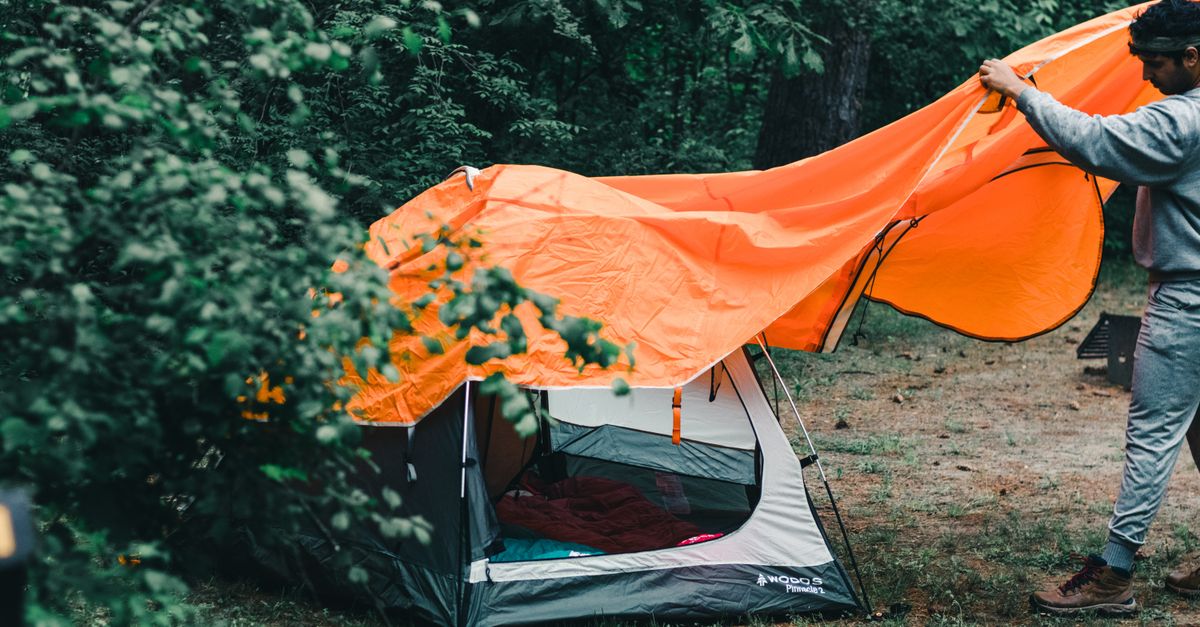
Tent inner mesh. The one that decides whether you sleep. Many tents sold in the UK have inner-door mesh sized for mosquitoes. A tent described as having a midge-proof inner is a different specification. If you camp in Scotland in summer, this is worth checking before you buy a tent, and it is very hard to retrofit.
There are also mesh gaiters, gloves and trouser sections, but face and neck are where the misery is concentrated.
Comparison Table
| Item | Typical weight | Approx price | Notes |
|---|---|---|---|
| Basic head net | around 20–40g | around £5–£10 | Check it says midge or no-see-um |
| Head net with hat-brim design | around 30–50g | around £8–£15 | Holds mesh off the face; better |
| Midge jacket | around 150–300g | around £20–£45 | For static outdoor work |
| Midge-proof tent inner | — | Part of tent spec | Check before buying the tent |
Prices are indicative and were correct at the time of writing.
Using One Without Going Mad
Keep the mesh off your skin. Midges bite through mesh that is pressed flat against your face. A cap under the net, or a net with a built-in brim or hoop, solves this and is the single biggest usability improvement.
Seal the bottom. An elasticated hem tucked inside a collar. A net that billows at the neck is an entrance.
Put it on before you need it. Once a cloud has found you, getting a net over your head means trapping a dozen of them inside it. When you arrive at a still, damp pitch at dusk, that is the moment — not five minutes later.
Eating and drinking is the weak point. There is no elegant solution. Most people retreat to the tent, which is why the inner mesh matters so much.
Glasses and headtorches. A brimmed net keeps mesh off spectacle lenses. A head torch worn outside the net attracts midges to the outside rather than lighting up the inside of your net.
What Else Actually Works
A net is the reliable part of a system, not the whole answer.
Wind is the best repellent there is. Midges struggle to fly in any real breeze, so an exposed pitch with airflow beats a sheltered sun-trap by a wide margin. This is counter-intuitive — the prettiest, calmest, most sheltered spot beside the loch is precisely the worst place to camp in midge season.
Time of day. They are at their worst at dawn and dusk, and in still, overcast, humid conditions. Bright sun and wind both suppress them.
Repellents. Products based on DEET, or the Scottish favourite Smidge, are genuinely effective on exposed skin and worth using alongside a net rather than instead of one.
Season. Roughly May to September, with the worst period usually July and August. Late April, early May and October give you the Highlands with a fraction of the misery.
Location. Sheltered glens, lochsides, damp woodland and boggy ground are the bad ground. Ridges, summits and the coast in a breeze are much better.
FAQ
Do midge nets actually work? Yes, provided the mesh is fine enough. Highland midges are far smaller than mosquitoes, so a standard mosquito head net lets them straight through — you need one described as midge-proof or no-see-um mesh. With the right net, and a cap or brim keeping the mesh off your skin, they are close to completely effective.
What is the difference between a midge net and a mosquito net? Aperture size. Highland midges are on the order of a millimetre or two, considerably smaller than mosquitoes, so midge-proof mesh has a much finer weave. The trade-off is slightly reduced airflow and visibility. If the packaging does not specifically mention midges or no-see-ums, assume it will not work in Scotland.
When is midge season in Scotland? Roughly May to September, worst in July and August, and worst of all at dawn and dusk in still, damp, overcast conditions. Late April, early May and October give you most of the good weather with far fewer midges. Wind above a gentle breeze largely grounds them at any time of year.
Do I need a midge jacket or is a head net enough? A head net is enough for walking, since you are moving and mostly covered. A jacket earns its place when you are static outdoors for a long stretch — pitching camp, cooking, fishing — where midges will find your neck, wrists and hands. Most people carry the head net always and add the jacket only for Highland trips in high summer.