Cooking in a Wood Stove: The Best Stove-Top Cookware and Kit for 2026
Some links on this page are affiliate links. If you buy through one, this site may earn a commission at no extra cost to you — this disclosure sits above…
Cooking in a Wood Stove: The Best Stove-Top Cookware and Kit for 2026
Some links on this page are affiliate links. If you buy through one, this site may earn a commission at no extra cost to you — this disclosure sits above the first affiliate link in line with UK CAP/ASA rules.
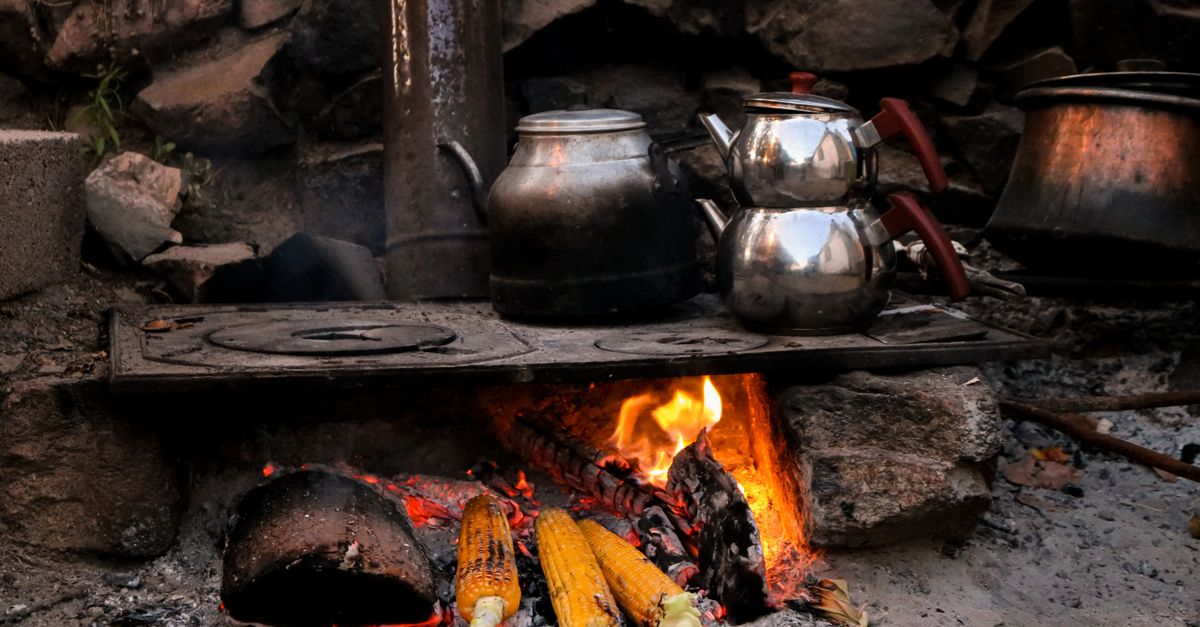
If your log burner is already lit to heat the room, the top plate is free heat you have already paid for — and it keeps working when the power goes out. That is the practical case for cooking on a wood burning stove: economy, resilience, and the slow radiant heat that suits braises, stews and bread far better than a fast electric ring.
There is a catch, and it is the one this guide leads with: not every log burner can be cooked on safely, or legally under its warranty. Stovax, Charnwood, Morsø and Arada all publish care instructions for their appliances, and many stove manuals explicitly void the warranty for direct cooking use. Everything below is research-based — manufacturer specifications, published care pages, expert guidance from the UK stove trade, and aggregate owner feedback from stove forums and Reddit’s wood-stove communities. We compare documented specifications and reported real-world behaviour rather than claiming hands-on testing we have not carried out. Prices are hedged approximations only, because they move constantly between retailers and seasons.
Quick Picks
| Best for | Product | Typical UK price |
|---|---|---|
| Best all-rounder | Le Creuset Signature Round Casserole, 26cm | Typically around £250–£300 |
| Best value | Lodge 30cm Cast Iron Skillet | Typically around £35–£45 |
| Best for bread and long braises | Petromax Dutch Oven ft4.5-T (used with a flat trivet) | Varies by size and retailer |
| Cheapest genuinely useful upgrade | Dr Meter HM02 or Protimeter Aquant moisture meter | Typically around £15–£30 |
Cooking In vs Cooking On: Which Stove Have You Actually Got?
The two phrasings mean different things, and the difference decides what you can cook.
Cooking in a wood stove is the American range-cooker sense: an appliance with a closed oven compartment and a hotplate, the Esse and Rayburn class of machine. You bake in the oven box, simmer on the hotplate, and the stove is purpose-built for it.
Cooking on a log burner is the UK sense: the flat-topped room heater in the lounge, used as a hob. This is what most British readers mean by wood burner cooking, and it is where the warranty risk lives. If your manual forbids direct cooking use, you are cooking on the top plate at your own discretion — which is why a trivet or heat diffuser is not optional kit but the thing that keeps the pan off the paint and enamel.
Why a Warranty Can Void Cooking Use
Stove makers build top plates to radiate heat, not to carry 5 kg of hot cast iron. Direct metal-on-metal contact concentrates heat in one spot, and that can scorch painted finishes, craze enamel, and in some cases warp or stress a plate. Stovax and Charnwood both publish care instructions for their stoves, and along with Morsø and Arada they are the makes whose documentation owners most often cite when this question comes up. Read your own manual before the first fry-up — the answer takes two minutes and can save a claim.
Post-2022 Ecodesign Stoves Are Different
Most wood-only stoves sold since the 2022 Ecodesign rules took effect have a solid base with no riddling grate. That means the traditional advice about “riddling the grate and building a good ash bed before cooking” simply does not apply to them: there is no grate to riddle, and the ash sits on a solid floor. If you own an older stove with a riddling grate, the ash-bed guidance does apply — Salamander Stoves’ beginner’s guide to cooking on a log burner recommends ridding the grate first, because a good bed of ash produces a higher temperature and a cleaner burn.
Why Cook on a Wood Burning Stove?
Three honest reasons.
Economy. The heat is already there. Once the stove is lit for the room, anything you cook on top costs no extra fuel.
Resilience. A wood burner keeps working during a power cut — precisely when an electric hob is useless.
Flavour and technique. Slow, radiant, uneven heat is exactly what a braise, a pot of baked beans or a no-knead loaf wants. A domestic oven delivers steady air heat; a stove top delivers gentle heat from below for hours.
The trade-off is control. Salamander Stoves’ guide is blunt about it: there is no temperature gauge on a stove top, and heat fluctuates far more than in a domestic oven. In practice you learn to slide pans between hotter and cooler zones of the plate rather than turning a dial — a skill most people pick up within a few sessions of watching what the pan is doing.
Safety, Fuel and the Law: UK Notes Before You Cook
This is the block most guides skip. It matters more than any cookware choice.
HETAS is the UK competent-person scheme for solid-fuel appliances. Use it for installation context: if you are having a stove fitted, a HETAS-registered installer is the recognised route, and cooking use is one of the things worth raising with them at the time rather than afterwards.
Woodsure / Ready to Burn is the named certification for firewood at 20% moisture or below. This is not vague “standard UK guidance” — it is a specific mark, and it is the benchmark your fuel should meet.
DEFRA Smoke Control Areas restrict what fuel you may burn. If you live in an urban Smoke Control Area, the fuel rules apply to you regardless of whether you also cook on the stove, so authorised smokeless fuels or exempt appliances are the relevant considerations.
Carbon monoxide. A CO alarm is legally required in rooms containing solid-fuel appliances, and the regulations differ between England, Wales and Scotland. This is not a box-ticking matter when you cook: opening the stove door to tend a pan increases the risk of smoke and CO spillage into the room. Keep the alarm maintained and never leave the door open longer than the job needs.
Flue maintenance. The Guild of Master Chimney Sweeps is the recognised UK body for flue-maintenance guidance and for finding a sweep. Cooking on the top plate does not change what the flue needs, but more frequent door-opening does mean more smoke spillage potential, so flue condition deserves attention.
How to Choose: Matching Stove Type to Cooking Method
Top-plate temperature: 250–350°C
Published manufacturer specifications from Charnwood and Stovax put the top plate of a lit stove routinely at 250°C–350°C. That is far hotter than most cooking requires, which is why long bursts of bare metal-on-metal contact are a bad idea: you want that heat, but throttled by a trivet or diffuser rather than applied straight to an enamelled base.
Plate temperature is not pan temperature
What cooking depends on is pan-surface temperature, and it differs significantly from plate temperature. The gap is the whole game: a trivet, a diffuser, a thicker pan base and the food itself all pull the surface temperature down into a usable band. Trying to judge this from the stove’s own behaviour is guesswork — which is why you measure it.
The three instruments, and which one you actually need
There are three distinct tools, and they are not interchangeable:
- Magnetic flue gauge — the classic round dial that sticks to the flue pipe or stove body. It measures flue gas temperature. That is useful for judging the burn and creosote risk, but it tells you nothing about your cooking surface.
- Infrared (IR) gun — a non-contact thermometer you point at the pan surface. This is the tool that answers “how hot is my cooking surface right now?”, and it takes a reading in a second.
- Probe thermometer — inserted into the food, for doneness. A stove top has no thermostat, so a probe is how you know a loaf or a joint is cooked through rather than assuming.
A magnetic flue thermometer is not a cooking thermometer. Owners who cook regularly on stoves typically end up with an IR gun for the surface and a probe for the food, keeping the magnetic gauge for what it was designed for.
Trivet or direct contact?
Salamander Stoves advises using a trivet or rack whenever you put cookware on a stove top — to protect the stove and to protect the pan. A trivet also slows heat transfer, which is good for simmering and bad for searing. If you want a hard sear, short bursts of direct contact are the way; everything else belongs on a trivet or diffuser.
Material matters more than brand
Cast iron takes longer to heat up than steel but retains heat better and stays hot for longer — a point Salamander Stoves makes explicitly and owner reviews back up repeatedly. That makes it ideal for an uneven stove top. Thin steel and spun iron respond faster and are far lighter to handle. Enamelled cast iron adds rust protection and easy cleaning at the cost of some tolerance to thermal shock.
Preheating rules
Preheat pans on the stove while you prep — it saves energy. But never dry-preheat enamelled cast iron. Bare cast iron and thick steel only, and even then with a film of fat in the pan.
The Best Stove-Top Cookware and Kit for 2026
Le Creuset Signature Round Casserole, 26cm — best all-rounder
Best for: stews, curries, casseroles, baked beans and no-knead bread, served straight from stove to table.
What you get: an enamelled cast-iron casserole, 26cm across. Loaded — pan, lid and contents — it weighs approximately 5 kg, which is a genuine handling hazard on a hot plate. Move it with two hands and a dry cloth, never one-handed over an open door.
Standout strength: the enamelled interior handles acidic braises that would strip a bare iron pan, and the mass holds heat long after the fire has died down.
The caveat, straight from the maker: Le Creuset’s own care page states no dry preheating, no sudden temperature changes, and gives maximum-heat guidance. On a plate running 250–350°C, that advice is the crux of the whole exercise — use a trivet or heat diffuser to moderate the heat and let the pan come up gradually.
Price: typically around £250–£300 in 2026 when checked against lecreusetuk.com and John Lewis. If you see figures nearer £380, that is closer to the 28cm size or specialty colours rather than the standard 26cm Signature.
Where to buy: lecreusetuk.com and John Lewis.
Verdict: the single most versatile pan for log burner cooking if your stove’s manual permits top-plate use and you respect the care instructions.
Lodge 30cm Cast Iron Skillet — best value
Best for: searing, fry-ups, flatbreads, roast potatoes, anything that wants hard heat and a wide flat base.
What you get: a 30cm bare cast-iron skillet, pre-seasoned, following Lodge’s published seasoning guidance.
Standout strength: heat retention. Lodge’s published guidance describes cast iron’s ability to hold and deliver heat evenly, which is precisely what an uneven stove top rewards. It is also the one pan here you can dry-preheat — with a film of fat — and the one you can put in direct contact with the plate for a sear without worrying about enamel.
The caveat: bare iron needs drying and a wipe of oil after washing, and it rusts if you neglect it. It is also heavy, and the handle gets hot on a stove top.
Price: approximately £35–£45 in the UK.
Where to buy: Amazon UK and ProCook.
Verdict: the cheapest route into serious stove-top cooking, and tough enough to treat carelessly for years.
Petromax Dutch Oven ft4.5-T — best for bread and long braises (with a caveat)
Best for: thick-walled braising, and bread if you add the right accessory.
What you get: a footed camp Dutch oven with a rimmed lid. The “ft” in the model name denotes the feet.
Standout strength: thick cast iron and a rimmed lid that holds heat and steam, which is why owner reviews consistently praise it for bread and braises.
The caveat — and this one is decisive: those three feet are designed for embers, not a flat hotplate. On a stove top the ft4.5-T rocks, and it needs a flat trivet to sit level. Just as importantly, the classic Dutch-oven baking method of heaping coals on the lid does not work on a stove top, because all the heat is below you, not above. For bread on a stove, you need either a stove-top oven box accessory or a flat-bottomed Dutch oven — the Petromax fp series is the flat-bottomed alternative in the same range.
Where to buy: camping, bushcraft and outdoor retailers typically stock the Petromax range.
Verdict: excellent cast iron let down by a shape built for campfires — buy it only if you are also buying a flat trivet or an oven box.
Thermometers: Valiant flue gauge, Inkbird IRT-T26 IR gun and a probe
Best for: anyone who wants to stop guessing. As covered above, these three tools do three different jobs.
- Valiant stove thermometer — the magnetic flue gauge. It reads flue gas temperature, not cooking surface. Useful for judging the burn.
- Inkbird IRT-T26 (or a comparable IR gun) — non-contact surface readings, the tool that tells you what your pan is actually seeing.
- A probe thermometer — for internal food temperature, the only reliable way to know bread or a roast is done on an appliance with no thermostat.
Where to buy: The Wood Stove Shop and Amazon UK. Exact prices vary by model and retailer, but all three sit well below the cost of the cookware itself, and the IR gun is the one that changes how you cook.
Verdict: the IR gun is the highest-value purchase in this entire guide for anyone serious about stove-top cooking.
Trivets and heat diffusers: Esse cast-iron trivets, 6-inch cast trivets and simmering plates
Best for: protecting the top plate and creating a usable low-heat zone.
- Esse cast-iron trivets — Esse builds range cookers in the same tradition as the Esse and Rayburn class machines mentioned above, and its cast-iron trivets are made for exactly this job.
- Generic 6-inch cast trivets — the cheap, effective option for a single pan; they lift cookware clear of the plate and slow heat transfer.
- Simmering plate / heat diffuser — a solid disc that spreads heat across a wider area, for low-and-slow work where a bare trivet still runs too hot.
Where to buy: Go Outdoors and Amazon UK for generic cast trivets.
Verdict: buy at least one before you cook anything, especially if your stove has an enamelled or painted top.
Firewood moisture meters: Protimeter Aquant and Dr Meter HM02
Best for: proving your fuel meets the Woodsure / Ready to Burn threshold of 20% moisture or below.
What it does: pushes two pins into a split log and reads moisture content directly, which is the only way to know for certain rather than guessing from weight or appearance.
Why it matters here: wet wood burns cool, smoulders, and coats pans and flue with resinous soot. Well-seasoned hardwood gives a more stable, longer-lasting bed of heat than softwood, and far less soot on your cookware.
Price: approximately £15–£30.
Where to buy: typically stocked by UK stove retailers and the larger online marketplaces.
Verdict: the cheapest way to protect both your cooking results and your flue.
Cooking Methods That Suit a Top Plate
Sear short, simmer long. Direct contact for a steak, then move the pan to a trivet or diffuser. That one habit does more for results than any pan upgrade.
Zone your plate. The centre runs hottest; the edges and the front corners are cooler. Slide pans rather than reaching for a dial.
Use the ash bed — if you have a grate. On a pre-Ecodesign stove with a riddling grate, riddling before cooking gives you a hotter, cleaner burn.
Think in hours, not minutes. Stews, casseroles, baked beans and pot roasts are what a stove top does best. Fried eggs are not a beginner’s project.
Watch the door. Every time it opens to stir or check, smoke spillage risk rises — keep it brief, and keep that CO alarm in the room.
Maintenance and Long-Term Care
Cooking on a stove adds grease to the top plate and more frequent door-opening to the routine. Wipe the plate once it is cool, not while it is hot. Check your stove’s finish for scorch marks if you have used direct contact heavily. And keep the flue in condition — the Guild of Master Chimney Sweeps is the body to consult for flue-maintenance guidance and for finding a qualified sweep.
FAQ
Can I cook on any log burner? No. Many stove manuals explicitly void the warranty for direct cooking use, and Stovax, Charnwood, Morsø and Arada all publish care instructions covering their appliances. Check your own manual first, and if you are having a stove installed, raise cooking use with your HETAS-registered installer at the time. Appliances with enamelled or painted tops are the most vulnerable to scorching.
How hot does a wood stove top actually get? Published manufacturer specifications from Charnwood and Stovax put the top plate of a lit stove routinely at 250°C–350°C. That is far hotter than most cooking requires, which is why a trivet or heat diffuser matters. Remember that pan-surface temperature is what governs cooking, and it differs significantly from plate temperature.
Is a magnetic stove thermometer accurate for cooking? No — that is a common misunderstanding. A magnetic flue gauge measures flue gas temperature and is designed to help you judge the burn and creosote risk. For cooking you want an infrared gun pointed at the pan surface, plus a probe thermometer for checking that food is done. The Valiant stove thermometer and an Inkbird IRT-T26 or similar IR gun do entirely different jobs.
Do I need a carbon monoxide alarm if I cook on my stove? Yes — a CO alarm is legally required in rooms containing solid-fuel appliances, with different regulations in England, Wales and Scotland. Opening the stove door to tend a pan increases the risk of smoke and CO spillage into the room, so keep the alarm maintained and the door open only as long as necessary.
What wood should I burn for cooking? Fuel certified under Woodsure / Ready to Burn, which guarantees 20% moisture or below. Well-seasoned hardwood gives a more stable, longer-lasting bed of heat than softwood and produces far less resinous soot on your pans. A moisture meter such as the Protimeter Aquant or Dr Meter HM02, typically around £15–£30, lets you verify each load rather than trusting the supplier’s word.
Can I bake bread in a footed Dutch oven on a stove top? Not with the lid-coals method, because a stove top heats only from below. The Petromax ft4.5-T in particular has feet designed for embers and will rock on a flat plate without a trivet. For bread you need either a stove-top oven box accessory or a flat-bottomed Dutch oven, such as the flat-bottomed Petromax fp series.
How do I stop a heavy pan damaging my stove top? Use a trivet or heat diffuser and lift, never drag. A 26cm Le Creuset Signature casserole weighs approximately 5 kg when loaded, and dragging that across a painted or enamelled plate is how scratches and scorch marks happen. Esse cast-iron trivets and generic 6-inch cast trivets, widely available from Go Outdoors and Amazon UK, are the inexpensive fix.
The Verdict
Start with a heat diffuser and an infrared thermometer, not with the pan. Those two small purchases decide whether stove-top cooking is a pleasure or a scorched plate and a scratched casserole — and they cost a fraction of the cookware. Then buy according to what you actually cook: the Le Creuset Signature 26cm casserole for all-round braising and table service, the Lodge 30cm skillet at around £35–£45 for searing and value, and the Petromax ft4.5-T only if you are prepared to add a flat trivet or an oven box for baking. Whatever you choose, read the manual first: the warranty position on cooking in a wood stove is the one detail that can turn a good meal into an expensive repair.