The Best Roof Tents for UK Cars in 2026: Reviews and Buyer's Guide
A roof tent does something no ground tent can: it lifts your bed clear of everything damp, lumpy and muddy at ground level.
The Best Roof Tents for UK Cars in 2026: Reviews and Buyer’s Guide
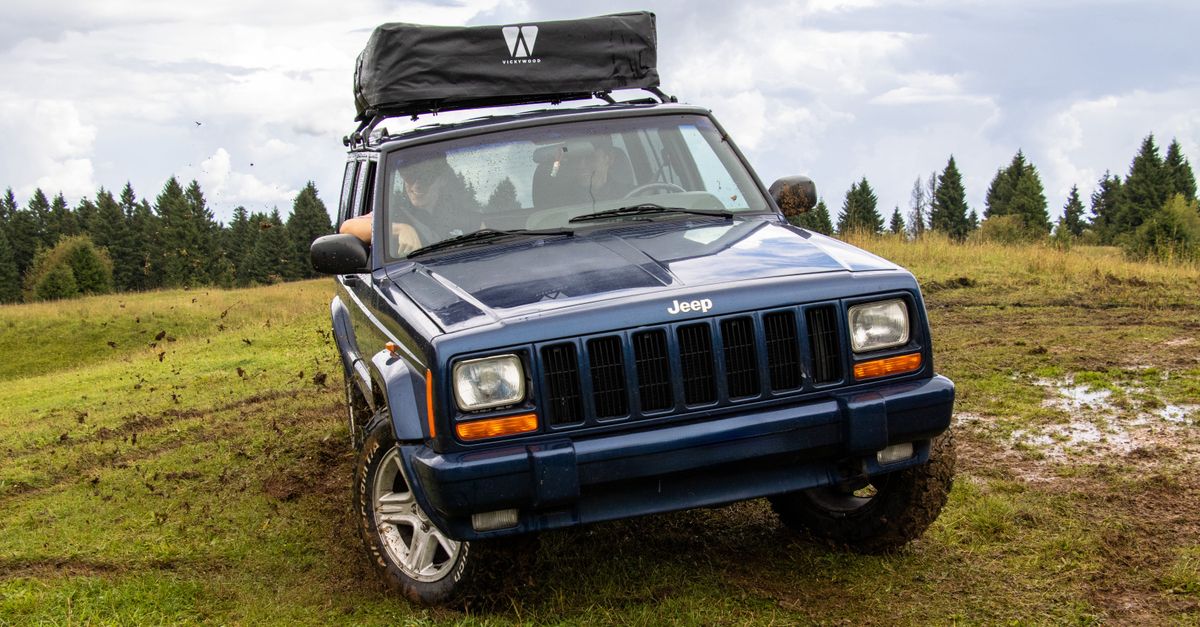
A roof tent does something no ground tent can: it lifts your bed clear of everything damp, lumpy and muddy at ground level. Arrive at a campsite after dark, in the rain, unclip a hard shell, and you’re lying on a mattress that never once touched the ground. Over the past few seasons, rooftop camping has moved from an overlanding niche to genuinely mainstream UK holiday kit, and the market now splits into two broad design camps — low, aerodynamic clamshells for everyday cars, and tall, spacious folding wedges for serious 4x4s. Prices run from just over a thousand pounds to well beyond three.
This guide is based on desk research rather than hands-on testing. We have compared manufacturer-published specifications for the leading models sold in the UK, weighed the consensus of several hundred verified owner reviews, and focused on the numbers buyers most often overlook: packed height, dynamic roof-load limits, car-park barrier clearance and insurance declarations. Retail prices shift frequently and dealer quotes vary, so treat every figure below as a hedged approximation at the time of writing rather than a fixed price.
Roof Tent Quick Picks
| Product | Best for | Approximate price (at the time of writing, 2026) |
|---|---|---|
| TentBox Lite | Smaller cars, everyday fit, easiest storage | Around £1,349 at tentbox.com |
| ARB Esperance 2 | Compact 4x4 clamshell with a slim packed height | Roughly £1,600–£2,500, dealer-quoted |
| ARB Altitude | One-button powered set-up and off-grid comfort | Approximately £3,000–£4,000, dealer-quoted |
Also worth a place on your shortlist: the ARB Intrepid, a folding wedge that trades a taller packed height for a bigger sleeping area; the iKamper Skycamp Mini, aimed squarely at small cars; the Thule Approach, widely stocked in UK outdoor chains; and the Front Runner Roof Top Tent, pitched at the expedition end of the market.
Clamshell or Folding Wedge?
Most roof-tent buying debates come down to one question: clamshell or wedge?
Clamshell designs — sometimes called hard shells — split open like a suitcase. Because the base is rigid, the mattress usually lives inside the folded unit, as with the TentBox Lite, whose quilted mattress stays in place when the shell is closed. Clamshells sit low and aerodynamic on the roof, which keeps wind noise and the fuel penalty in check, and their modest packed height makes them the realistic choice for UK garages and multi-storey car parks. The compromise is interior space: a clamshell’s sleeping area is shorter than a wedge of equivalent roof footprint, so it can feel snug for very tall sleepers.
Folding wedge tents are the more traditional rooftop shape: a hinged base unfolds into a long, pitched triangle. The ARB Intrepid and ARB Altitude are both wedges. They offer a longer effective sleeping area and, typically, a thicker mattress — the Altitude’s 70 mm foam, for example, versus the Esperance 2’s 50 mm — but they sit taller when folded, add more weight, and create more drag on the motorway. Sophisticated wedges such as the Altitude use powered struts to raise the roof for you, which we cover in the reviews below.
If you mostly do weekend trips from home, a clamshell is easier to live with day to day. If you’re kitting out a Defender or Land Cruiser for longer expeditions, a wedge’s space and mattress comfort usually win.
What to Look For in a Roof Tent
Roof load: the first number to check
The single most safety-critical specification is not the tent’s weight on its own, but that weight against your car’s dynamic roof load — the maximum weight the manufacturer authorises the roof to carry while the vehicle is moving. That figure includes the roof tent, the roof bars, and anything else mounted up top.
Here is the part that catches buyers out: there is no universal rule. The “75–100 kg” figure you will see quoted on forums is a rough rule of thumb at best, and it may be irrelevant to your specific car. Dynamic roof load is set per vehicle by the manufacturer, which is why a figure in an Mk8 Volkswagen Golf owner’s handbook will not match the figure in a Land Rover Defender 110 handbook — each car is engineered and tested differently. The number that governs your purchase is the one printed in your own owner’s handbook and stamped on the B-pillar or roof rail label. Check it before you fall in love with a specific tent.
The distinction that explains why the limit exists is between dynamic and static load. Static load is what the roof carries while the car is parked: the tent, the mattress, and the people climbing in and out of it. That figure is always higher, because a parked car’s weight routes directly down through the body and suspension. When the car moves, things change: bumps, braking and cornering multiply the forces acting on the roof mounts, momentarily subjecting them to several times the tent’s static weight. The dynamic limit is the manufacturer’s tested answer to those forces, and it is the one you must respect on the road.
Two further checks follow. First, your roof bars or platform must themselves be rated for the load — a rack rated for 75 kg cannot legally or safely carry a heavier tent just because the car’s dynamic limit is higher. Second, very heavy tents narrow your options dramatically: the ARB Altitude weighs 106 kg, so ARB flags that it needs a heavy-duty 4x4 roof platform capable of supporting it, not a set of ordinary crossbars.
Packed height: garages, barriers and motorway manners
A roof tent is a permanent or semi-permanent addition, and its packed height affects almost everything after the purchase. Most UK car-park barrier arms sit at around 2.0–2.1 m, so your real-world clearance is your car’s own roof height, plus the height of your roof rack, plus the tent’s packed height. A 330 mm-packed clamshell such as the ARB Esperance 2 can take a tall SUV well past the 2 m mark, so measure the full stack before you book a multi-storey or rely on a low garage door.
Packed height also shapes everyday driving. A lower silhouette means less wind noise and a smaller fuel penalty on the motorway, and a tent that folds slim is easier to store in a shed or garage when it is off the car. This is precisely why the Esperance 2’s 330 mm figure — the only sub-350 mm clamshell in its price band — matters, and why wedge tents, which fold higher, demand more careful budgeting of height.
Fabric and mattress: what you sleep on and under
Roof-tent fabrics are rated in GSM — grams per square metre — and the material matters as much as the number. The ARB Esperance 2 uses a 200 GSM UV50+ polycotton, while the ARB Intrepid upgrades to 300 GSM polycotton; the heavier fabric is tougher and more expedition-worthy. Polycotton’s advantage over pure synthetic canvas is breathability: it lets overnight condensation escape rather than dripping back on you, which is a genuine comfort benefit in damp UK conditions. The UV50+ rating, meanwhile, is a measure of how much ultraviolet radiation the fabric blocks, protecting both occupants in bright sun and the fabric itself from sun degradation over years of use.
Mattresses are the other half of the comfort equation, and the difference between models is plain. The Esperance 2’s 50 mm convoluted egg-crate foam is designed to contour to the body and is typical of compact clamshells. The Altitude’s 70 mm foam is a substantial step up in plushness, and the TentBox Lite’s quilted mattress stays sealed inside the shell when closed, so it arrives at camp dry and ready.
Set-up mechanics: what makes a wet Friday arrival painless
The entire point of a roof tent is that it removes the chore of pitching. The practical differences come down to the opening mechanism. A manual clamshell or wedge relies on releasing the shell and letting gas struts or a ladder take the weight — simple, reliable and light. At the premium end, the ARB Altitude’s powered struts do the work for you: press a button and the roof rises into position without manhandling, which is a genuine benefit after a long drive. Whatever the mechanism, check how the ladder attaches and whether it is structural: on many wedge designs the ladder supports the foot end, so a sturdy, well-engineered ladder is part of the tent’s structure, not an afterthought. Some tents, such as the Esperance 2, also offer an optional annexe, giving you a ground-level changing space or room for a small child alongside the elevated bed.
The Best Roof Tents Reviewed
TentBox Lite
Best for: drivers of smaller cars who want the smallest daily impact on their vehicle.
The TentBox Lite is the British brand’s most compact clamshell, and its defining feature is convenience. The quilted mattress stays inside the shell when closed, so the bed is always made, always dry, and ready the moment you unclip the shell. TentBox also quotes the Lite’s folded height as the smallest in the entire TentBox range, which makes it the model to shortlist if you park in a garage or have to squeeze under a barrier.
Owner sentiment backs up the brand’s claims: at the time of writing, the TentBox Lite holds more than 400 customer reviews on Amazon UK, averaging 4.6 out of 5 stars, which is an unusually strong consensus for any roof tent. Its standout strength is therefore the whole package for everyday UK use — a compact, aerodynamic shell from a home-grown brand, backed by a large verified-owner base. The honest caveat is the flip side of that compactness: as with any clamshell, the sleeping area is cosier than an equivalent wedge, so taller couples should check the internal length on TentBox’s spec sheet before committing.
Verdict: the default smart choice for small cars and first-time buyers who want the smallest folded profile in TentBox’s range.
Where to buy: directly at tentbox.com at around £1,349 at the time of writing, or via Amazon UK, where the model’s verified owner reviews are concentrated.
ARB Esperance 2
Best for: 4x4 and SUV owners who want a true clamshell without a bulky roofline.
The ARB Esperance 2 is the sharpest value argument in this guide, and its sharpest angle is a single number: 330 mm packed height. That makes it the only sub-350 mm clamshell in its price band, and on a tall 4x4 the difference between a 330 mm shell and a 400 mm wedge is the difference between clearing a multi-storey barrier and not.
The rest of the specification is quietly sensible. The mattress is 50 mm of convoluted egg-crate foam, shaped to contour rather than simply pad. The shell fabric is 200 GSM UV50+ polycotton — breathable to manage condensation, with a UV rating that protects the fabric through years of exposed parking. As a compact clamshell it is a two-person tent, and ARB offers an optional annexe for those who want ground-level space for kit or a child.
The caveat is pricing and availability rather than quality. ARB sells through authorised dealers rather than a single online shop, and dealer quotes for the Esperance 2 typically land between roughly £1,600 and £2,500, meaning the price you are quoted can vary meaningfully with dealer and timing. Shop around before committing.
Verdict: the slimmest genuine clamshell in its price band — the one to buy if packed height rules your decision.
Where to buy: through the UK network of authorised ARB dealers; because quotes vary between dealers, it pays to contact more than one.
ARB Altitude
Best for: overlanders who want premium comfort and one-button set-up.
The ARB Altitude is the flagship of ARB’s roof-tent line, and it is defined by two extremes: comfort and weight. Its 70 mm foam mattress is the thickest in this guide, a serious step up from the Esperance 2’s 50 mm for anyone with a bad back. And its powered struts deliver genuinely one-button deployment — press the control and the roof lifts itself into position, removing the physical effort that manual wedges demand.
That comfort comes at a structural price. At 106 kg, the Altitude is a heavy object to carry on a roof, and it will exceed the dynamic roof-load rating of many mainstream racks and some vehicles entirely. ARB therefore specifies a heavy-duty 4x4 roof platform for the Altitude, and buyers must confirm both their vehicle’s dynamic roof load and the platform’s rating before purchase. It is a tent for serious 4x4s, not family SUVs.
The finances are equally serious: dealer quotes for the Altitude typically sit between approximately £3,000 and £4,000, and the model is frequently backordered, so lead times can be substantial. If you want one for a specific expedition, order early and confirm stock with your dealer.
Verdict: the most comfortable and effortless roof tent here, provided you own a heavy-duty 4x4 platform and can wait out the backorders.
Where to buy: through authorised UK ARB dealers, with dealer-quoted pricing around £3,000–£4,000 at the time of writing — and stock worth confirming before you order.
ARB Intrepid
Best for: expedition 4x4s where roof footprint should match the tent exactly.
The ARB Intrepid is a folding wedge built for vehicles with serious roof space, and its defining specification is choice. It comes in three widths — 1,285 mm, 1,400 mm and 1,600 mm — so you can match the tent to the usable length of your roof rather than accepting one-size-fits-most. A 1,600 mm footprint suits a long-roofed Defender; the 1,285 mm version keeps a smaller wagon balanced.
The fabric is the toughest in ARB’s range here: 300 GSM polycotton, a heavier, more abrasion-resistant canvas than the Esperance 2’s 200 GSM material, which speaks to its expedition intent. As a folding wedge, however, the Intrepid’s packed height is higher than any clamshell’s — ARB does not publish the kind of sub-350 mm figure the Esperance 2 boasts — so buyers need to verify the exact folded height on ARB’s spec sheet and add it to their vehicle and rack heights before assuming they will clear a 2 m barrier.
Verdict: the width-flexible wedge for long expeditions, provided you have the roof length and the height budget for it.
Where to buy: through authorised UK ARB dealers, at dealer-quoted prices; confirm the current quote and the packed-height figure on the ARB spec sheet.
iKamper Skycamp Mini
Best for: small-car owners who want a premium hard-shell without a giant footprint.
Not every roof tent demands a 4x4, and the iKamper Skycamp Mini is built on exactly that premise: it targets small cars. iKamper positions the Mini as a two-person hard-shell that respects the shorter, lower roof lines of the crossovers and hatchbacks that dominate UK driveways. The two figures that matter most — sleep footprint and weight — are published on the iKamper.com spec page, and both should be checked against your car’s dynamic roof load before you buy, because with a small car every kilogram counts double against a modest handbook limit.
The Mini’s strength is opening up the roof-tent category to vehicles that larger wedges would overwhelm. Its honest caveat is the same as every compact shell: a smaller footprint means a snugger bed, so it suits average-height couples more than tall families.
Verdict: the strongest mainstream option for small cars, if the published weight and footprint fit your handbook figures.
Where to buy: typically available through iKamper’s own website and specialist overlanding retailers in the UK; pricing is set by the retailer, so compare current listings.
Thule Approach
Best for: buyers who want to see a roof tent in person before spending.
The Thule Approach earns its place on a different strength: availability. Thule is one of the most widely distributed roof-rack brands in Britain, and the Approach is widely stocked in UK chains including Halfords and Go Outdoors. That matters because a roof tent is a large, expensive purchase — being able to inspect the shell, try the ladder and judge the mattress in person before committing is a genuine advantage that online-only brands cannot offer.
Thule also publishes a fit-guide covering roof-load compatibility, which lets you check that your vehicle, its roof system and the Approach’s weight are compatible before you buy. The practical caveat is that the Approach competes in a crowded premium segment, so it is worth comparing its specification side-by-side with specialist roof-tent brands rather than assuming the big-name badge means the best value.
Verdict: the pragmatic choice for buyers who value seeing the product in the flesh and the reassurance of Thule’s fit-guide.
Where to buy: at Halfords and Go Outdoors, both of which stock the Thule Approach across UK stores and online.
Front Runner Roof Top Tent
Best for: expedition builds where proven overlanding hardware matters.
Front Runner is best known for its expedition roof racks and load systems, and the Front Runner Roof Top Tent is the natural extension of that heritage. It is pitched firmly at the expedition end of the market — the buyer who is already running Front Runner racks and wants a tent that matches the same engineering philosophy. Front Runner publishes a full spec sheet, and as with every tent here, its weight should be checked against both your vehicle’s dynamic roof load and the rating of the rack system carrying it.
The tent’s strength is coherence: for an overlanding build, matching tent and rack from a single expedition-spec manufacturer simplifies load ratings and mounting hardware. The caveat is that this is a purpose-built piece of expedition kit rather than a value buy, so casual campers will likely find lighter, cheaper clamshells more sensible.
Verdict: a well-engineered expedition tent for overlanders already invested in Front Runner’s rack ecosystem.
Where to buy: through Front Runner’s own site and specialist expedition outfitters; check the manufacturer’s spec sheet for current pricing and load data.
Roof Tents in the UK: What You Need to Know
Parking height: do the maths before you drive
Most UK car-park barrier arms sit between 2.0 and 2.1 m, and a surprising number of roof-tent owners learn this the expensive way. The formula is simple: take your car’s roof height from the handbook, add the height of your roof bars or platform, then add the tent’s packed height — 330 mm in the case of the ARB Esperance 2, more for a folding wedge. Compare the total against the barrier height before you enter a multi-storey, and remember that the same stack has to clear your garage door at home.
Insurance: declare your roof tent as a modification
In the eyes of UK insurers, a roof tent is a modification to your vehicle, and many policies require you to declare one. Insurers such as Admiral and Aviva publish modification policies that spell this out, and failing to declare a fitted roof tent risks invalidating your cover in the event of a claim. The good news is that a declared roof tent is rarely a major premium issue, but the declaration itself is not optional. Fit the tent, then call your insurer before you drive anywhere.
Dealer quotes and price verification
The prices in this guide were verified against manufacturer and dealer listings at the time of research in 2026, and every figure should be treated as an approximation. TentBox sells directly at tentbox.com, which keeps its pricing stable. ARB, by contrast, sells through authorised dealers, and the spread between dealer quotes for the same tent — roughly £1,600–£2,500 for the Esperance 2, and £3,000–£4,000 for the Altitude — is wide enough that shopping around genuinely saves money.
Roof Tent FAQ
Can you put a roof tent on any car?
Most cars with a solid roof and factory-fitted roof rails or mounting points can carry a roof tent in principle, but “in principle” is doing a lot of work. The combined weight of the tent and its rack must stay within your car’s dynamic roof load, which is set per vehicle and printed in the owner’s handbook and on the B-pillar or roof rail label. Compact models such as the TentBox Lite and iKamper Skycamp Mini exist precisely because smaller cars need lighter, shorter tents, while a 106 kg tent like the ARB Altitude demands a heavy-duty 4x4 roof platform and a vehicle rated to carry it.
Are roof tents legal on UK roads?
Yes — roof tents are legal on UK roads, and there is no separate type-approval or licence requirement for the tent itself. You remain responsible, however, for keeping the combined weight within the vehicle manufacturer’s roof-load limit and for ensuring the tent is securely fitted, since an overloaded or unsafe roof load can put you in breach of road-traffic rules. You are also required by most insurers, including Admiral and Aviva under their modification policies, to declare the tent as a modification to your vehicle.
What is the weight limit for a roof tent on a UK car?
There is no single UK-wide weight limit because the limit is set by each vehicle manufacturer, not by national regulation. The figure that governs your purchase is the dynamic roof load in your owner’s handbook and stamped on the B-pillar or roof rail label — the commonly quoted 75–100 kg rule of thumb may not match your car at all. Your roof rack or platform must also be rated for the load, which is why the 106 kg ARB Altitude requires a heavy-duty 4x4 platform rather than ordinary crossbars.
Do roof tents damage your car’s roof?
A correctly fitted roof tent, kept within the vehicle’s dynamic roof load and mounted on a properly rated rack, should not damage your roof. Damage typically comes from exceeding the dynamic limit, which subjects roof mounts to forces they were not engineered for, or from poor rack fitting. Follow the rack manufacturer’s installation instructions, check torque settings periodically, and respect the handbook figure and the rating stamped on the B-pillar label.
Do I need to declare a roof tent to my car insurer?
In most cases, yes. UK insurers generally treat a roof tent as a modification to the vehicle, and Admiral and Aviva both publish modification policies that require a roof tent to be declared. The declaration is quick and unlikely to cause major premium increases, but missing it out can leave you under-insured if you need to claim after an incident involving the tent.
Will a roof tent clear a standard UK car-park barrier?
Only if you do the arithmetic first. Most UK barriers sit at 2.0–2.1 m, so add your car’s roof height, your roof rack’s height and the tent’s packed height — 330 mm for the ARB Esperance 2, for example — and compare the total. Many SUVs with a clamshell roof tent end up at or above 2 m, and folding wedges sit taller still, so a measured check beats an educated guess.
Verification note: Product specifications and prices in this guide were compiled from manufacturer sources including tentbox.com, ARB’s UK dealer listings, iKamper.com, Thule’s UK fit-guide and Front Runner’s spec sheet, all accessed in 2026. Amazon UK review figures reflect the TentBox Lite’s customer rating at the time of writing. Roof-load figures are vehicle-specific and must always be confirmed against your own owner’s handbook and B-pillar label.