Best Gas Range Stove UK 2026: Three Gas Cookers Compared, From 50cm to 90cm
A gas cooker that fits the gap you've got, heats the way you actually cook and doesn't quietly ratchet up your energy bill comes down to three decisions…
Best Gas Range Stove UK 2026: Three Gas Cookers Compared, From 50cm to 90cm
A gas cooker that fits the gap you’ve got, heats the way you actually cook and doesn’t quietly ratchet up your energy bill comes down to three decisions: how wide it is, how its ovens are split, and what it costs to run once it’s plumbed in. Get those right and the rest — pan supports, flame safety, whether the hose is in the box — is straightforward detail.
This guide covers the best gas range stove options UK buyers can actually get hold of in 2026: three confirmed models spanning 50cm, 60cm and 90cm widths, and three budget tiers from around £250 to around £1,400. Our findings come from desk research — manufacturer specification sheets, current retailer listings and aggregated owner feedback on AO.com and Trustpilot — rather than hands-on testing. Where a capacity or a burner output matters to your decision, we point you to the manufacturer’s published figure so you can confirm the current number before you order.
Quick picks: three gas cookers at a glance
| Model | Width | Cavities | Best for | Approx. price |
|---|---|---|---|---|
| Statesman GDL60B | 60cm | Main oven + top cavity with grill | Best all-rounder in a standard 60cm slot | Around £300–£350 |
| Montpellier MDOG50LK | 50cm | Double-oven gas layout (confirm cavity count and litres on the product page) | Best for small kitchens and tight budgets | Around £250–£300 |
| Rangemaster Classic 90 Gas | 90cm | Two full-size ovens + separate grill | Best full-size cooker for family kitchens | Around £1,200–£1,400 |
What “gas range stove” means in a UK kitchen
Search for the term and you’ll be buried in American reviews of 30-inch freestanding ranges. In the UK, that appliance is a freestanding cooker: hob and oven in one unit, installed as a single piece. Once it reaches 90cm wide with two or three cavities, retailers sell it as a gas range cooker.
The vocabulary shift matters when you’re comparing specifications, because US listings quote in inches and cubic feet while UK listings quote in centimetres and litres:
- 30 inches equals roughly 76cm — closest UK equivalent is a 60cm cooker.
- 36 inches equals roughly 91cm — closest UK equivalent is a 90cm range cooker.
- 1 cubic foot of oven capacity is approximately 28.3 litres.
Beyond size, UK terminology splits three ways. A gas cooker is anything from 50cm to 60cm wide, usually with one or two oven cavities. A range cooker is typically 90cm, 100cm or 110cm wide, with two or three cavities and a wider hob. Dual fuel means a gas hob paired with an electric oven — very common at the premium end, and worth knowing about because it changes your installation requirements entirely.
Every model below is all-gas: gas hob, gas oven or ovens. That single fact drives the installation rules, the ventilation considerations and the running-cost maths we cover further down.
US shoppers: this page covers UK-spec models only.
How to choose a gas cooker in 2026
Size and fit
50cm models suit flats, small kitchens and buy-to-let properties where space is genuinely tight. 60cm is the UK standard and offers by far the widest choice of brands and price points. 90cm range cookers need a dedicated gap, usually more clearance, and they weigh considerably more — worth checking floor strength and the route into your kitchen before ordering.
Measure the gap, not the old appliance. Cookers need a small clearance either side both for ventilation and so the oven door can swing fully open, and manufacturers publish minimum distances to combustible surfaces — worktops, cabinets, anything above the hob — in the installation manual, not on the marketing page.
Oven layout and cooking space
Gas ovens are usually conventional rather than fan-assisted. In practice that means heat rises from the base of the cavity, so they tend to preheat more slowly than an electric fan oven and you’ll adjust shelf positions more often to manage browning. Configuration is the bigger differentiator between models:
- Single cavity with grill — the cheapest arrangement, fine for one or two people.
- Double oven (main cavity plus a top cavity with grill) — lets you roast in the main oven while grilling or warming above it, which is exactly what you want on a Sunday.
- Twin cavity range cooker — two full-size ovens plus a separate grill, the family-cooking option.
Burners, pan supports and flame safety
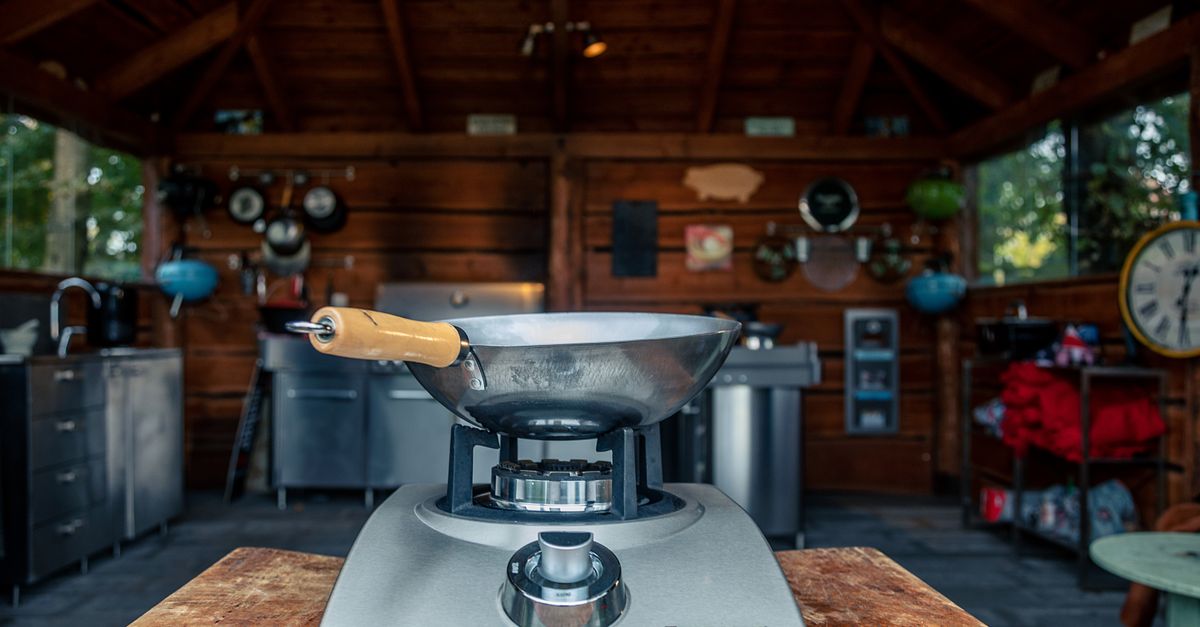
Four burners is standard on 50cm and 60cm cookers, usually with one rapid burner for fast boiling. Range cookers typically run five or six burners, often including a wok burner — a higher-output ring designed to concentrate heat under a curved pan base rather than up its sides.
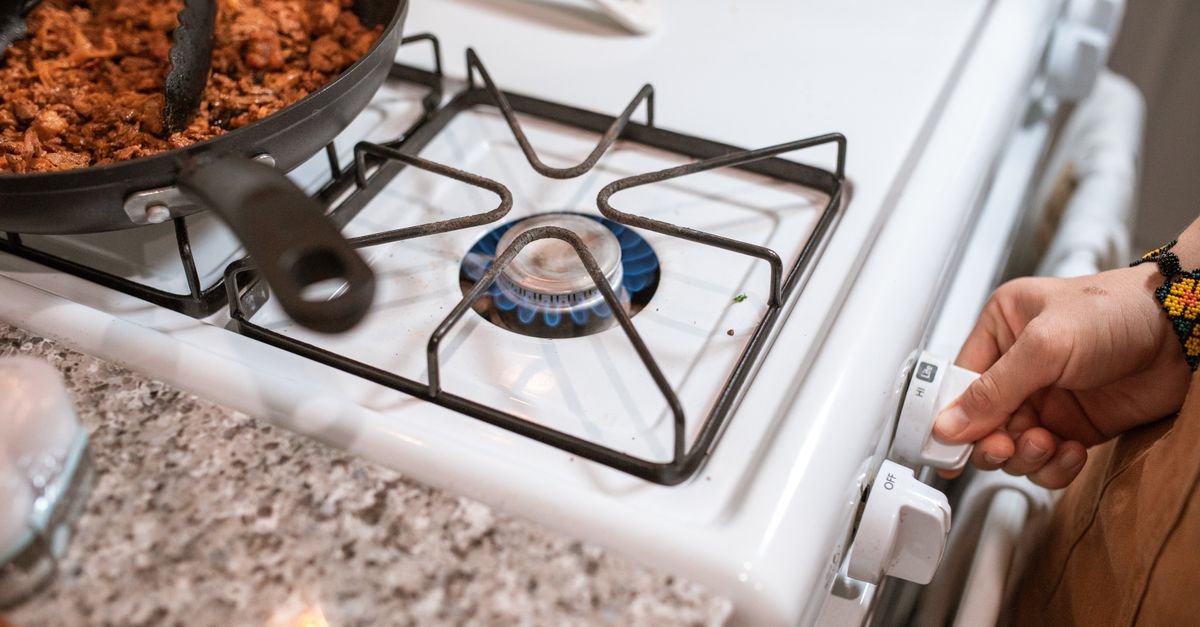
Look for cast-iron pan supports. They’re more stable under a heavy pan than pressed steel and last far longer without warping. Then check that flame supervision devices (FSDs) are fitted: an FSD is a small sensor that cuts the gas supply to a burner if the flame goes out, so a draught or a boiled-over pan can’t leave gas flowing into the room. FSDs are mandated on hob burners of gas cooking appliances, covered by the BS EN 30-1-1 standard for gas cooking appliances, and Gas Safe Register guidance sets out what that means in practice. It’s a genuine safety feature, not a marketing line.
What the energy label does — and doesn’t — tell you
You won’t find an energy rating on a gas oven, and that’s not an oversight. The UK energy label under Regulation 65/2014 — retained UK law following EU exit — applies to electric ovens. Gas oven cavities fall outside its scope, which is why a gas cooker’s spec sheet lists burner outputs, capacities and dimensions but no efficiency class. Treat any efficiency badge you see attached to a gas oven with scepticism and rely on the declared gas input instead.
Running costs in 2026: where gas wins and where it doesn’t
Ofgem’s Q1 2026 price cap — published in the regulator’s tariff cap notice — puts gas at roughly 7p per kWh and electricity at roughly 24p per kWh. That gap, roughly a factor of three, is the whole reason gas cooking appeals.
Work it through on the oven side. A typical electric fan oven draws around 2.5 kWh across an hour of cooking; at about 24p per kWh, that’s roughly 60p an hour. To run the equivalent calculation for a gas oven, start with the declared kW input printed on the manufacturer’s specification sheet, multiply by the hours you cook, and multiply by about 7p — so every kilowatt of declared input costs roughly 7p per hour. A model with a higher declared input will therefore close that gap quickly, and a lower one will widen it.
There’s a second factor that matters more than most buyers expect: gas ovens are less thermally efficient than electric fan ovens. A share of the heat a gas oven produces is lost up the flue and into the kitchen rather than reaching the food, so the raw price difference doesn’t translate into an identical saving. The gas advantage narrows for oven cooking and is strongest for hob use, where nearly all the heat goes straight into the pan.
LPG conversion: what to check before you buy
If mains gas isn’t available where you live, or you’re cooking off a bottled supply, four questions decide whether a cooker is viable:
- Does the manufacturer offer an LPG conversion kit for this model? Some cookers are mains-gas only, and no kit will ever appear for them.
- What’s the kit’s part number? You’ll need it to order the right kit, and it should match the model code exactly.
- What does the kit cost on top of the cooker? It’s an extra line, not an included accessory.
- Is the model mains-only? If so, cross it off the list before you fall in love with the price.
One cost caveat worth building into your budget: bottled LPG typically costs more per kWh than mains gas, so the running-cost advantage described above is smaller than the headline Ofgem figures suggest. The conversion itself is gas work and falls under the same legal requirements as a mains installation.
The three models, reviewed
Statesman GDL60B — best all-rounder
Best for: households with a standard 60cm slot who want two cooking zones without paying range-cooker money.
What you get: a 60cm freestanding all-gas cooker with two cavities — a main oven and a top cavity with a grill — a hob fitted with a rapid burner for fast boiling, a glass lid, and a manufacturer-stated combined capacity of around 91 litres across the two cavities. Statesman publishes the rapid burner’s output in kW on its specification sheet; that figure determines how quickly a large pan of water comes up, so check the current sheet rather than a retailer’s summary.
Standout strength: the second cavity. Being able to roast in the main oven while grilling or warming above it is the difference between cooking a full meal and cooking it in relays — and it’s rare at this price.
Honest caveat: the main oven is a conventional gas cavity, not fan-assisted, so expect a slower preheat and more shelf-shuffling than an electric fan oven. Also confirm whether the flexible hose and stability bracket are included with the model you order — they frequently aren’t.
Verdict: the sensible default for a standard UK kitchen — two cavities, a rapid burner and a price that leaves budget for installation.
Where to buy: typically Appliance World, at around £300–£350.
Montpellier MDOG50LK — best for small kitchens
Best for: flats, galley kitchens and buy-to-let properties where every centimetre of worktop counts.
What you get: a 50cm freestanding gas cooker with a four-burner hob and, judging by the model code — “DOG” denotes a double oven gas layout — two cavities. Two caveats on the specification: confirm the cavity count and the oven capacity in litres on the current product page, because model codes aren’t always a reliable guide to what ships, and pull the exact burner output in kW from the manufacturer’s spec sheet rather than assuming.
Standout strength: the footprint and the price. A 50cm cooker frees up 10cm of worktop compared with a 60cm model, and the four-burner hob still covers the pans most households use daily.
Honest caveat: narrower hobs mean less room for large pans at once, and there’s no wok burner here — so anyone regularly cooking for a crowd with big pans should look at the 60cm Statesman instead.
Verdict: the value pick if space, not capacity, is your binding constraint.
Where to buy: 50cm gas cookers in this class are typically stocked by UK appliance retailers and online appliance specialists, at around £250–£300.
Rangemaster Classic 90 Gas — best full-size range cooker
Best for: family kitchens with a dedicated 90cm gap and a cooking routine that regularly fills two ovens.
What you get: a 90cm all-gas range cooker with two full-size ovens and a separate grill — three distinct cooking zones rather than the main-and-top arrangement of a 60cm double oven — plus a wide hob that includes a wok burner. Ringemaster’s installation manual carries the declared wok-burner output in kW; check that figure alongside the published side clearance to combustibles.
Standout strength: genuine simultaneous capacity. Roast in one full-size oven, bake in the other, grill above — no compromising on temperature or timing.
Honest caveat: it’s a big, heavy appliance that needs a dedicated gap and more surrounding clearance than a 60cm cooker, and its weight makes delivery and positioning a two-person job.
Verdict: the one to buy if you have the space and cook at scale; the running-cost calculations above apply to each cavity you use.
Where to buy: typically AO or Rangemaster direct, at around £1,200–£1,400.
Installation and safety: the UK rules that apply
A gas cooker must be installed by a Gas Safe registered installer — that’s a legal requirement, not a recommendation, and you can verify an engineer’s registration at gassaferegister.co.uk. Budget for this before you order, and don’t accept a general handyman’s offer to “sort it”.
Two parts are commonly overlooked. A stability bracket and a BS 669 flexible hose are required for the installation — the bracket anchors the cooker so it can’t tip forward when a heavy pan sits on an open door, and the BS 669 hose is the specified connection between the cooker and the bayonet fitting. Neither is always supplied with the cooker, so confirm the box contents per model before delivery day.
On safety features: flame supervision devices are mandated on hob burners, under the BS EN 30-1-1 standard covering gas cooking appliances, as set out in Gas Safe Register guidance. What that means practically is that a cooker meeting current UK specifications will cut the gas to a burner whose flame has gone out, rather than letting unburnt gas escape into the kitchen.
Clearance for a 90cm unit: check the manufacturer’s published side clearance to combustibles in the installation manual. Marketing pages frequently omit it, and the figure varies between models, so it isn’t something to estimate.
Owner reviews: how to use them well
UK buyers post owner feedback in two places worth checking: the customer review section on each AO.com product page, and Rangemaster’s Trustpilot profile for the range cookers. Both surface the practical issues that matter far more than star averages — whether the flexible hose and stability bracket arrived in the box, how much clearance an owner actually left around a 90cm unit, and how quickly each cavity reached temperature in daily use.
Read them actively rather than skimming the score. Check how many reviews a specific model has, when they were posted, and whether they’re tied to that exact model code rather than a similar one in the range — review volume and recency vary considerably between SKUs, and a handful of older reviews tells you much less than a steady run of recent ones.
FAQ
Can I install a gas cooker myself? No. Connecting a gas cooker is work that must legally be carried out by a Gas Safe registered installer, and you can check any engineer’s credentials at gassaferegister.co.uk. This applies whether you’re replacing a like-for-like cooker or installing into a new kitchen — the connection, the stability bracket and the BS 669 flexible hose all fall inside that requirement. Attempting it yourself also risks invalidating your home insurance if something goes wrong.
Do I need an extractor hood above a gas cooker? There’s no single answer that fits every kitchen, but the relevant figure is the minimum clearance between the hob and anything fitted above it — a hood, a cabinet or a shelf — and that distance is published in the manufacturer’s installation manual, not in the marketing copy. Gas cooking also produces combustion products and moisture alongside cooking steam, so ventilation matters more than it does with an induction hob. Read the manual’s clearance figure for your specific model and match your hood to it.
Can I convert a gas cooker to run on LPG? Only if the manufacturer offers a conversion kit for that specific model — some cookers are mains-gas only and can never be converted. Before buying, check that a kit exists, note its part number so you order the right one, and factor the kit’s cost into your budget on top of the appliance price. Bear in mind that bottled LPG typically costs more per kWh than mains gas, which erodes the running-cost advantage we worked through above.
Is gas cheaper than electricity for cooking? Per unit of energy, yes — by a wide margin. Ofgem’s Q1 2026 price cap puts gas at roughly 7p per kWh against roughly 24p per kWh for electricity. But gas ovens are less thermally efficient than electric fan ovens, so the saving is smaller for oven cooking than the raw rates imply and most pronounced for hob use. To estimate your own oven costs, take the declared kW input from the manufacturer’s specification sheet, multiply by the hours you cook, then multiply by about 7p.
Will a 90cm range cooker fit through my kitchen door? Often not without preparation. A typical UK internal door gives a clear opening of about 762mm, while a 90cm cooker is 900mm wide — so the doors, and sometimes the door frame, need to come off to get the appliance through. Measure the narrowest point on the delivery route, including any hallway turns and the gap between the front door and the kitchen, before ordering rather than on the morning of delivery.
Are the flexible hose and stability bracket included with the cooker? They’re required for a compliant installation, but they’re not always supplied in the box — so check the manufacturer’s box-contents list and the installation manual for the model you’re buying. Your installer can usually supply both, and a Gas Safe registered engineer will tell you whether the existing BS 669 hose is still suitable. Confirming this before delivery avoids a cooker sitting unconnected while you wait for parts.