The Complete Guide to Brecon Beacons Wild Camping: Gear, Legalities & Safety for 2026
Brecon Beacons wild camping guide for 2026: the legal grey area, the MOD firing-range and unexploded ordnance hazards, and gear for exposed Welsh ridges.
The Complete Guide to Brecon Beacons Wild Camping: Gear, Legalities & Safety for 2026
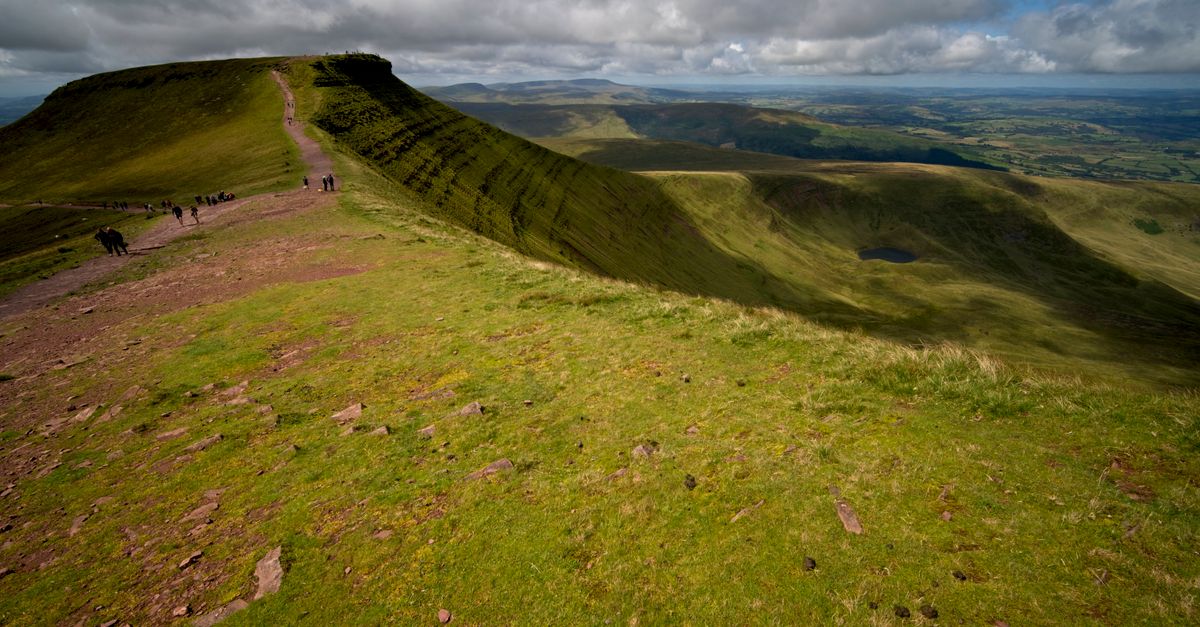
The Brecon Beacons — officially known as Bannau Brycheiniog — offer some of the most dramatic and accessible upland terrain in the UK. From the sandstone ridges of Pen y Fan to the remote, boggy expanses of the Black Mountain, this landscape rewards preparation. But Brecon Beacons wild camping sits in a complex legal grey area, complicated by active Ministry of Defence (MOD) firing ranges and genuinely life-threatening unexploded ordnance risks. This guide covers everything you need for a safe, responsible trip in 2026: the legal status of wild camping in the national park, the critical MOD hazards you must understand before setting out, and the best gear for the conditions.
Quick Picks: Top 3 Products for Brecon Beacons Wild Camping
| Product | Best For | Approximate Price |
|---|---|---|
| Vango Banshee Pro 200 | Solo/duo lightweight backpacking on exposed ridges | Around £180–£220 |
| OEX Fathom EV 300 | Three-season synthetic-fill sleeping bag for damp Welsh conditions | Around £100–£130 |
| Jetboil Flash | Fast, efficient hot food and drink in changeable weather | Price varies by retailer |
The Legal Status of Wild Camping in the Brecon Beacons
There is no legal right to wild camp anywhere in Wales or England. The Countryside and Rights of Way (CRoW) Act 2000 grants a right of access on foot to mapped open country and registered common land, but camping is explicitly excluded from that right. This means that pitching a tent on open access land in the Brecon Beacons without the landowner’s permission is technically trespassing — a civil matter rather than a criminal one, but an infringement of the law nonetheless.
This stands in stark contrast to Scotland, where the Land Reform (Scotland) Act 2003 establishes a statutory right of access that includes wild camping on most unenclosed land. No equivalent framework exists south of the border.
Tolerated Practice, Not Legal Right
Despite the lack of a legal right, a tradition of discreet, leave-no-trace wild camping persists in upland areas of the national park. This is a tolerated practice, not a right — the distinction matters. The consensus among online communities such as Reddit’s r/CampingUK and the UKHillwalking.com forums supports a broadly accepted code of conduct: arrive after dusk, leave before 9am, light no fire, and leave no litter. These communities tend to regard the eastern Mynydd Du ridgelines as lower-risk areas for discreet camping, though no specific spot can be asserted as definitively “tolerated” — circumstances change, landowners vary, and what passes without comment one weekend may draw objection the next.
The River Usk valley floor, by contrast, is private farmland. No tolerance should be assumed there. Campers seeking to minimise friction with landowners should stick to high, open moorland well away from enclosed grazing land, farm tracks, and dwellings.
Two Distinct Upland Areas
The Brecon Beacons uplands divide into two distinct areas that should be treated separately when planning a trip:
- Mynydd Du (the Black Mountain) — the western range, generally remoter and less frequented. Its eastern ridgelines are the areas most commonly cited by experienced wild campers as offering the lowest risk of landowner friction.
- Fforest Fawr — the central plateau, characterised by extensive deep peat bogs that make navigation and pitching more challenging. This area demands careful route selection, particularly after wet weather when the bog can become impassable in places.
Local Hazards
Beyond the legal and military considerations, the Brecon Beacons present several natural hazards that campers must account for:
- Deep peat bogs — Fforest Fawr is especially notorious. These can be knee-deep or worse after rain and can swallow a tent footprint. Route planning should account for terrain as well as distance.
- Adders — active from April through September. Adder bites are rarely fatal but require immediate medical attention. Sturdy boots and vigilance when stepping over heather or rocks are essential during these months.
- Orographic weather — the Beacons generate their own weather systems. Warm sunshine in the valley can become a horizontal gale with near-zero visibility on Corn Du within an hour. The mountains’ orientation creates funnelling wind effects, and orographic cloud can descend without warning, dropping temperatures dramatically even in midsummer.
The MOD Hazard: Sennybridge Training Area (SENME)
This is the single most important safety consideration for anyone planning to wild camp in the central Brecon Beacons, and it cannot be overstated: the danger here is genuinely life-threatening, not merely a matter of legal administration.
The MOD Sennybridge Training Area, designated SENME, covers large sections of the central Beacons, including the areas around Pen y Fan, Corn Du, and Fan y Big. These are active firing ranges subject to MOD bylaws. The critical hazard is unexploded ordnance (UXO) — live munitions, including artillery shells and other military debris, that remain on or near the surface of the ground. Decades of military training have left a legacy of unexploded rounds across these ranges. Disturbing unfamiliar metal objects, walking off established paths, or pitching a tent on uncleared ground in these zones carries a risk of serious injury or death.
Before any trip to the central Beacons, you must check the current red-flag status via the Defence Infrastructure Organisation (DIO) firing times page. When red flags are flying, the ranges are active and access is prohibited. Even when ranges are not active, the UXO risk persists — the absence of a red flag does not mean the ground is safe. The DIO publishes firing times on its website, and these should be consulted as close to your departure date as possible, as schedules can change at short notice.
If you encounter any metal object, debris, or suspicious item on the ground within the training area, do not touch it. Mark the location if you can do so safely, leave the area by the same route you approached, and report the find to the local police or MOD range control.
How to Choose Wild Camping Gear for the Brecon Beacons
Selecting gear for the Brecon Beacons requires understanding three specific environmental pressures: high wind on exposed ridgelines, persistent moisture that can soak gear and reduce insulation, and the need to carry everything on your back over challenging terrain.
Tent selection hinges on weight and wind-shedding ability. A packed weight under 2 kg is the benchmark for genuine backpacking comfort on multi-hour approaches. Wind stability is determined by pole architecture and profile — low, streamlined shapes that present a narrow face to the wind perform far better than tall, boxy designs. Pay attention to pitch sequence: tents that pitch inner-first leave the interior exposed to rain during setup, a meaningful disadvantage in Welsh conditions where showers can arrive without warning.
Sleeping bag selection should be guided by the ISO 23537-1:2016 standard, which replaced the older EN 13537 rating system. This standard defines three temperature ratings that serve different purposes:
- Comfort — the temperature at which a standard adult woman can sleep comfortably through the night without waking from cold. This is the rating most recreational campers should use as their primary benchmark.
- Lower Limit — the temperature at which a standard adult man can sleep for six hours without waking from cold, curled in a foetal position. This is a survival-adjacent figure, not a comfort figure.
- Extreme — the minimum temperature at which a standard adult woman can survive for six hours without risk of death from hypothermia, though she will not sleep and will be very cold. This is a safety threshold, not a usable rating.
Confusing the Comfort and Lower Limit ratings is a safety-critical error. A bag rated to a Lower Limit of -5°C may only have a Comfort rating around 0°C — the difference between a restful night and a miserable, potentially dangerous one.
Fill material matters enormously in the Brecon Beacons. Down insulation offers the best warmth-to-weight ratio but loses its insulating loft when damp — a serious liability in a national park where persistent rain and high humidity are the norm. Synthetic fill retains its loft when wet, meaning it continues to insulate even in damp conditions. For Welsh wild camping, this practical advantage often outweighs the weight and packed-size penalty of synthetic fill.
Cooking system selection comes down to speed and efficiency. In cold, wet, windy conditions, the ability to produce hot food and drink quickly is not merely a comfort issue — it contributes to maintaining core body temperature. Wind is the enemy of gas stove efficiency: even a light breeze can dramatically increase boil times and fuel consumption. Integrated canister systems that incorporate a windshield into the pot-stove unit are significantly more efficient in these conditions than standalone upright stoves.
Product Reviews
Vango Banshee Pro 200
Best for: Solo or duo lightweight backpacking on exposed ridgelines.
Key specs (per Vango manufacturer specifications):
- Design: compact 2-pole tunnel tent
- Packed weight: approximately 1.9 kg
- Hydrostatic head: 1,800 mm
- Poles: PowerFlex alloy
What’s included: Tent inner, flysheet, PowerFlex alloy poles, pegs, guy lines, stuff sack.
Approximate price: Around £180–£220 at Amazon UK and Go Outdoors (prices correct at time of writing, subject to change).
Where to buy: Amazon UK, Go Outdoors.
It is important to correct a common misdescription found in some retail listings and online reviews: the Vango Banshee Pro 200 is a 2-pole tunnel tent, not a semi-geodesic design. Semi-geodesic construction requires at least three crossing poles set at varied angles to create a self-supporting, freestanding structure — the Vango Tempest series is an example of a true semi-geodesic tent. The Banshee Pro 200’s 2-pole tunnel design is structurally different: it relies on tension and pegging to maintain its shape, and its strength comes from its low profile and streamlined aerodynamics rather than from geometric self-support.
The practical implication of this design is that the Banshee Pro 200 sheds wind effectively when pitched end-on to the prevailing wind — a technique that matters on exposed Beacons ridgelines where gusts can be fierce. Its approximately 1.9 kg packed weight makes it genuinely backpackable for the multi-hour approaches that wild camping in the national park typically requires. The PowerFlex alloy poles provide a good balance of flexibility and strength, flexing under wind load rather than resisting rigidly until they snap.
The 1,800 mm hydrostatic head rating indicates the flysheet fabric’s resistance to water pressure — the industry standard for a 3-season tent. In practical terms, this means the fabric can withstand a column of water 1,800 mm tall before moisture begins to penetrate. This is adequate for typical Brecon Beacons rainfall, though prolonged, driving rain will test it over a multi-day trip.
Honest caveat: The Banshee Pro 200 uses an inner-pitch-first design. This means the inner tent is erected before the flysheet goes over it. In rain, the inner tent is exposed to the elements during the pitching process, and water can soak the interior before you get the flysheet on. In the wet conditions that characterise the Brecon Beacons, this is a genuine disadvantage — practice pitching quickly, and consider timing your arrival to coincide with a break in the weather.
Verdict: A lightweight, wind-shedding tunnel tent that excels on exposed ridgelines, provided you can pitch it fast in the rain.
OEX Fathom EV 300
Best for: Three-season use in damp Welsh conditions where synthetic fill’s wet-weather performance outweighs the weight penalty of down.
Key specs (per Go Outdoors product listing, ISO 23537-1:2016 ratings):
- Comfort rating: approximately 0°C to -1°C
- Lower Limit rating: approximately -5°C
- Extreme rating: approximately -21°C
- Fill: synthetic
What’s included: Sleeping bag, compression stuff sack.
Approximate price: Around £100–£130 at Go Outdoors and Cotswold Outdoor (prices correct at time of writing, subject to change).
Where to buy: Go Outdoors, Cotswold Outdoor.
The OEX Fathom EV 300’s temperature ratings require careful attention, because confusing them could lead to a dangerously cold night. The Comfort rating of approximately 0°C to -1°C is the figure most campers should use when planning a Brecon Beacons trip. This is the temperature at which a standard adult woman can sleep comfortably through the night. The Lower Limit of approximately -5°C is a different and more demanding benchmark — it describes the conditions under which a standard adult man, curled in a foetal position, can sleep for six hours without waking from cold. Quoting -5°C as the bag’s comfort rating, as some informal reviews do, is a safety-critical error that could lead a camper to expect warmth in conditions where they will actually be cold and uncomfortable.
The Extreme rating of approximately -21°C is a survival threshold, not a usable figure — it indicates the temperature at which a standard adult woman could survive for six hours without dying of hypothermia, though she would not sleep and would be extremely cold. No one should plan to use this bag at that temperature.
For Brecon Beacons wild camping, the Comfort rating of around 0°C to -1°C is well-matched to typical overnight conditions on high moorland from late spring through early autumn. Summer nights on the summits can dip close to zero even in July, and the wind chill factor on an exposed pitch can make the effective temperature feel several degrees colder.
The synthetic fill is the Fathom EV 300’s defining advantage for Welsh conditions. Unlike down, which collapses and loses its insulating loft when damp, synthetic insulation retains its structure and continues to trap warm air even in high humidity or when the bag itself has absorbed moisture from the air. In the Brecon Beacons, where persistent rain, mist, and high humidity are the norm rather than the exception, this property is invaluable. A damp down bag offers almost no insulation; a damp synthetic bag still works, albeit with reduced efficiency.
Honest caveat: Synthetic fill is heavier and bulkier than down for the same warmth rating. The Fathom EV 300 will take up more space in your pack and weigh more than a down bag with equivalent temperature ratings — a consideration on longer approaches where every gram matters.
Verdict: A well-priced, correctly rated synthetic bag that keeps working when the Welsh weather turns wet — ideal for the Beacons if you can accept the weight penalty.
Jetboil Flash
Best for: Fast, efficient hot food and drink in changeable weather when every minute spent standing still in the cold matters.
Key specs (per manufacturer figures):
- Boil time: 500 ml in approximately 100 seconds
- System weight: approximately 371 g
What’s included: Stove burner, integrated cooking cup with insulating cosy, lid, bottom cover that doubles as a measuring cup, stabiliser tripod for the gas canister.
Approximate price: Prices vary by retailer; check current pricing at major outdoor retailers (prices correct at time of writing, subject to change).
Where to buy: Widely stocked by major UK outdoor retailers.
The Jetboil Flash’s headline figure — boiling 500 ml of water in approximately 100 seconds — is a manufacturer-stated specification that reflects ideal conditions. In practical terms, 500 ml is enough for a freeze-dried meal, a hot drink, or a quick cup of soup, and producing it in under two minutes means minimal time standing still in cold, windy conditions. On a wild camp where you are trying to maintain core body temperature, this speed is not merely convenient — it contributes directly to safety.
The system weight of approximately 371 g refers to the complete cooking system, including the burner, cup, and accessories. This does not include the gas canister, which must be purchased separately and adds weight depending on size. Even with a small canister, the total cooking kit weight remains competitive for a system that eliminates the need to carry a separate pot, stove, and windshield.
The Flash is an integrated canister system: the burner screws directly onto a gas canister, and the cooking cup locks onto the burner, creating a sealed unit with an integrated windshield around the burner head. This design captures heat that would otherwise be lost to the surrounding air, which is why the system achieves such fast boil times. The insulating cosy on the cup retains heat after boiling, keeping contents warm while you eat.
Honest caveat: The Jetboil Flash performs poorly in sub-zero, windy conditions without a windshield. While the integrated design provides some wind protection around the burner, strong winds can still disrupt the flame and dramatically increase boil times and fuel consumption. In the Brecon Beacons, where sub-zero temperatures and high winds can coincide even in spring and autumn, this is a meaningful limitation. A separate foil windshield, positioned carefully on the windward side (and never fully enclosing the canister, which creates an explosion risk), can mitigate this — but it adds a step and a piece of gear to manage.
Verdict: A fast, efficient integrated cooking system that shines in typical Brecon Beacons conditions, with a notable weakness in sub-zero wind that demands a workaround.
Legal Alternative: Brecon Beacons Wild Camping Site near Crickhowell
For those who want the atmosphere of camping in the national park without the legal grey area, the Brecon Beacons Wild Camping site near Crickhowell offers a fully legal alternative. This is a designated campsite that provides pre-pitched Belle Tents alongside bring-your-own (BYO) pitches for personal tents and campervans.
This option sits clearly on the legal side of the fence — it is a booked, paid-for campsite, not wild camping in any legal sense. It is included here as a practical alternative for campers who are uncomfortable with the trespass implications of true wild camping, who are new to the outdoors and want to build experience before going fully self-sufficient, or who simply want a guaranteed pitch with the option of a campfire.
The site’s location near Crickhowell places it in the Usk Valley, offering easy access to the national park’s walking routes while providing a secure, legal base. Belle Tents offer a glamping-style experience — a furnished, canvas tent already erected on site — while BYO pitches allow traditional tent camping with the peace of mind that comes from having permission to be there.
FAQ
Can you wild camp on Pen y Fan?
No. There is no legal right to wild camp on Pen y Fan or anywhere else in the Brecon Beacons National Park. Additionally, Pen y Fan falls within the MOD Sennybridge Training Area (SENME), which is an active firing range subject to MOD bylaws and carries a risk of unexploded ordnance. Before any visit to the central Beacons, check the Defence Infrastructure Organisation (DIO) firing times page for current red-flag status. Even when ranges are not active, the UXO risk persists and campers should never touch or disturb unfamiliar metal objects on the ground.
Do you need a permit to wild camp in the Brecon Beacons?
No permit system exists for wild camping in the Brecon Beacons. Because there is no legal right to wild camp in Wales or England, a permit would not change the legal status. What is required is the landowner’s express permission. Without it, pitching a tent is technically trespass. The practice of discreet, leave-no-trace camping that some hill-goers follow is a tolerated tradition, not a legal right — it depends on discretion, good behaviour, and the goodwill of landowners, none of which can be relied upon.
What is the best 2-man tent for Brecon Beacons wild camping?
The Vango Banshee Pro 200 is a strong choice. It is a compact 2-pole tunnel tent (not semi-geodesic, as sometimes misdescribed) with a packed weight of approximately 1.9 kg, a hydrostatic head of 1,800 mm, and PowerFlex alloy poles. Its low profile sheds wind effectively on exposed ridgelines, and its weight makes it genuinely backpackable for the long approaches that Brecon Beacons wild camping typically involves. The main drawback is its inner-pitch-first design, which exposes the interior to rain during setup.
What temperature sleeping bag do I need for the Brecon Beacons?
For typical late-spring through early-autumn use, a sleeping bag with a Comfort rating around 0°C is appropriate. The OEX Fathom EV 300, for example, has an ISO 23537-1:2016 Comfort rating of approximately 0°C to -1°C and a Lower Limit of approximately -5°C. Always plan around the Comfort rating, not the Lower Limit — the Lower Limit describes survival-adjacent conditions for a curled-up adult male, not a comfortable night’s sleep. Summer summit temperatures in the Beacons can approach zero even in July, so do not assume a summer-rated bag will be sufficient without checking forecasts.
Is the MOD Sennybridge Training Area dangerous?
Yes, genuinely so. The SENME training area covers large sections of the central Brecon Beacons, including Pen y Fan, Corn Du, and Fan y Big. These are active firing ranges with live munitions, and the ground contains unexploded ordnance that can cause serious injury or death if disturbed. The danger is not theoretical — it is a real, documented hazard. Always check the DIO firing times page before visiting, never touch unfamiliar metal objects, and stick to established paths within the training area.
What are the main natural hazards in the Brecon Beacons?
Three hazards deserve particular attention. Deep peat bogs, especially in the Fforest Fawr central plateau, can be knee-deep or worse after rain and can swallow tent footprints. Adders are active from April through September and, while their bites are rarely fatal, they require immediate medical attention. Orographic weather — weather generated by the mountains themselves — can change rapidly, with warm valley conditions giving way to gale-force winds and near-zero visibility on summits within an hour. Always carry full waterproofs, a map and compass, and check mountain-specific weather forecasts before setting out.
All prices correct at time of writing, subject to change.