Cairngorms Wild Camping Map: Scotland's Access Right in Practice
Wild camping in the Cairngorms under Scotland's statutory access right — where to go, the Outdoor Access Code, bothies, ticks and winter cautions.
Cairngorms Wild Camping Map: Scotland’s Access Right in Practice
The Cairngorms is the largest national park in Britain and the only place in these islands where wild camping is a legal right rather than a tolerance. That single fact changes everything about how you plan a trip here. This guide is based on desk research: the Scottish Outdoor Access Code, Cairngorms National Park Authority and NatureScot guidance, Mountain Bothies Association material and Ordnance Survey mapping rather than first-hand testing. Below you will find the legal position, an area-by-area guide, the specific Cairngorm hazards, and the responsibilities the right carries.
Quick Reference
| Area | Character | Notes |
|---|---|---|
| Cairngorm plateau and corries | High, arctic, serious | Superb but severe; full winter conditions well into spring |
| Glen Feshie, Glen Derry, Glen Lui | Sheltered glen and pinewood | The sensible choice for a first Cairngorm camp |
| Loch Lomond & Trossachs (separate park) | Byelaw camping zones | Different park, different rules — permits needed in season |
The Legal Position: A Right, Not a Tolerance
Scotland is genuinely different, and it is worth understanding precisely why.
The Land Reform (Scotland) Act 2003 created a statutory right of responsible access to most land and inland water in Scotland. That right explicitly includes wild camping, and it applies to everyone. It is not a landowner’s favour and it cannot be casually withdrawn.
The right is defined by the Scottish Outdoor Access Code, which sets out what “responsible” means. In summary, for camping the Code describes lightweight, small-scale, short-duration camping — a small tent, a night or two, carried in on foot, well away from buildings and roads.
Where the right does not apply:
- Buildings, their immediate curtilage and gardens
- Land where crops are growing
- School grounds, sports pitches in use, and certain other developed land
- Motorised camping. The right is for people arriving on foot, by bike or by boat — it does not cover campervans, which are governed by ordinary parking and traffic law.
One important nuance many visitors get wrong: byelaws can restrict camping in specific places. The best-known are in Loch Lomond and the Trossachs National Park, which operates seasonal camping management zones requiring a permit between roughly March and September. Those byelaws do not apply to the Cairngorms, but people frequently assume Scottish rules are uniform. They are not — check the specific park.
Where to Camp
Glen Feshie. Old Caledonian pinewood, the Feshie river, and one of the great regeneration success stories in Scotland. Sheltered, beautiful, and far more forgiving than the plateau. An excellent first Cairngorm wild camp.
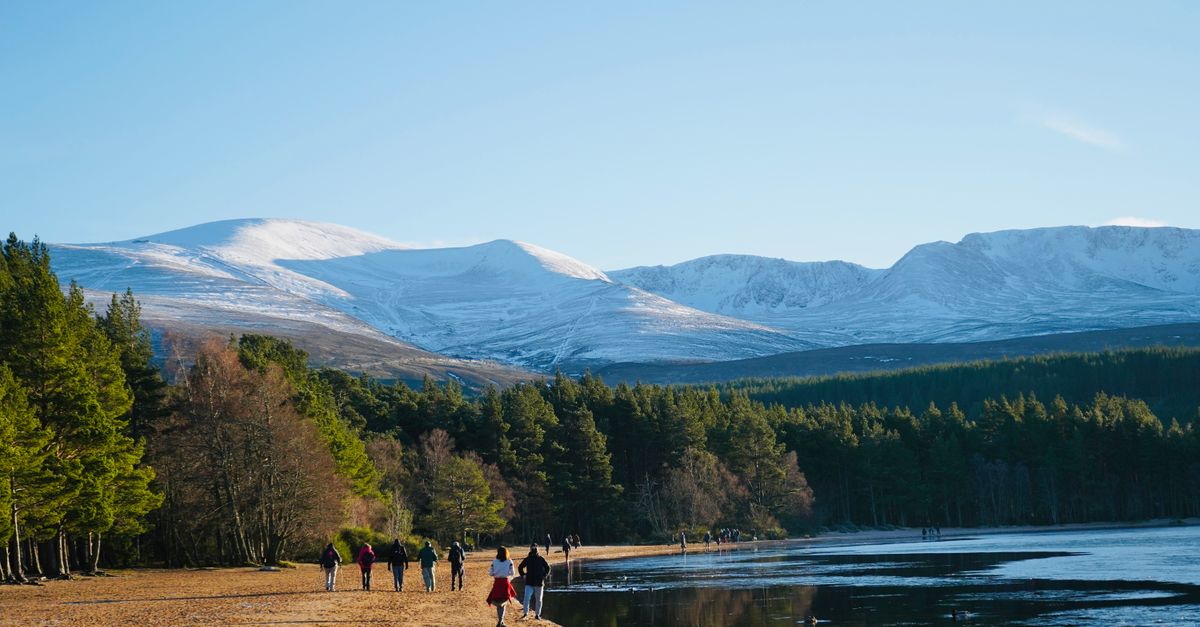
Glen Derry and Glen Lui, above Braemar. The walk in from Linn of Dee leads through pinewood into open glen with the Derry Cairngorm and Ben Macdui massif beyond. Good sheltered pitches, and Derry Lodge and the surrounding area is a traditional base.
The Lairig Ghru. The great pass splitting the massif between Aviemore and Braemar. Camping in the pass is spectacular and committing — it is high, stony, exposed and holds snow late. The Corrour Bothy sits beneath the Devil’s Point.
Loch Avon (Loch A’an) basin. Reached over the plateau or up from Glenmore, this is regarded by many as the finest mountain location in Britain — a deep glacial basin ringed by cliffs, with the Shelter Stone (a huge boulder with a howff beneath) at its head. It is remote and serious; the walk out in bad weather is long in every direction.
The high plateau — Ben Macdui, Cairn Gorm, Braeriach, Cairn Toul. Camping up here is possible and memorable, but this is arctic terrain. The plateau is the coldest, windiest place in Britain, holds snow patches into summer, and has almost no shelter. Only camp here with proper equipment and the experience to move confidently in whiteout.
Glenmore and Rothiemurchus. Beautiful pinewood close to Aviemore — and correspondingly busy, with some local camping restrictions near the loch shores and honeypots. Walk further in.
Bothies
The Cairngorms has a good scattering of Mountain Bothies Association shelters — Corrour, Hutchison Memorial Hut, Faindouran, Bob Scott’s and others. They are unlocked, free, and maintained by volunteers.
The Bothy Code matters: they are first-come and never bookable, so always carry a tent as backup. Take all rubbish out, leave the place cleaner than you found it, bring your own fuel if there is a stove, and be prepared to share cheerfully. Do not treat a bothy as a destination for a large group — that is the fastest way to lose them.
Cairngorm-Specific Hazards
This is a genuinely serious mountain environment and the main reasons people get into trouble here are specific.
The plateau is arctic. Sub-arctic vegetation, snow patches persisting through summer, and wind speeds regularly exceeding anywhere else in Britain. Conditions on the tops bear no relation to Aviemore in the valley.
Winter starts early and finishes late. Full winter conditions — ice axe, crampons and the skill to use them — routinely persist from October into May, and cornices on the corrie rims are lethal and often invisible from above. Check the Scottish Avalanche Information Service forecast for the Northern Cairngorms in season; avalanche risk here is real and regularly underestimated.
Navigation on the plateau is exceptionally difficult. It is broad, featureless and frequently in cloud, with few catching features. Whiteout navigation with map, compass and pacing is a genuine skill requirement, not a nicety.
Ticks and Lyme disease. The glens and heather carry ticks from roughly spring to autumn. Check thoroughly every evening, carry a tick remover, and take any expanding circular rash or subsequent flu-like illness to a doctor promptly, mentioning the bite.
Midges. From late May to September, still and damp conditions in the glens bring them in extraordinary numbers. A head net weighs nothing and is worth more than any repellent. Camp where there is a breeze.
Deer stalking. The stag season runs roughly July to late October and hind culling into February. Access rights are not suspended, but the Code asks you to take reasonable account of stalking; check Heading for the Scottish Hills or estate notices and choose your route accordingly.
Camping Responsibly Under the Code
- Small tent, small group, one or two nights, then move on.
- Well away from roads, buildings and historic structures.
- No fires. The Code specifically discourages open fires, and the Cairngorm pinewoods and heather moorland are highly vulnerable. Never light a fire on peat. Use a stove.
- Take out everything. Bothies and popular pitches suffer badly from abandoned rubbish and gear.
- Human waste at least 30m from water and paths, buried 15cm deep, with all paper carried out.
- Do not disturb ground-nesting birds. The Cairngorms holds capercaillie, dotterel, ptarmigan and other sensitive species — keep dogs on leads, especially April to July, and stay on paths in the pinewoods where capercaillie lek.
- Take account of stalking and estate management.
Practical Notes
- Maps. OS Explorer OL57 and OL58 cover the core. Carry paper, and a compass you can use.
- Water. Generally excellent from flowing burns high up, but filter or treat — there is deer and sheep grazing across the glens.
- Tent choice. Wind resistance is the priority. A geodesic or a well-guyed tunnel pitched into the wind, with pegs that hold in stony or peaty ground.
- Sleeping mat. Even in summer the ground is cold and often damp. An R-value of 4 or above is sensible on the plateau; the mat matters more than the bag for warmth from below.
- Register your intentions. Leave a route and return time with someone. Mobile coverage across most of the massif is absent.
- Getting there. Aviemore has a railway station, which makes a car-free trip genuinely practical from the north side.
FAQ
Is wild camping legal in the Cairngorms? Yes. The Land Reform (Scotland) Act 2003 established a statutory right of responsible access across most of Scotland that expressly includes wild camping, and it applies in the Cairngorms. That makes it a legal right rather than the landowner tolerance that operates in the Lake District, Eryri and the Peak District. The right is qualified by the Scottish Outdoor Access Code, which describes responsible camping as lightweight, small-scale and short-duration, carried in on foot and away from buildings and roads.
Do I need a permit to wild camp in the Cairngorms? No. The seasonal permit system people are usually thinking of belongs to Loch Lomond and the Trossachs National Park, which operates camping management byelaws in defined zones between roughly March and September. Those byelaws do not apply in the Cairngorms. It is a common and understandable confusion, since both are Scottish national parks — always check the rules for the specific park you are visiting rather than assuming they are uniform.
Where is the best place to wild camp in the Cairngorms? For a first trip, Glen Feshie or Glen Derry — sheltered, beautiful pinewood and glen with straightforward walking in from Linn of Dee or Feshiebridge. For something more committing, the Loch Avon basin is widely regarded as the finest mountain setting in Britain, and the Lairig Ghru is a classic. The high plateau around Ben Macdui and Braeriach is spectacular but arctic and extremely exposed, and is best left until you are confident in serious mountain conditions.
Can I sleep in a campervan under Scotland’s access rights? No. The statutory access right covers people arriving on foot, by bike, on horseback or by boat — it does not extend to motorised vehicles, so campervan overnighting is governed by ordinary parking and traffic law plus any local restrictions, not by the Land Reform Act. Several popular Highland locations have introduced restrictions in response to pressure from roadside van camping. Use a campsite or a designated aire, of which there are a growing number around the park.