Isle of Skye Wild Camping Map: Where the Access Right Actually Works
Wild camping on Skye under Scotland's statutory access right — where to pitch, the Cuillin's magnetic rock, midges, and the honeypots to avoid.
Isle of Skye Wild Camping Map: Where the Access Right Actually Works
Skye is the hardest island in Scotland to wild camp well. Not because the law is against you — it is emphatically not — but because the island receives more visitors than almost anywhere in the Highlands, and the obvious places are the worst places. This guide is based on desk research: the Scottish Outdoor Access Code, NatureScot and Highland Council guidance, Mountain Bothies Association material and Ordnance Survey mapping rather than first-hand testing. Below you will find the legal position, an area-by-area breakdown, the specific hazards the Cuillin present, and the honeypots where camping causes real damage.
Quick Reference
| Area | Character | Verdict |
|---|---|---|
| Glen Sligachan and Camasunary | Long, wild glen with bothy at the far end | The best introduction to Skye wild camping |
| Cuillin high corries | Serious mountain terrain, magnetic rock | Experienced parties only |
| Trotternish ridge (north of Storr) | Grassy ridge walking, big views | Excellent once past the car parks |
| Fairy Pools, Old Man of Storr, Quiraing car parks | Honeypots | Do not camp — go further in |
The Legal Position
The Land Reform (Scotland) Act 2003 created a statutory right of responsible access to most land and inland water in Scotland, and that right explicitly includes wild camping. It applies on Skye exactly as it applies on the mainland. This is a right, not a landowner’s tolerance, and it is the reason Scotland is genuinely different from England and Wales.
The right is defined by the Scottish Outdoor Access Code, which sets out what “responsible” means in practice. For camping the Code describes lightweight, small-scale and short-duration camping: a small tent, one or two nights, carried in on foot, pitched well away from buildings and roads.
The right does not extend to:
- Buildings and their immediate curtilage, gardens, and land where crops are growing
- Motorised camping. The access right is for people arriving on foot, by bike or by boat. Campervans and cars are governed by ordinary parking and traffic law, not by the access right — a distinction visitors to Skye get wrong constantly.
- Camping in a way that is not “responsible” — large groups, multiple nights in one spot, fires on peat, or pitching in a passing place or a working croft.
One point specific to Skye: the access right does not entitle you to park anywhere. A great deal of the friction on the island is about vehicles, not tents. Single-track roads with passing places are working infrastructure for residents, and blocking one is both antisocial and an offence.
Where to Camp
Glen Sligachan to Camasunary. The classic Skye wild camp. The path runs south from Sligachan between the Red and Black Cuillin, and after roughly seven miles opens out at Camasunary bay, looking across to Rùm. There is a Mountain Bothies Association bothy here — the newer building; the older lodge is private. Pitches on the machair behind the beach are sheltered and the setting is as good as Scotland offers. Being a walk-in, it self-selects for people who care.
Coruisk. Loch Coruisk sits in the heart of the Cuillin, ringed by the ridge. It is reached by the Bad Step from Camasunary, over the Druim Hain ridge, or by boat from Elgol. This is one of the great mountain locations in Britain and correspondingly committing — the walk out in bad weather is long in every direction, and the Bad Step is a genuine scramble above the sea that becomes serious when wet.
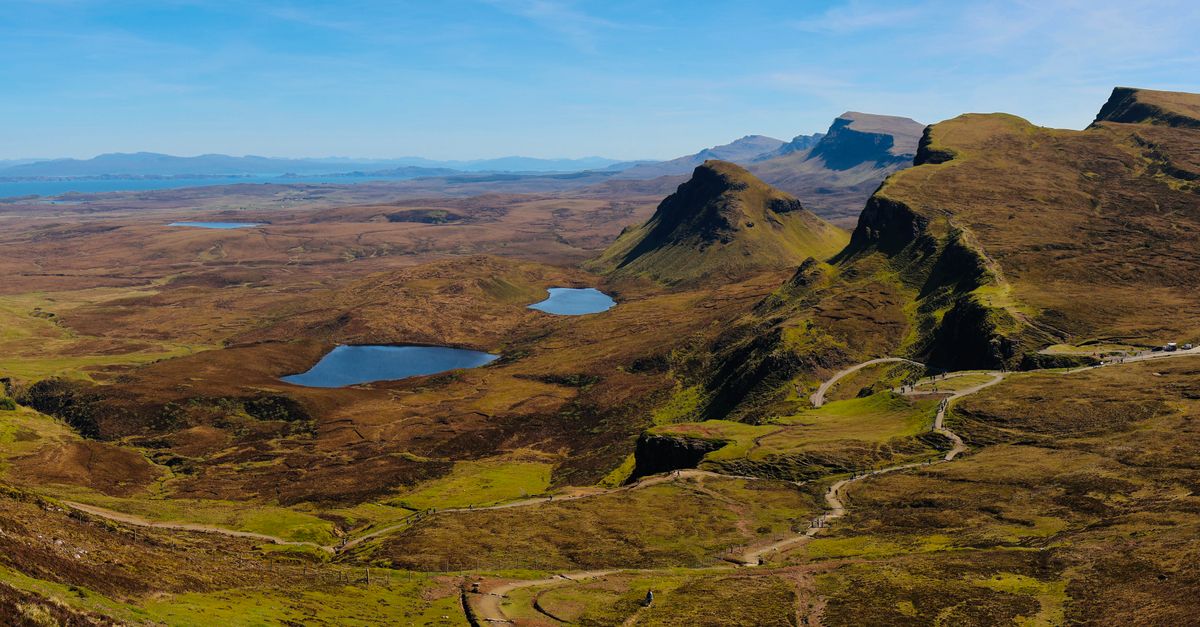
The Trotternish ridge. The long escarpment running north from the Storr to the Quiraing gives grassy, straightforward ridge walking with the Sound of Raasay on one side. Camp on the ridge itself rather than near the car parks and it is quiet even in August. Water is the limiting factor — the ridge crest is dry, so plan to carry it or drop to a burn.
Glen Brittle upper corries. Coire Lagan and Coire a’ Ghrunnda hold small lochans and flat ground beneath the highest Cuillin peaks. These are magnificent, high, and exposed. Coire a’ Ghrunnda in particular is a superb place to wake up. Treat both as serious mountain camps.
Sleat and the south. The quiet corner of the island. Lower, greener, more wooded, with far fewer people. It lacks the drama of the Cuillin but it is a pleasant place to camp without feeling you are part of a queue.
Where Not to Camp
This matters more on Skye than almost anywhere else, because the damage is visible.
The Fairy Pools. A paid car park, a short walk, and enormous numbers of visitors. There is no meaningful wild camping here and pitching by the pools is exactly the behaviour that has led to access pressure across the island.
Old Man of Storr and the Quiraing car parks. Both are busy, both have had significant erosion and human-waste problems, and both are surrounded by working croft land. Walk in properly or camp elsewhere.
Elgol and the road-ends generally. Small communities on single-track roads with limited parking. Arriving late and pitching next to the car is the classic Skye mistake.
The Cuillin: What Makes Them Different
The Black Cuillin are not ordinary British hills, and two features catch people out.
The rock is magnetic. The Cuillin gabbro and the basalt intrusions running through it are magnetic in many places, and compass bearings on the ridge are unreliable — sometimes wildly so. This is well documented and it is not a curiosity: navigation on the Cuillin has to be done by terrain, timing and memory rather than by trusting a needle. If your entire navigation plan is “take a bearing”, the Cuillin will break it.
The ridge is a climb, not a walk. The Cuillin main ridge is the only Munro round in Britain that requires rock climbing rather than scrambling. The Inaccessible Pinnacle on Sgùrr Dearg is a graded rock climb and cannot be walked; most people are roped for it. Sgùrr Alasdair, the highest point at around 992m, is reached by a steep scree and scramble approach. None of the high Cuillin should be treated as a hillwalk.
Gabbro is superbly grippy and correspondingly abrasive — it shreds rope, gloves and trouser fabric far faster than most British rock.
Midges, Weather and Water
Midges. Skye is one of the worst places in Britain for them. The season runs roughly May to September, peaking in July and August, and they are at their worst in still, damp, overcast conditions at dawn and dusk. Sheltered glens and lochsides are the bad ground. A breeze, higher and more exposed pitches, a head net and a repellent are the practical answers — pitching in the calmest, prettiest, most sheltered spot you can find is precisely the wrong instinct here.
Ticks. Bracken and long grass, particularly in the glens, carry ticks and the associated Lyme disease risk. Check thoroughly, and carry a tick remover.
Weather. Skye is an Atlantic island and the Cuillin generate their own weather. Clear mornings turn to hill fog quickly, and the ridge is regularly in cloud when the coast is sunny. Rainfall is high year-round.
Water. Running burn water above habitation is generally the pragmatic choice, taken from moving water rather than standing pools, and away from the ground where sheep and deer concentrate. Filtering or treating is the cautious option and the sensible one lower down.
Responsibilities the Right Carries
The access right in Scotland comes bundled with obligations, and on Skye they are the difference between the right surviving in its current form and not.
- Toilet waste. Bury it properly, at least 30m from water, or carry it out. On busy ground, carrying out is the honest answer.
- No open fires on peat or near woodland. Peat can burn underground for weeks. Use a stove.
- One or two nights maximum in a spot, then move on. Repeated pitching kills vegetation and is the single most visible cause of damage.
- Take everything out, including food waste. Buried tins and abandoned tents are a real and growing problem on Skye.
- Small groups. The Code is written around a small tent, not an encampment.
FAQ
Is wild camping legal on the Isle of Skye? Yes. Skye is in Scotland, so the Land Reform (Scotland) Act 2003 applies and wild camping is a statutory right when carried out responsibly under the Scottish Outdoor Access Code. That means lightweight, small-scale, short-duration camping away from roads and buildings. The right does not cover campervans or sleeping in a vehicle, which are matters of parking law.
Can I camp at the Fairy Pools or the Old Man of Storr? Legally you are not in a special exclusion zone, but in practice you should not. Both are heavily visited honeypots close to car parks and croft land, with existing erosion and sanitation problems. Camping there is the behaviour most likely to provoke formal restrictions. Walk further in.
Do I need a permit to wild camp on Skye? No. Skye has no camping byelaws. The permit system people have heard about applies to seasonal camping management zones in Loch Lomond and the Trossachs National Park, which is a different park several hours away. Scottish rules are not uniform, so check the specific area.
When is the best time to avoid midges on Skye? Outside roughly May to September. April, early May and October give the best combination of usable daylight and low midge activity. If you go in high summer, camp higher and more exposed where there is a breeze, and carry a head net — the sheltered lochside pitches are where midges are worst.