Can You Use a Camping Stove Indoors? UK Camping Safety Guide 2026
Safety bodies advise you should never use a camping stove indoors in a sealed tent or van because of carbon monoxide and fire risk.
Can You Use a Camping Stove Indoors? UK Camping Safety Guide 2026
It is one of the most common questions UK campers ask, especially when the weather turns and cooking outside feels miserable. The short version is that fuel-burning camping stoves are designed for the open air, and using one inside a sealed tent, awning or campervan can be deadly. This guide draws on published guidance from UK safety bodies, the NHS and stove manufacturers to explain the carbon monoxide and fire risks, and to set out the genuinely safer ways to get a hot meal.
Quick Answer
- No — you should never use a fuel-burning camping stove inside a sealed or enclosed space such as the inner sleeping compartment of a tent, a zipped-up awning, a small porch, a caravan or a campervan.
- The two big dangers are carbon monoxide (CO) poisoning and fire, and CO is the one that kills without warning because you cannot see, smell or taste it.
- The safest approach is to cook outside, in the open air, away from tent fabric. UK camping guidance is consistent that it is always safer to cook outside your tent.
- If you must cook under any cover, only do so in a large, actively ventilated space with the flame in view — never while dozing, sleeping or with the doors zipped shut.
- Fuel-free electric options (an induction hob on electric hook-up, flameless ration heaters, or an electric heated lunch box) are the safest way to eat hot food under cover, because they produce no combustion fumes.
- A portable carbon monoxide alarm certified to BS EN 50291-2 is a sensible backup — but it is a last line of defence, not permission to cook in an enclosed space.
The Carbon Monoxide Risk: The Silent Killer
Carbon monoxide is the single most important reason not to run a camping stove in an enclosed space. As the British Mountaineering Council puts it, any stove that burns fuel produces carbon monoxide. In a poorly ventilated tent, awning or bothy, that gas can build up to dangerous levels very quickly.
What makes CO so dangerous is that your body cannot detect it. According to the NHS, carbon monoxide is colourless, odourless and tasteless, so there is no smell of gas, no visible smoke and no warning taste to tell you something is wrong. It is often called the silent killer for exactly this reason. CO is produced whenever a fuel does not burn completely — and incomplete combustion becomes far more likely in a confined space where oxygen is being used up, or when a stove is not burning cleanly.
Carbon monoxide poisoning is a serious public-health issue in the UK. Camping safety guidance reports that around 200 people a year are treated in hospital for carbon monoxide poisoning in the UK, and roughly 40 of those cases prove fatal — figures that cover homes and leisure settings alike. Tragically, campsites are part of that picture: there have been widely reported UK cases of campers dying after a smouldering barbecue or a fuel-burning appliance was brought inside a tent or porch overnight.
Symptoms to watch for
The NHS lists the main symptoms of carbon monoxide poisoning as:
- Headache — often the first and most common sign
- Dizziness and weakness
- Nausea or being sick, and stomach pain
- Breathlessness and confusion
- Drowsiness, collapse and loss of consciousness at higher exposures
A telltale pattern is that symptoms can feel like flu but without a high temperature, and they often ease when you leave the tent and get into fresh air, then return when you go back in. If you or anyone in your group feels unwell while a stove is burning, treat it as a carbon monoxide emergency: turn off the appliance if you safely can, get everyone out into fresh air immediately, and call 999 for an ambulance if anyone is seriously affected. NHS advice is not to drive yourself to hospital — ask someone else to drive, or call for help.
Why Tents, Awnings and Campervans Are So Dangerous
It is tempting to think a big porch or a campervan is “roomy enough” to be safe. It is not, and there are three reasons why.
First, enclosed spaces trap carbon monoxide. A tent, awning or van has a small internal air volume and limited airflow, so CO from a stove concentrates far faster than it would outdoors. Guidance for caravans and motorhomes is blunt: never use a fuel-burning appliance to heat your sleeping space, and never sleep with a gas hob, stove or heater running. People are especially vulnerable asleep, because the early symptoms of CO poisoning pass unnoticed.
Second, tents and awnings burn. Modern tent fabrics can catch fire and collapse quickly, and a knocked-over liquid-fuel or spirit stove can spread flame faster than you can react. In a zipped tent, your escape route is a fabric door and a couple of zips — a poor position to be in with a fire between you and the exit.
Third, a “porch” or “vestibule” is still an enclosed space. Cooking in the tent porch is one of the most common risky habits, but a porch offers little real ventilation, sits directly against flammable fabric, and lets CO drift straight into the sleeping area. Awnings and porches count as enclosed spaces for the purposes of carbon monoxide risk, and RoSPA and camping clubs advise never bringing a barbecue or fuel-burning stove inside them. The same applies to campervans: cooking is possible with proper fixed ventilation and roof vents, but manufacturers and safety bodies stress opening a window or door, never blocking air vents, and never leaving a hob burning to warm the van.
Comparing Stove and Fuel Types
Different fuels carry different risks, but the headline point from safety guidance is that no fuel-burning stove is truly safe to use in a sealed space. The table below summarises how the common types compare for indoor or enclosed-space use.
| Stove / fuel type | Examples | Main hazards in an enclosed space | Indoor-use risk |
|---|---|---|---|
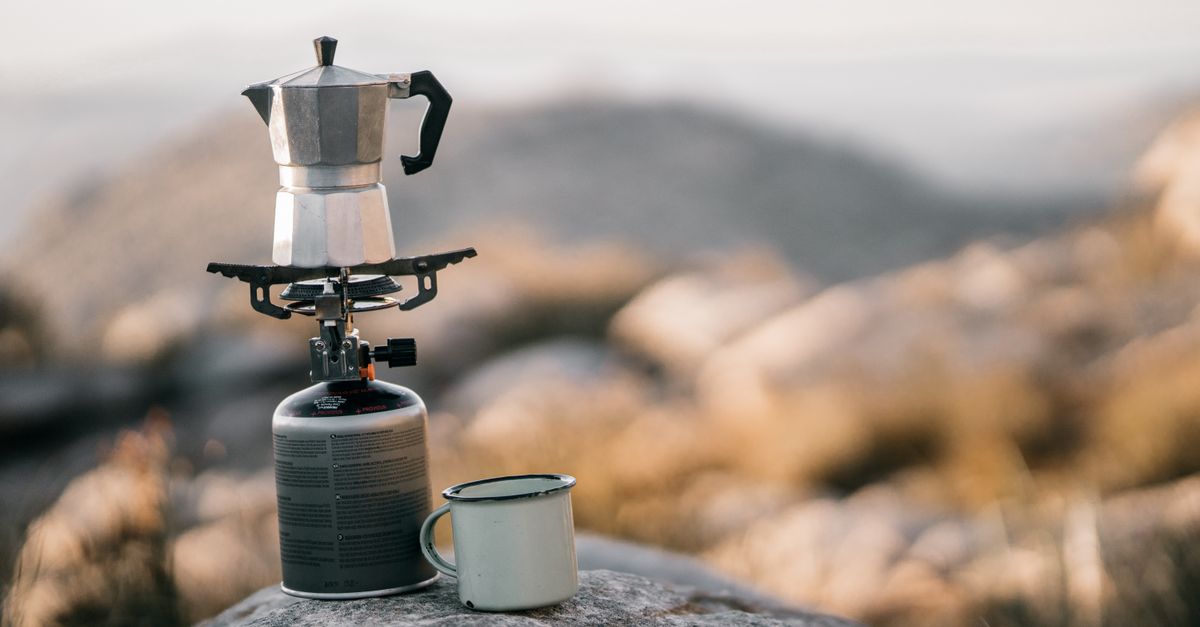
| Gas (butane / propane) | Screw-on canister stoves, resealable cartridge stoves, portable “bistro” stoves | Produces carbon monoxide; fire and burns; canister and connection leaks | High — generally the most controllable flame, but still dangerous when enclosed |
| Liquid fuel (petrol / paraffin / white gas) | Multi-fuel expedition stoves, Coleman-type stoves | Priming flare-ups, less flame control, higher chance of incomplete combustion and CO | Very high — safety guidance rates these among the riskiest indoors |
| Methylated spirits (meths) | Trangia and similar spirit burners | Near-invisible flame, spill and fireball risk, CO and soot from incomplete combustion; toxic fuel | Very high — Trangia itself advises using the burner only in a well-ventilated place |
| Solid fuel | Hexamine / Esbit tablets, gel burners | Burning tablets can release formaldehyde, ammonia and other toxic fumes as well as CO | Very high — the fumes are toxic, so ventilation is essential |
A few points are worth spelling out. Gas stoves are often described as the “safer” choice, but that is only relative — they still produce carbon monoxide and still require ventilation and care. Liquid-fuel and spirit stoves are harder to control, with less predictable flames and a real risk of spills igniting. Meths burns with a flame that can be almost invisible in daylight, which makes accidental burns and knock-overs more likely, and the fuel is toxic and highly flammable. Solid-fuel tablets such as hexamine give off genuinely nasty combustion products — Esbit’s own safety information notes that burning can create formaldehyde, ammonia and other harmful fumes — so they should never be burned in an unventilated space.
Safe Practices If You Cook Anywhere Near Your Tent
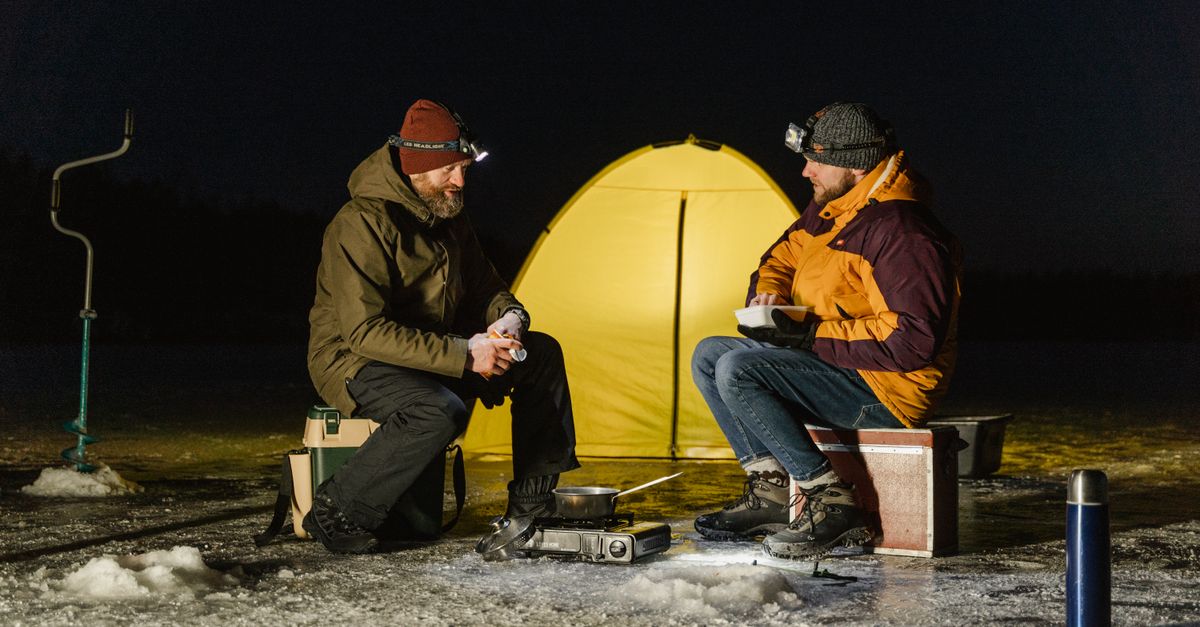
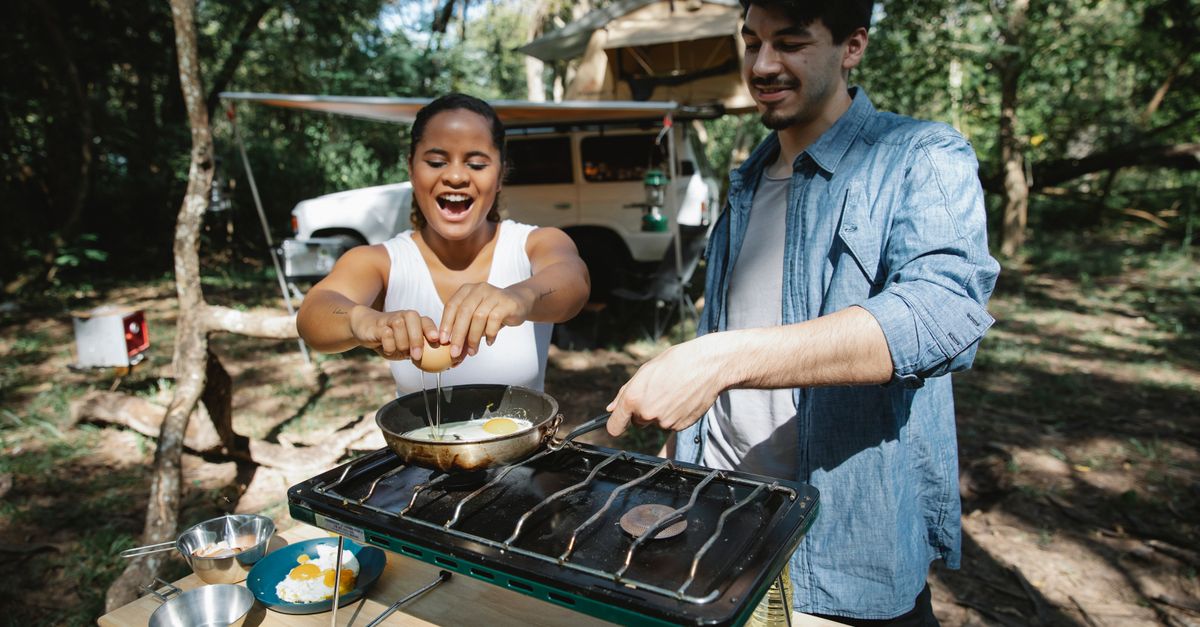
The gold standard is simple: cook outside, in the open air, on stable ground, well away from the tent, awning and anything flammable. If circumstances mean you are cooking under cover of any kind, follow the precautions that UK safety bodies and stove makers recommend.
- Ventilate aggressively. Open doors and vents to create genuine cross-flow air, not just a cracked zip. A single small gap is not enough to clear carbon monoxide.
- Never leave a stove unattended, and never cook while tired or lying down. Keep the flame in view at all times.
- Never use a stove or heater to warm a tent or van, and never sleep with one running. This is the single most important rule.
- Keep well clear of fabric. Position the stove away from walls, groundsheets, guy lines and anything that can catch.
- Treat barbecues with the same caution. Even a “cooling” disposable barbecue continues to give off carbon monoxide for hours. Never bring a barbecue into a tent, porch, awning or van, even in the rain, and store it outside in a ventilated spot once it is fully out.
- Carry a portable carbon monoxide alarm. For camping, caravanning and boating, look for one certified to BS EN 50291-2 — the standard that adds vibration and temperature testing for recreational use. Well-known options include the Kidde K7DCO travel/leisure alarm and caravan-and-motorhome models from FireAngel (such as the FA331 range). Guidance for leisure vehicles suggests placing the alarm roughly 1–3 metres horizontally from any fuel-burning appliance, and having cover in the sleeping area. Remember that an alarm is a backup that warns you when something has already gone wrong — it does not make it safe to cook in a sealed space.
Safer Alternatives: Hot Food Without an Open Flame
The good news is that you do not need a naked flame indoors at all. Several fuel-free options let you eat hot food under cover without producing combustion fumes.
Electric induction hobs on mains hook-up. If your pitch has an electric hook-up, a low-wattage induction hob is one of the safest ways to cook under cover, because it produces no flame, no fuel and no carbon monoxide, and many have cool-touch surfaces and pan-detection that only heat when cookware is present. Models made for camping include the Outdoor Revolution Low Wattage Induction Hob range (with single and double versions) and low-watt hobs from brands such as Leisurewize. The key is to match the wattage to your hook-up allowance: many UK pitches are limited to 6A, 10A or 16A, so a lower-wattage single hob is a safer bet than a power-hungry double on a small supply. Expect these to cost, very roughly, from around £30 to £90 depending on model and whether it is single or double — prices vary between retailers, so check current listings.
Flameless ration heaters. These are water-activated chemical heaters — the type issued with military ration packs — that warm a sealed food pouch without any flame. UK-available examples include the British Army-style Hot Pack flameless ration heater. They are convenient and flame-free, though the reaction does give off some gas and heat, so it is still sensible to use them with ventilation and follow the pack instructions. Individual heaters are typically only a few pounds each, but prices vary.
Electric heated lunch boxes. Battery, USB or mains-powered heated lunch boxes such as the LunchEAZE, HeatsBox and Bentgo Heat warm a pre-prepared meal over 15–45 minutes with no flame at all — handy in an awning or van with power. These commonly sell for somewhere around £40 to £70, again depending on model, so treat that as an indicative range rather than a fixed price.
Other flame-free options include an electric kettle or small low-wattage appliance on hook-up for hot drinks and instant meals, and a vacuum flask of boiling water prepared safely outdoors and used later inside. None of these produce carbon monoxide, which is exactly why they are the sensible choice when you genuinely need to eat under cover.
Frequently Asked Questions
Is it safe to cook in my tent porch or vestibule?
No — a porch or vestibule is still an enclosed space pressed right against flammable fabric, and it offers very little real ventilation. Carbon monoxide can build up in a porch and drift straight into your sleeping area, and a knocked-over stove can set light to the tent between you and the exit. UK camping guidance is consistent that it is always safer to cook fully outside. If wind or rain is the problem, use a proper windbreak outdoors, or switch to a flame-free electric option rather than moving a burning stove under cover.
Can I use a gas stove inside my campervan or motorhome?
Only with real caution. Fixed cooking appliances in campervans and motorhomes are designed to be used with proper ventilation — a window or roof vent open, air vents never blocked, and the flame never left unattended. Crucially, you must never sleep with a hob or gas appliance running, and never use the hob to heat the van. Fit a carbon monoxide alarm certified to BS EN 50291-2, service gas appliances properly, and open up for airflow whenever you cook. When in doubt, cooking outside remains the safest option.
Do I really need a carbon monoxide alarm when camping?
A portable CO alarm is strongly worth having, because carbon monoxide gives no warning your senses can detect — an alarm may be the only thing that alerts you in time. Choose one certified to BS EN 50291-2 for travel, caravanning and boating use, such as the Kidde K7DCO or a FireAngel caravan/motorhome model, and follow the placement guidance. That said, an alarm is a safety net, not a green light: the goal is to avoid producing carbon monoxide in an enclosed space in the first place, and the alarm is there to catch mistakes and unexpected sources such as neighbouring barbecues.
What is the safest way to cook if the weather is bad?
Reach for a fuel-free electric method rather than bringing a flame under cover. On a pitch with electric hook-up, a low-wattage induction hob produces no flame and no carbon monoxide, making it far safer for use in an awning or van. Flameless ration heaters and electric heated lunch boxes are also excellent bad-weather options. If you have no power, set up outside under a robust shelter or windbreak with the stove in the open air — never move a burning stove into a sealed tent to escape the rain.