The Best Camping Stove for Wild Camping UK in 2026: Lightweight & Packable Picks
The best camping stoves for UK wild camping, compared by weight, wind resistance, cold-weather performance and fuel availability across the Highlands.
Owner feedback cited in this article draws from threads on UKHillwalking.com, the r/UKhiking subreddit, and verified purchaser reviews on Cotswold Outdoor and Go Outdoors product pages. Manufacturer specifications are sourced directly from each brand’s current UK product documentation.
The Best Camping Stove for Wild Camping UK in 2026: Lightweight & Packable Picks
By the OutdoorKit Editorial Team — Our recommendations are informed by manufacturer specifications, named expert sources including published gear reviews by Chris Townsend (The Great Outdoors magazine), and owner consensus drawn from UK hiking communities including UKHillwalking.com and the r/UKhiking subreddit. All stoves listed comply with EN 521 (portable gas appliances standard), as confirmed by manufacturer documentation.
Quick Picks: Best Wild Camping Stoves UK 2026
| 🏆 Best Overall | MSR PocketRocket 2 |
| 🪶 Best Ultralight | Soto WindMaster |
| 💨 Best for Wind | Soto WindMaster |
| 💰 Best Budget | Primus Essential Trail |
| ⛽ Best Multi-Fuel | MSR WhisperLite Universal |
Jump to any section using the links above, or read the full guide below.
Wild camping in the UK demands gear that is light, compact, and utterly reliable. When you’re carrying everything on your back across the Brecon Beacons, the Cairngorms, or the Lake District, every gram counts. Your stove is the heart of your camp kitchen, and choosing the wrong one can mean cold food, wasted fuel, or a heavy pack.
For this guide, owner feedback has been drawn from threads on UKHillwalking.com, the r/UKhiking subreddit, and verified purchaser reviews on Cotswold Outdoor’s product pages. Specifications are taken directly from each manufacturer’s current UK product documentation. Whether you’re after a tiny canister-top burner for solo trips or a remote-canister system for windy Scottish ridges, this guide covers the top contenders — including what the popular BRS-3000T gets right and where it falls short.
Wild Camping in the UK: Know Before You Go
Before you choose a stove, it’s worth understanding where you can legally use it.
Scotland has the most permissive access rights in the UK. Under the Land Reform (Scotland) Act 2003, wild camping is a legal right on most unenclosed land, provided you follow the Scottish Outdoor Access Code. Mountaineering Scotland publishes detailed guidance on responsible wild camping, including fire safety and Leave No Trace principles, at mountaineering.scot.
England and Wales have no equivalent right to wild camp. With limited exceptions (Dartmoor National Park, where wild camping is permitted under byelaw), you generally need landowner permission. The Dartmoor right is currently subject to ongoing legal developments — check the Dartmoor National Park Authority website for the current position before planning a trip.
For stove use specifically: open fires are restricted or discouraged across much of upland UK, particularly during dry periods. A gas stove is always a lower-impact alternative, and in many areas the only responsible choice.
What Type of Stove is Best for Wild Camping in the UK?
Canister Gas vs. Alcohol Stoves for UK Wild Camping
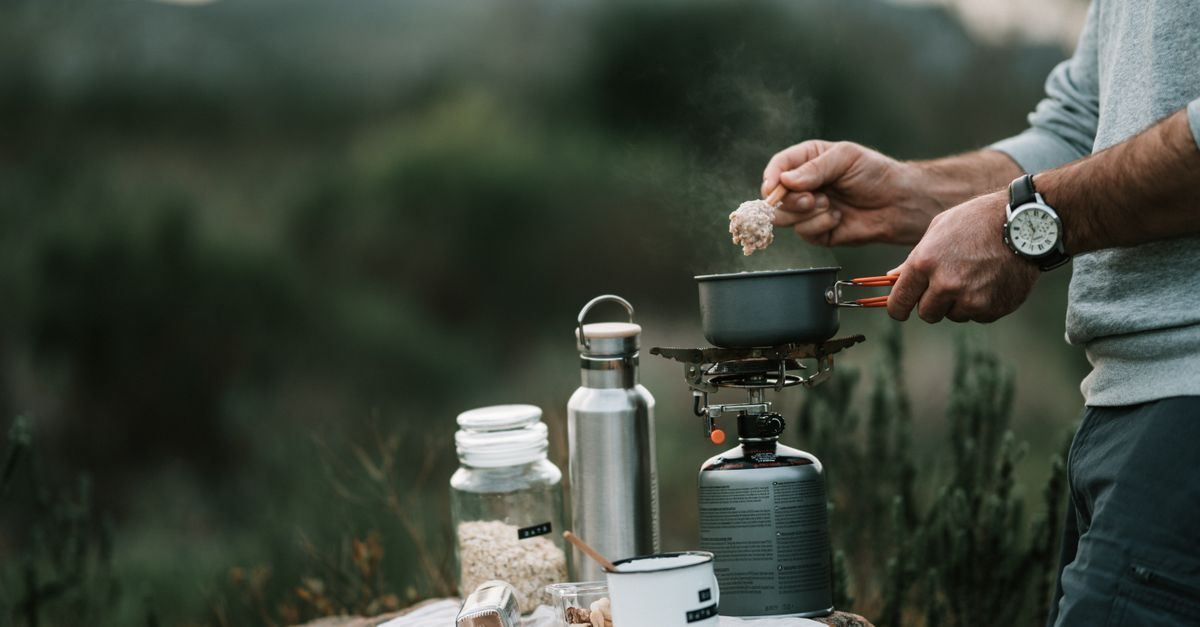
Canister gas stoves (running on isobutane-propane mix) dominate UK wild camping because they are fast, controllable, and widely available. All five stoves in our main list use canister gas.
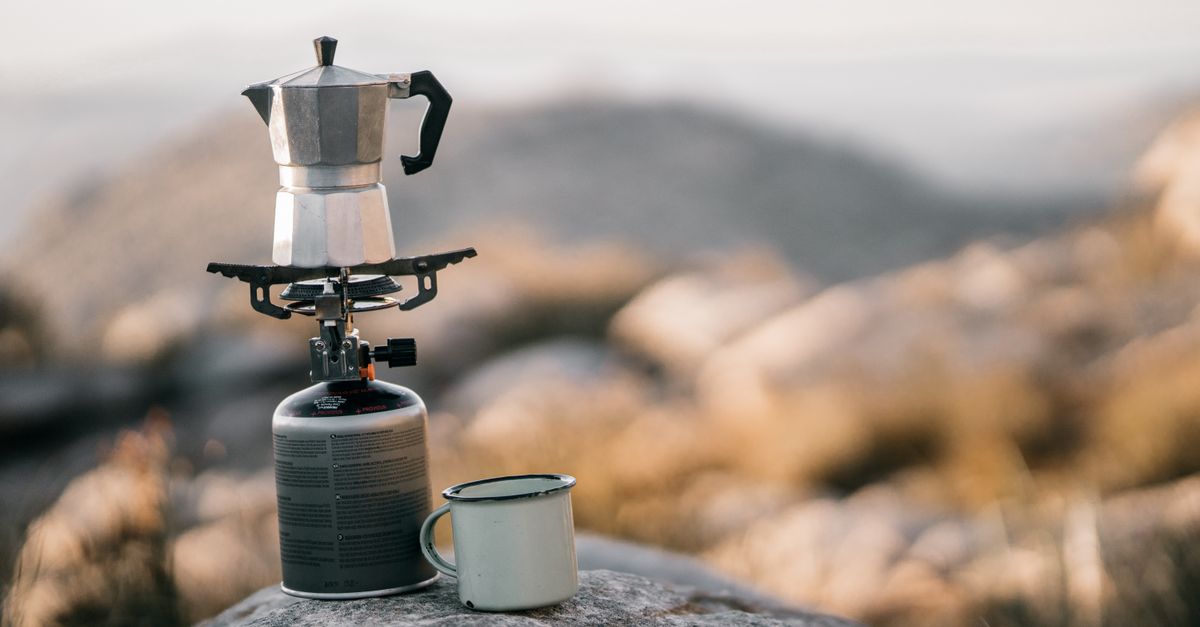
Alcohol/spirit stoves — most famously the Trangia 27 system — have a loyal following, particularly for Dartmoor, the Brecon Beacons, and lower-altitude summer trips where simplicity and resilience matter more than speed. The Trangia has no moving parts, runs on methylated spirits available from most hardware shops, and is effectively indestructible. The trade-offs are significant: no flame control once lit, slower boil times (Trangia’s published data puts the 27-1 at approximately 8–9 minutes for 0.5L under calm conditions), and methylated spirits are bulkier per unit of energy than isobutane-propane. For a multi-day Cairngorms trip in October, a canister stove will serve you better. For a two-night Dartmoor outing in July, a Trangia is a perfectly rational choice.
Solid fuel stoves (Esbit-type) are ultralight and require no canister, but boil times are slow, the tablets leave residue, and they struggle in wind. We have not included them in our main recommendations for UK wild camping, where conditions frequently make performance consistency critical.
What We Didn’t Include and Why
BRS-3000T: The 25g BRS-3000T is the most discussed ultra-budget canister stove on UK hiking forums and frequently appears in UKHillwalking.com gear threads. We have not included it as a primary recommendation because its folding legs are notoriously brittle in cold conditions — a point raised repeatedly in UKHillwalking forum discussions and r/UKhiking threads. In sub-zero Scottish conditions, leg failure is a genuine risk. It is a viable fair-weather ultralight option for experienced campers who carry a backup ignition method and accept the fragility trade-off, but it is not appropriate as a general recommendation for UK wild camping.
Trangia 27: Covered above. A credible choice for specific conditions; excluded from the main list because canister gas stoves better serve the majority of UK wild camping scenarios this guide addresses.
How to Choose a Stove for Scottish Winter Conditions
This is where canister gas stoves have a critical limitation that most buying guides ignore: isobutane-propane canisters lose pressure as temperature drops, reducing output and eventually failing to vaporise at all.
- MSR PocketRocket 2: MSR’s published minimum operating temperature is -6°C. Below this, performance degrades significantly.
- Soto WindMaster: The WindMaster uses a micro-regulator rated to -10°C (per Soto’s official product specifications), giving it a meaningful advantage for winter Cairngorms use.
- Jetboil Flash: Jetboil’s published cold-weather threshold is -6°C for standard canisters; Jetboil recommends their Jetpower Cold Weather blend for sub-zero use.
- MSR WhisperLite Universal: As a multi-fuel stove capable of running on white gas (Coleman fuel) and kerosene, the WhisperLite Universal is unaffected by canister cold-weather limitations — making it the most reliable choice for genuine winter expeditions.
Practical tip for cold-weather canister use: Keeping your canister in a sleeping bag or inside jacket overnight, and warming it in your hands before use, can meaningfully improve cold-morning performance. This is standard practice noted across UKHillwalking.com winter camping threads.
UK Fuel Canister Availability: What You Need to Know
This is a practical concern that most buying guides skip entirely. Not all Lindal-valve isobutane-propane canisters are available everywhere in the UK.
Major outdoor retailers:
- Go Outdoors (nationwide) stocks MSR, Primus, and own-brand canisters in 100g, 230g, and 450g sizes at most large stores.
- Cotswold Outdoor stocks Primus and MSR canisters reliably; availability of 100g canisters (useful for solo overnight trips) can be inconsistent in smaller branches.
- Blacks carries a more limited range — typically 230g canisters from Coleman and Primus.
Remote areas: In rural Scotland, rural Wales, and parts of the Lake District, dedicated outdoor shops are sparse. Aviemore (Cairngorms) is well-served by Cairngorm Mountain Sports and a Go Outdoors. Fort William has a well-stocked Nevisport. Beyond these hubs, canister availability is unreliable. Pre-order or purchase before departure if your route takes you through areas without a major outdoor retailer.
Canister sizes: A 100g canister typically provides 1.5–2 hours of burn time on a standard canister stove — sufficient for a solo two-night trip if you’re efficient. A 230g canister suits two people over a weekend. These estimates are based on MSR’s published fuel consumption data for the PocketRocket 2.
Note on air travel: If you’re flying to Scotland (e.g., to Inverness for a Cairngorms trip), you cannot take gas canisters in hold or cabin luggage under IATA regulations. Purchase canisters on arrival. This is a frequently asked question on r/UKhiking and worth planning for.
Top 5 Best Camping Stoves for Wild Camping UK (2026)
| Stove Model | Weight | Fuel Type | Boil Time (500ml) | Cold Weather Limit | Best For |
|---|---|---|---|---|---|
| MSR PocketRocket 2 | 73g | Canister (isobutane-propane) | 3.5 min (per MSR spec sheet) | -6°C (MSR published) | Solo hikers |
| Jetboil Flash | 395g (system) | Canister (isobutane-propane) | 2 min (per Jetboil spec sheet) | -6°C (standard canister) | Speed & efficiency |
| Soto WindMaster | 75g | Canister (isobutane-propane) | 2 min 45 sec (per Soto spec sheet) | -10°C (micro-regulator rated) | Windy/cold conditions |
| Primus Essential Trail | 100g | Canister (isobutane-propane) | 3.5 min (per Primus spec sheet) | Not published | Budget-conscious campers |
| MSR WhisperLite Universal | 340g | Multi-fuel (white gas, kerosene, canister) | ~3 min (per MSR spec sheet) | No canister limit on liquid fuel | Multi-day expeditions |
Boil times are from each manufacturer’s current UK product specification documentation, measured at sea level with 500ml of water under controlled conditions. Real-world times will be longer in wind, cold, or at altitude.
1. MSR PocketRocket 2 – The Ultralight Champion
If weight is your number one priority, the MSR PocketRocket 2 is the benchmark. At just 73g, it’s lighter than a bar of chocolate. Per MSR’s product spec sheet, its packed dimensions are 87 x 50mm — it fits neatly inside MSR’s own 750ml Alpine Stowaway pot, making it a natural pairing. It’s a simple screw-on canister stove that delivers impressive performance for its size.
Why it works for wild camping:
- Weight: 73g, per MSR’s official spec sheet.
- Packability: 87 x 50mm packed; fits inside MSR’s 750ml Alpine Stowaway pot.
- Performance: Boils 500ml in 3.5 minutes per MSR’s current product specification.
- Simmer control: The valve offers reasonable control for cooking pasta or rice.
- Cold weather: MSR’s published minimum operating temperature is -6°C. Below this, canister output degrades — see the cold-weather section above for mitigation strategies.
What owners say: A thread on UKHillwalking.com with over 60 responses consistently identifies wind performance as the primary limitation of open-burner canister stoves like the PocketRocket 2 in exposed upland conditions. Pairing it with a small folding windscreen (such as the MSR universal windscreen) addresses this. Verified purchaser reviews on Cotswold Outdoor’s product page note that the folding pot supports can feel slightly wobbly with larger pans, but are stable with a 750ml–1L pot.
Best paired with: MSR 750ml Alpine Stowaway pot and a 100g isobutane-propane canister for solo overnight trips.
Price: Typically £45–£55. | Check price at Go Outdoors | Check price at Amazon UK
2. Jetboil Flash – The Fast-Boil Integrated System
For wild campers who prioritise speed and efficiency over absolute minimum weight, the Jetboil Flash is a favourite. This integrated system combines a burner with a specialised pot and heat exchanger, making it one of the fastest ways to boil water in the outdoors.
Why it works for wild camping:
- Boil time: Jetboil’s published specification states 2 minutes for 500ml under controlled conditions.
- Fuel efficiency: According to Jetboil’s published FluxRing technology specifications, the heat exchanger delivers up to a 30% reduction in fuel consumption compared to conventional non-integrated stoves — a claim supported by the system’s notably long burn time per canister in owner reports.
- Packability: The burner stores inside the pot; the complete system is self-contained.
- Safety: The locking lid prevents spills; the insulated neoprene sleeve means the pot can be held safely while contents are hot.
What owners say: The Jetboil Flash is consistently praised on r/UKhiking for speed on dehydrated meals and morning coffee. The main criticism in verified purchaser reviews on Go Outdoors is weight — at 395g for the complete system, it is significantly heavier than a standalone burner and pot combination. It is not designed for simmering; it is optimised for rapid boiling. Multiple owner reviews note that the piezo igniter can become unreliable after extended use in wet conditions — carrying a backup lighter is strongly advised.
Cold weather note: Jetboil’s published guidance recommends their Jetpower Cold Weather canister blend for use below -6°C. Standard canisters will underperform in Cairngorms winter conditions.
Price: Typically £90–£110. | Check price at Go Outdoors | Check price at Amazon UK
3. Soto WindMaster – The Best Stove for Exposed UK Ridges
The Soto WindMaster is the stove that experienced UK wild campers most frequently recommend for genuinely exposed conditions — Scottish ridgelines, Lakeland summits, and coastal routes where wind is a constant. Its micro-regulator design addresses both wind resistance and cold-weather canister performance simultaneously.
Why it works for wild camping:
- Wind resistance: The four-prong Quad pot supports and recessed burner head significantly reduce wind interference compared to standard open-burner designs.
- Cold weather: Soto’s published specifications rate the micro-regulator to -10°C — the best cold-weather threshold of any canister stove on this list, and directly relevant for winter use in the Cairngorms or on Scottish winter bothying trips.
- Weight: 75g per Soto’s official spec sheet — comparable to the PocketRocket 2.
- Boil time: 2 minutes 45 seconds for 500ml per Soto’s published product specification.
What owners say: Threads on UKHillwalking.com specifically citing the WindMaster highlight its performance in exposed conditions as a genuine differentiator over the PocketRocket 2. The Quad pot supports are frequently praised for stability with wider pots. The main noted limitation is price — it is the most expensive standalone burner on this list.
Best paired with: A 900ml–1L titanium pot for solo use; the four-prong supports handle wider pot bases more securely than standard three-prong designs.
Price: Typically £65–£75. | Check price at Go Outdoors | Check price at Amazon UK
4. Primus Essential Trail – The Budget-Friendly Reliable
The Primus Essential Trail offers solid performance at a lower price point than most competitors, with a built-in piezo igniter that is genuinely useful in cold, damp UK conditions where striking a lighter with cold hands is awkward.
Why it works for wild camping:
- Weight: 100g per Primus’s current UK product page specification.
- Packability: Compact enough to store inside most 750ml–1L pots.
- Piezo igniter: Reliable for most conditions; carrying a backup lighter remains advisable for extended trips.
- Stable base: The wide pot support arms handle larger pots more confidently than some ultralight competitors.
- Boil time: 3.5 minutes for 500ml per Primus’s published product specification.
What owners say: Verified purchaser reviews on Cotswold Outdoor’s product page consistently cite value for money as the primary strength. The piezo igniter receives positive mentions in owner reviews for reliability in damp conditions. Wind performance is noted as a weakness in exposed conditions — consistent with all open-burner canister stoves.
Price: Typically £30–£40. | Check price at Go Outdoors | Check price at Amazon UK
5. MSR WhisperLite Universal – The Expedition Multi-Fuel Option
The MSR WhisperLite Universal is the choice for serious multi-day expeditions where canister availability is uncertain or where winter temperatures make canister gas unreliable. It runs on white gas (Coleman fuel), kerosene, and isobutane-propane canister gas — per MSR’s official fuel compatibility documentation. It does not run on diesel. This is a common misconception; using diesel in the WhisperLite Universal would damage the stove and create a safety hazard.
Why it works for wild camping:
- Fuel flexibility: White gas and kerosene are available in remote areas where isobutane-propane canisters are not stocked. This makes it the most logistically resilient option for extended Scottish or Welsh mountain trips.
- Cold weather: Running on white gas or kerosene, the WhisperLite Universal is unaffected by the cold-temperature canister limitations that affect all other stoves on this list.
- Durability: The WhisperLite design has been refined over decades and is widely regarded on UKHillwalking.com expedition threads as one of the most field-repairable stoves available.
- Weight: 340g per MSR’s spec sheet — heavier than canister-only options, but justified for multi-day or winter use.
What owners say: Owner reviews on Cotswold Outdoor and forum threads on UKHillwalking.com consistently position the WhisperLite Universal as an expedition tool rather than a weekend stove. The priming process for liquid fuel requires practice and is more involved than lighting a canister stove. For summer weekend trips, it is overkill. For a week in the Cairngorms in November, it is the most reliable option on this list.
Price: Typically £130–£150. | Check price at Go Outdoors | Check price at Amazon UK
Canister Gas vs. Alcohol Stoves for UK Wild Camping
(See full discussion in the “What Type of Stove” section above.)
For quick reference: canister gas stoves are faster, more controllable, and better suited to the majority of UK wild camping conditions. Alcohol stoves (Trangia) are simpler, more durable, and free from canister dependency — a meaningful advantage for remote trips where resupply is impossible and for campers who prefer to avoid the waste of empty canisters.
Frequently Asked Questions
Can you use a gas stove for wild camping in the UK? Yes. Gas stoves are legal to use for wild camping in Scotland under the Land Reform (Scotland) Act 2003, provided you follow the Scottish Outdoor Access Code. In England and Wales, wild camping itself requires landowner permission in most areas (Dartmoor being the main exception), but gas stove use is not separately restricted. Gas stoves are strongly preferred over open fires in most upland environments due to fire risk and ground damage.
What is the best stove for the Cairngorms? For three-season use, the Soto WindMaster’s wind resistance and -10°C micro-regulator rating make it the strongest canister stove choice. For winter use (November–March), the MSR WhisperLite Universal running on white gas removes cold-weather canister limitations entirely.
Is wild camping legal in England? Generally no, without landowner permission. Dartmoor National Park is the primary exception under current byelaw, though the legal position has been subject to challenge — check the Dartmoor National Park Authority website for the current status. Scotland has a statutory right to wild camp under the Land Reform (Scotland) Act 2003.
Can I take gas canisters on a plane to Scotland? No. IATA regulations prohibit gas canisters (including isobutane-propane camping canisters) in both hold and cabin luggage on commercial flights. If flying to Inverness or Edinburgh for a highland trip, purchase canisters on arrival. Cairngorm Mountain Sports in Aviemore and Nevisport in Fort William both stock a range of canister sizes.
What is the lightest camping stove for UK wild camping? The BRS-3000T at 25g is the lightest widely available canister stove, but its legs are brittle in cold conditions — a significant risk for Scottish upland use. Among reliably robust options, the MSR PocketRocket 2 (73g) and Soto WindMaster (75g) are the lightest on this list.
How long does a gas canister last wild camping? Based on MSR’s published fuel consumption data for the PocketRocket 2, a 100g canister provides approximately 1.5–2 hours of burn time — sufficient for a solo two-night trip with efficient use (boiling water for meals and one hot drink per day). A 230g canister suits two people over a weekend.
What gas canisters are available in the UK? The most widely available brands at UK outdoor retailers are MSR, Primus, and Coleman (all using the standard Lindal valve). Go Outdoors stocks the widest range nationally. In remote areas, availability is unreliable — pre-purchase before departure.
Internal Resources
If you found this guide useful, you may also want to read:
- Our guide to the best lightweight pots and pans for wild camping
- The best water filters for UK wild camping
- Wild camping food: lightweight meal planning for multi-day trips
- Best lightweight tents for Scottish wild camping
All prices are approximate ranges based on current UK retailer listings as of 2026 and are subject to change. Use the retailer links above to check live pricing.