The Best Commercial Pizza Ovens for UK Businesses in 2026
Commercial pizza ovens for UK businesses in 2026: compare deck and conveyor models by heat, throughput and price, with the compliance rules that matter.

The Best Commercial Pizza Ovens for UK Businesses in 2026
If you are running a pizzeria, a gastropub, or a fast-casual restaurant anywhere in the UK, the heart of your operation is almost certainly your oven. A commercial pizza oven is not just another piece of kitchen kit; it is the engine that drives your menu, your margins, and your reputation. Get the specification right, and you will turn out consistently cooked pizzas that keep customers returning. Get it wrong, and you will be wrestling with uneven heat, slow recovery times, and a serious dent in your bottom line.
This guide is built for purchase-ready readers — owner-operators who need to know exactly what will pass an Environmental Health inspection, what will survive a Friday-night service, and what each model will cost to buy and install. We have researched the UK market for 2026, focusing on genuine commercial catering equipment, manufacturer specifications, and the regulatory realities of fitting a commercial pizza oven in a British kitchen.
Before reviewing the specific models, there is a critical issue that must be addressed first. Buying a commercial pizza oven in the UK is not as simple as unboxing a unit and plugging it in; compliance dictates your choices from the very beginning.
Compliance and Installation: The UK Regulatory Reality
The sharpest distinction a buyer must understand in 2026 is the hard line between domestic and commercial equipment. Environmental Health Officers (EHOs) will reject domestic or outdoor appliances in a commercial kitchen. Premium consumer brands like the Gozney Dome and Roccbox are superb products in their intended outdoor or domestic settings, but they are not rated for commercial premises. Recommending them for a commercial kitchen is a recipe for a failed inspection and a forced equipment change. You must invest in genuine commercial catering equipment.
For gas-powered commercial pizza ovens, UK law is unambiguous: installation must be carried out by a Gas Safe-registered engineer. Using an unregistered fitter is illegal and invalidates your insurance. Electric models, while avoiding the gas regulations, must carry UKCA or CE marking certifying them for commercial catering use. This marking proves the oven meets the safety and electromagnetic compatibility standards required for a professional environment.
Electrical supply is another common stumbling block. Single-deck counter-top electric ovens rated at 3kW or below may run on a standard 13A plug, making them relatively straightforward to integrate into an existing kitchen. However, once you step up to double-deck or high-capacity models, the power demands increase dramatically. These units typically require a 32A commando plug or a 3-phase supply. You must verify your kitchen’s electrical infrastructure with a qualified electrician before placing an order, as upgrading a supply can add significant cost and delay to a fit-out.
Finally, extraction is not optional. Under Building Regulations Part J and HSE catering guidance, a commercial extraction canopy fitted with grease filters is mandatory for all commercial cooking equipment. Gas ovens carry an additional requirement: they must be paired with a carbon filter or a flued extraction system to safely manage combustion byproducts. Failing to plan for adequate extraction will halt your kitchen approval at the sign-off stage.
Quick Picks: At a Glance
For readers who need to shortlist quickly, here are the top commercial pizza ovens for 2026, chosen for their balance of performance, compliance, and value. All prices are hedged approximations based on current UK catering distributor pricing.
| Product | Best For | Approximate Price |
|---|---|---|
| Lincat PO89X | Start-ups needing a genuine 13A commercial unit | £500–£700 |
| Cuppone Giotto GT/35T | Compact single-deck electric cooking | £1,500–£2,000 |
| Cuppone Giotto GT/60T | High-volume double-deck electric cooking | £3,500–£4,500 |
| Moretti Forni iDeck | Premium authentic electric deck cooking | £2,500–£5,000 |
| Lincoln Impinger 1600 | High-throughput fast-casual conveyor cooking | £8,000–£12,000 |
How to Choose a Commercial Pizza Oven
Choosing the right oven comes down to understanding the interplay between heat source, temperature, stone mass, and recovery time.
Oven Types and Spec-Accurate Temperatures
Different pizza styles require fundamentally different oven architectures. The temperature ranges below are the manufacturer-stated operational parameters for each category.
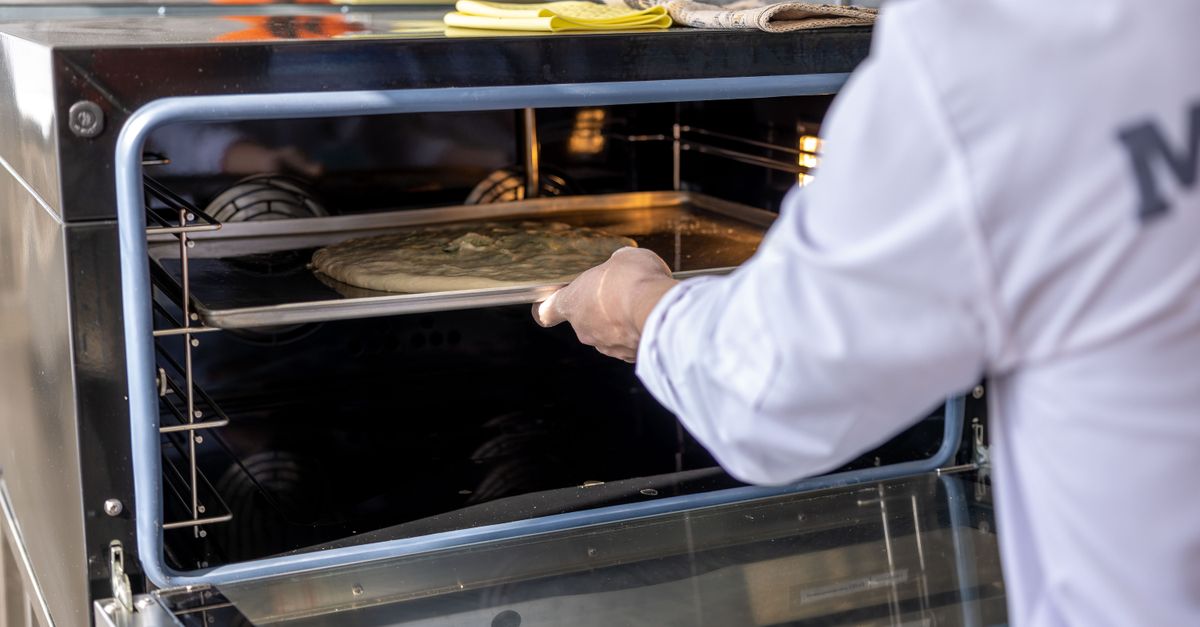
Electric Deck Ovens: These are the workhorses of most UK pizzerias. They typically operate between 350°C and 450°C. In a deck oven, the thermal mass of the stone drives performance, not the air temperature alone. The stone absorbs heat and transfers it directly into the pizza base, creating the characteristic crisp crust.
Conveyor Ovens: Brands like Lincoln Impinger and Middleby Marshall PS360 dominate this space. Conveyor ovens typically operate at lower temperatures — between 260°C and 315°C. They compensate for this lower heat by using forced airflow and dwell time (the time the pizza spends travelling through the conveyor belt). This makes them ideally suited to high-throughput fast-casual environments where consistency and volume matter more than artisanal charring.
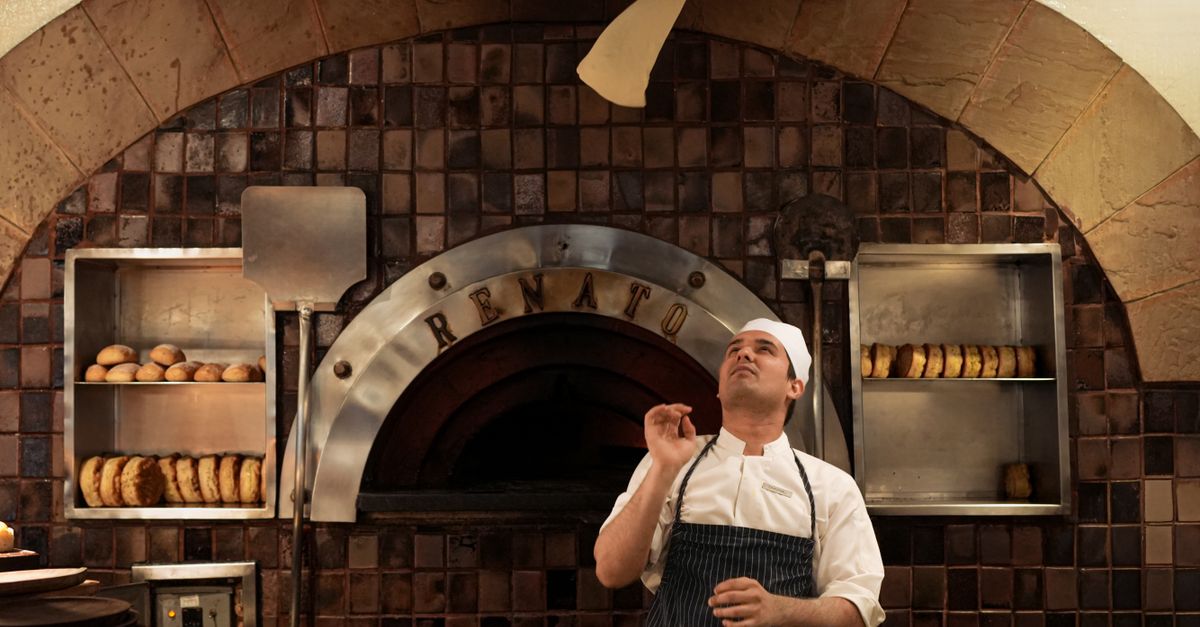
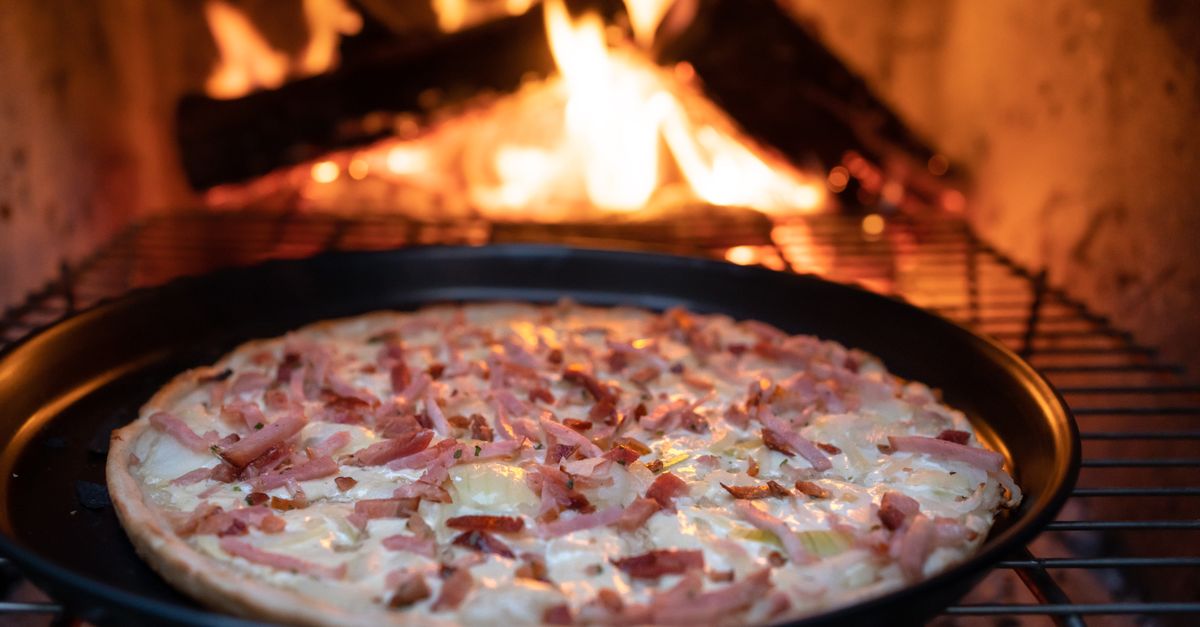
Wood/Gas-Fired Deck Ovens: Commercial-grade brands like Moretti Forni and Valoriani operate at the highest end of the temperature spectrum, typically reaching between 430°C and 480°C. For context, the AVPN (Associazione Verace Pizza Napoletana) specifies a floor temperature of 430°C to 480°C for certified Neapolitan pizza. If you are serving genuine Neapolitan pizza, you need a commercial oven capable of safely maintaining these extreme temperatures service after service.
Heat Recovery and Throughput: The Spec Buyers Miss
The single most overlooked specification by first-time buyers is heat recovery time. Air temperature is irrelevant if the cooking surface cannot maintain its heat under load. When a cold pizza dough hits a 430°C stone, it immediately draws heat out of that stone. If the oven cannot replenish that heat quickly, the second pizza in a batch will cook on a cooler surface, resulting in a soggy base.
Heat recovery time — the minutes it takes for the stone to return to its target cooking temperature after a pizza is removed — is the critical commercial metric. Manufacturer spec sheets for brands like Cuppone and Moretti Forni quote recovery times in minutes. You should demand this figure from your supplier before purchasing.
Stone thickness is directly tied to recovery. Thicker cordierite or refractory stones take longer to heat up initially, but their greater mass holds significantly more thermal energy. This means they recover their heat much faster under a heavy load. A thin stone may reach cooking temperature quickly, but it will struggle to maintain base temperature during a busy Friday night service.
Lincat PO89X
Best for: Start-ups and small venues needing a genuine commercial unit on a standard 13A supply.
The Lincat PO89X is an electric single-deck oven that solves one of the most common problems facing new UK food businesses: power constraints. Because it is a genuine single-phase commercial unit that can run on a standard 13A plug, it can be installed in many existing kitchens without the need for an electrician to run a 32A commando or 3-phase supply. This drastically reduces installation costs and timelines.
As a Lincat product, it carries the UKCA/CE marking required for commercial catering use, meaning it will satisfy Environmental Health Officers where domestic outdoor ovens would be rejected. It provides a compliant entry point into commercial pizza production for pubs, cafes, and small takeaways testing the market.
The primary caveat is throughput. Because it is limited by a 13A power draw, its heat recovery time under heavy, continuous load will naturally be slower than higher-wattage commercial units wired into a 3-phase supply. It is built for steady, lower-volume service rather than rapid-fire, high-volume pizzeria output.
Where to buy: Available at Nisbets, typically priced at approximately £500–£700.
Verdict: The Lincat PO89X is the smartest, most cost-effective way to add genuinely compliant commercial pizza cooking to a limited-power kitchen.
Cuppone Giotto GT/35T
Best for: Compact pizzerias needing reliable single-deck electric cooking.
The Cuppone Giotto GT/35T is a single-deck electric oven featuring a 35cm stone. Cuppone is a long-established name in commercial pizza equipment, and the Giotto range is designed specifically for operations where space is at a premium but commercial-grade performance is non-negotiable. The 35cm stone is sized appropriately for standard UK pizza offerings, providing enough surface area to cook a pizza thoroughly while fitting into a compact counter-top footprint.
As a dedicated commercial unit, it meets the UKCA/CE marking requirements for professional catering use. Depending on the specific electrical configuration of the model you select, you will need to confirm whether your kitchen’s supply can handle it, as moving beyond the 3kW threshold of a 13A plug is common for dedicated pizza ovens of this calibre.
The standout strength of the Cuppone Giotto range is the quality of its refractory stone and its heat recovery characteristics. Cuppone provides manufacturer spec sheets that quote recovery times in minutes, allowing buyers to plan their batch cooking accurately.
The caveat is that as a single-deck unit, your maximum throughput is physically limited by the cooking surface area. If your service model relies on sending out ten pizzas every five minutes, a single 35cm deck will become a bottleneck.
Where to buy: Stocked by Nisbets and Stephensons, typically priced at approximately £1,500–£2,000.
Verdict: A robust, properly engineered single-deck oven that delivers authentic commercial performance for space-limited UK kitchens.
Cuppone Giotto GT/60T
Best for: Growing pizzerias that need to double their output without doubling their footprint.
The Cuppone Giotto GT/60T is the double-deck sibling in the Giotto range. By stacking two cooking chambers, it allows a kitchen to double its potential throughput without requiring additional counter space. This is a critical advantage in tight commercial kitchens where floor space is at a premium.
Because it is a double-deck unit, the power requirements increase significantly. Buyers must be prepared to move away from a 13A plug. The GT/60T will typically require a 32A commando plug or a 3-phase supply to power both decks simultaneously. You must verify your kitchen’s electrical capacity with an electrician before purchase; running two high-heat decks demands a robust infrastructure to prevent tripping and maintain temperature stability.
The standout strength here is versatility and volume. With two decks, a chef can maintain different temperatures simultaneously — for example, running one deck at a higher temperature for Neapolitan-style pizzas and the other at a slightly lower temperature for deeper-pan or calzone cooking.
The honest caveat is the price jump. Moving from a single deck to a double deck represents a significant investment, and you are paying for the convenience of stacked capacity. If your volume does not truly warrant two decks, the return on investment will be slow.
Where to buy: Available through Nisbets and Stephensons Catering Supplies, typically priced at approximately £3,500–£4,500.
Verdict: An excellent upgrade path for established venues that have outgrown their single-deck oven and need immediate throughput expansion.
Moretti Forni iDeck
Best for: Premium pizzerias prioritising authentic, high-temperature deck cooking.
The Moretti Forni iDeck series represents the premium tier of electric deck ovens. Moretti Forni is an Italian manufacturer renowned for building equipment that bridges the gap between traditional wood-fired cooking and modern electric convenience. The iDeck series can reach temperatures of up to 450°C, placing it firmly in the territory required for high-end, authentic pizza production.
Because the iDeck is a modular series, the price varies significantly depending on the configuration you choose — the number of decks and the width of the oven. Prices typically range from approximately £2,500 to £5,000. This configurability allows buyers to spec an oven that precisely matches their kitchen dimensions and output requirements.
The standout strength of the Moretti Forni iDeck is its exceptional thermal engineering. The thick refractory stones used in these ovens provide outstanding heat recovery under load, meaning the cooking surface remains stable even when loaded with multiple pizzas during a rush. The build quality is designed for years of continuous, heavy commercial use.
The caveat is the electrical demand. Reaching and maintaining 450°C on a thick refractory stone requires serious power. These ovens will almost certainly require professional electrical installation, likely necessitating a 3-phase supply. You must factor the cost of an electrician and potential supply upgrades into your budget.
Where to buy: Available via catering equipment distributors, typically priced at approximately £2,500–£5,000 depending on configuration.
Verdict: A premium, highly configurable electric deck oven that brings authentic Italian pizza-making credentials to a commercial UK setting.
Lincoln Impinger 1600 Series
Best for: High-volume fast-casual restaurants and takeaways prioritising throughput over artisanal presentation.
The Lincoln Impinger 1600 series is a gas-powered conveyor oven that dominates the high-volume fast-casual sector. Unlike deck ovens, which require a skilled chef to monitor and rotate the pizza, a conveyor oven uses a continuous belt. The pizza goes in one end and comes out perfectly cooked the other, ensuring absolute consistency across hundreds of covers.
The Lincoln Impinger operates at a lower temperature than deck ovens — typically between 260°C and 315°C. It compensates for this lower heat by using forced airflow (impingement) to blast hot air onto the pizza, cooking it rapidly and evenly as it travels through the chamber. This makes it the ideal choice for operations serving American-style pizzas, where consistency, speed, and volume are the primary goals.
The standout strength is unmatchable throughput. A conveyor oven removes the bottleneck of manual deck management. Once the belt speed and temperature are dialled in, even inexperienced staff can produce identical pizzas at a rapid pace.
The caveat is multifaceted. Firstly, the price is substantial, typically ranging from approximately £8,000 to £12,000. Secondly, as a gas unit, it requires Gas Safe-registered installation, a flued extraction system, and a carbon filter to meet Building Regs Part J and HSE guidance. Finally, it cannot produce the charred, leoparded crust of a Neapolitan pizza; it is built for volume and consistency, not artisanal extremes.
Where to buy: Available through major catering equipment distributors, typically priced at approximately £8,000–£12,000.
Verdict: The definitive conveyor oven for UK fast-casual operations where absolute consistency and high-volume throughput are the driving factors.
UK Retailers and Warranty Support
When investing in commercial catering equipment, purchasing from reputable UK distributors ensures you receive genuine commercial warranty support and access to spare parts. The following retailers all stock commercial-grade electric deck ovens and associated equipment with UK warranty support:
- Nisbets: One of the largest catering equipment suppliers in the UK, stocking brands like Lincat and Cuppone.
- Stephensons Catering Supplies: A major distributor providing a wide range of commercial pizza ovens and after-sales support.
- Russums: A long-established supplier of professional kitchen equipment, known for stocking robust commercial ranges.
- Alliance Online: A comprehensive online distributor carrying a wide variety of compliant commercial catering appliances.
Frequently Asked Questions
What is the difference between single-phase and 3-phase power, and what must I confirm before ordering? Single-phase power is the standard electrical supply found in most domestic and small commercial settings (typically running on a 13A plug). 3-phase power is a heavier industrial supply that can deliver far more power simultaneously. Before ordering a commercial pizza oven, you must confirm your kitchen’s electrical supply with a qualified electrician. Single-deck ovens under 3kW may run on a 13A plug, but double-deck and high-capacity models typically require a 32A commando plug or a 3-phase supply.
Is an extraction canopy legally required for a commercial pizza oven? Yes, it is legally required, not optional. Under Building Regulations Part J and HSE catering guidance, a commercial extraction canopy fitted with grease filters is mandatory for all commercial cooking equipment. If you are installing a gas-powered pizza oven, you must additionally install a carbon filter or a flued extraction system to safely manage combustion byproducts.
Should I choose a deck oven or a conveyor oven? The choice comes down to a trade-off between throughput and authenticity. Conveyor ovens (like the Lincoln Impinger) operate at lower temperatures (260°C–315°C) and use forced airflow and dwell time to cook pizzas, making them perfect for high-throughput fast-casual environments where consistency is key. Deck ovens operate at higher temperatures (350°C–480°C) and rely on the thermal mass of the stone to cook the pizza directly, making them the choice for authentic, artisanal pizza styles.
How long does it take to install a commercial pizza oven? You should typically allow 1 to 3 days for installation. This timeline includes the physical positioning of the oven, the electrical wiring (such as fitting a 32A commando plug or connecting a 3-phase supply), and the installation or verification of the extraction canopy. Gas ovens will also require sign-off by a Gas Safe-registered engineer.
Why is heat recovery time so important? Heat recovery time is the minutes it takes for the oven’s stone to return to its target cooking temperature after a pizza has been placed on it and removed. It is the critical metric for commercial throughput. If an oven has a slow recovery time, the stone temperature will drop with each subsequent pizza, leading to soggy bases and extended cooking times during a busy service. Thicker cordierite or refractory stones take longer to heat up initially but provide much faster recovery under load.
Can I use an outdoor pizza oven, like a Gozney Dome, in my commercial kitchen? No. Environmental Health Officers will reject domestic or outdoor appliances like the Gozney Dome or Roccbox in a commercial kitchen setting. These are superb products for outdoor or home use, but they lack the UKCA/CE marking for commercial catering use and do not meet the regulatory requirements for a professional food business. You must purchase a dedicated commercial pizza oven.