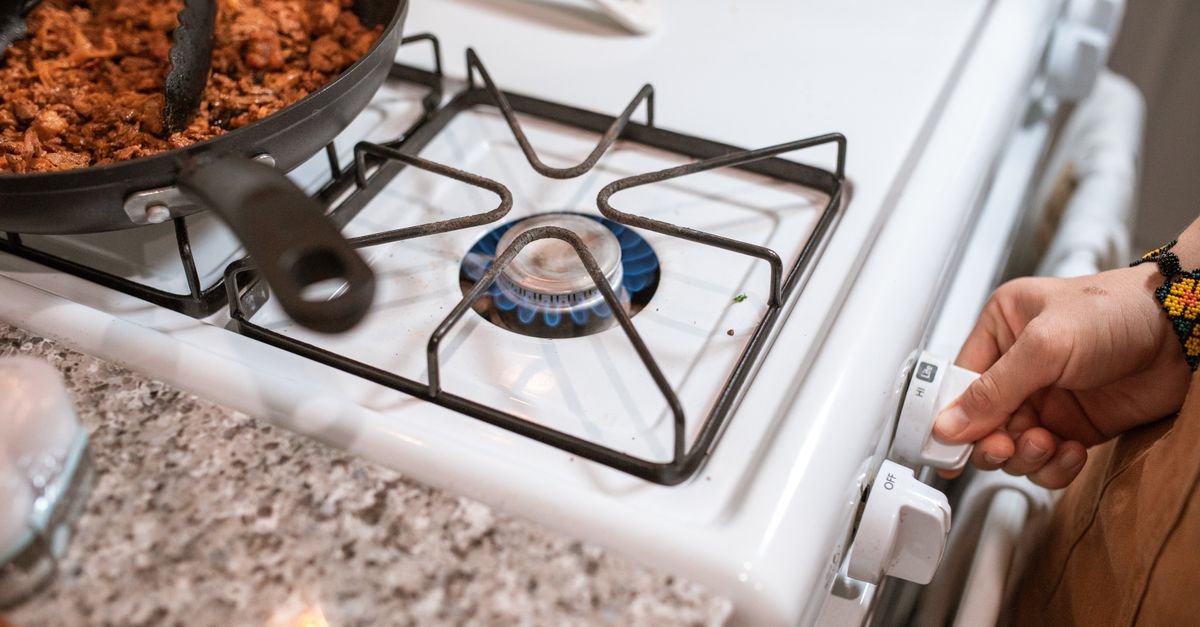
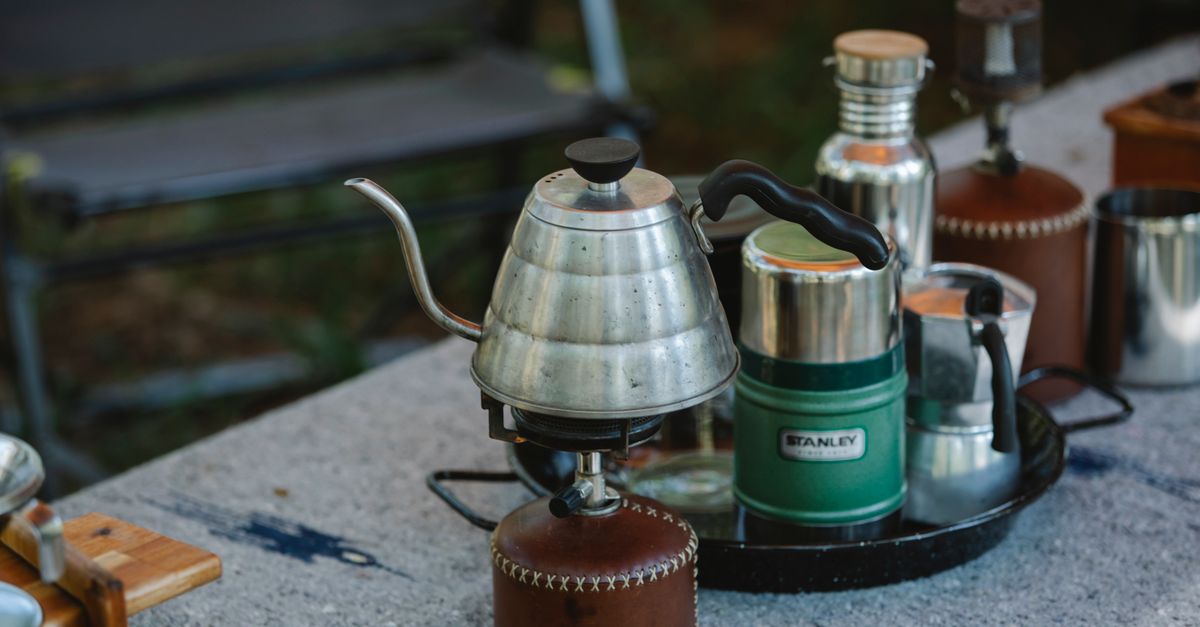
Gas Stove Propane: The Best Propane and Propane-Mix Camping Stoves for UK Buyers in 2026
Most camping stoves sold in Britain run on a blend of propane, butane and isobutane in a threaded canister — not on pure propane.
Gas Stove Propane: The Best Propane and Propane-Mix Camping Stoves for UK Buyers in 2026
Most camping stoves sold in Britain run on a blend of propane, butane and isobutane in a threaded canister — not on pure propane. Genuine propane gas stove setups do exist, but they almost always mean a bulk cylinder, a hose and a regulator, which is a different product category with different fittings, different regulations and very different running costs. Getting that distinction right is the difference between a stove that lights first time on a frosty morning in the Peak District and one that sits useless in its bag.
This guide is written specifically for UK buyers. That matters, because search results for gas stove propane are heavily weighted towards North American propane appliances and one-pound disposable cylinders that have no direct UK equivalent. Below we compare five stoves UK buyers actually shortlist — three EN417 canister models, one Easy-Clic cartridge model and one bulk-propane system — using manufacturer specifications, published fuel-consumption data and aggregated owner feedback rather than hands-on testing claims.
At a Glance
Disclosure: some links in this article are affiliate links. If you buy through them, we may earn a commission at no extra cost to you. This disclosure is provided in line with ASA/CAP guidance on identifying affiliate content.
All prices below are approximate, VAT-inclusive UK RRP or observed retail, checked in early 2026. Gas and hardware prices move, so treat every figure as a guide rather than a quote.
| Product | Fuel system | Approximate UK price | Best for |
|---|---|---|---|
| Trangia Gas Burner 772527 | EN417 threaded canister | around £50–£60 (burner alone) | Trangia 27/25 owners who want a soot-free, priming-free upgrade |
| Campingaz Bistro 2 | Campingaz Easy-Clic (CV470 Plus) | around £35–£45 | Casual campers who want the simplest possible setup |
| Jetboil Flash | EN417 integrated system | around £110–£130 | Speed-focused solo users who want fast manufacturer-stated boil times |
| Cadac Safari Chef 2 HP | Bulk propane (hose + regulator) | around £120–£150 (body only) | Caravan, awning and group cooking on true high-pressure propane |
| MSR WindBurner Solo | EN417 integrated system | around £150–£170 | Exposed, windy pitches where an integrated system earns its keep |
Quick verdict: for cold-weather reliability from a canister stove, the Trangia Gas Burner paired with a propane-heavy winter blend is the most predictable option; for pure convenience, the Campingaz Bistro 2; for speed, the Jetboil Flash; for genuine bulk propane and group cooking, the Cadac Safari Chef 2 HP.
How to Choose: What “Propane” Actually Means on a Camping Stove Label
EN 417 and the threaded canister standard
The first thing to understand is that EN 417 is a standard, not a connector. Published by BSI and referenced across the trade, EN 417 covers non-refillable gas cartridges, and it covers both the pierceable type and the valved type. The threaded sub-type that the vast majority of UK camping stoves use is a specific valve: the 7/16” NS valve, also known as the Lindal B188 valve. The two terms are not synonymous — EN 417 is the standard, and 7/16” NS is the particular valve profile within it. Buyers who conflate them end up ordering the wrong cartridge.
Why does this matter in practice? Because a threaded EN417 stove will accept EN417 canisters from any brand that makes them — Primus, MSR, Optimus and Jetboil among them — without an adapter. Trangia’s own burner documentation confirms its gas burner runs on cartridges containing a propane/butane/isobutane mixture and connects via this international-standard thread.
EN417 canisters come in three common sizes — 100 g, 230 g and 450 g. Roughly: 100 g suits a solo weekend where weight is the priority, 230 g is the all-round workhorse size, and 450 g suits groups or longer trips where you would rather carry one big canister than three small ones.
Why blends change with the season
A canister stove burns vapour, not liquid. That single mechanical fact explains almost every cold-weather complaint about gas stoves. For a canister to feed the burner, the fuel inside has to boil and produce vapour pressure — and when the temperature drops below a fuel’s boiling point, that pressure collapses and the stove starves, even though there is plenty of liquid gas left in the tin.
The boiling points are the numbers to remember:
- Propane: approximately −42 °C
- Butane: approximately −0.5 °C
- Isobutane: approximately −11.7 °C
A butane-heavy “summer gas” canister that works perfectly in July can barely light in a February bothy, because butane stops vaporising at around 0 °C. A “winter gas” canister is deliberately propane-heavy for exactly this reason: the propane fraction keeps the canister pressurised when the temperature falls below zero. This is why the blend inside the tin matters more than the brand on the tin.
The Campingaz Easy-Clic middle ground
Campingaz uses its own Easy-Clic cartridge system, covering the CV470 Plus range. It clicks straight onto the appliance with no threading at all, and it contains a butane/propane blend — the CV470 Plus’s safety data sheet is the place to confirm the exact ratio, as Campingaz does not headline it. Mechanically, Easy-Clic is a pierceable fitting and falls under a separate standard, not EN 417.
It sits between the two extremes: more convenient than a hose-and-regulator setup, less universally available than EN417 threading. The trade-off is supply — you are tied to one brand’s cartridge range, which is stocked widely at UK camping retailers but is not something a climbing shop in the middle of nowhere will necessarily have on the shelf.
Note also that Trangia’s documentation states that non-threaded cartridges cannot be used with its gas burner, so an Easy-Clic cartridge will not click onto an EN417 appliance. Third-party adapters between Easy-Clic cartridges and EN417 appliances are widely sold, so this is not a hard dead end, but the two systems are not designed to interoperate and you should check compatibility carefully before relying on a crossover in the field.
When you genuinely need pure propane
If you want true pure propane rather than a blend, you are looking at bulk cylinders — Calor Patio Gas in 5 kg or 13 kg, or the Flogas equivalents — feeding a stove through a regulator and hose. That arrangement is normal for caravan awnings, large two-burner camping stoves and Cadac-style cooking systems.
It is not compatible with EN417 threaded burners. The cylinder, the regulator, the hose and the stove inlet are four separate purchase decisions, and a mismatch anywhere in that chain means no gas at all.
UK cylinders and regulators: the bit most guides get wrong
This is where UK buyers hit real, expensive confusion, because Calor sells two propane ranges that use completely different fittings.
- Calor Patio Gas (orange cylinder, available in 5 kg and 13 kg) uses a 27 mm clip-on regulator. The regulator pushes onto the cylinder valve and locks in place.
- Calor standard propane (available in 3.9 kg, 6 kg and 13 kg) uses a 37 mbar screw-on POL regulator, which threads onto the cylinder valve.
Flogas makes equivalent cylinders, and the same regulator split applies. Cylinder colour is a genuine safety cue rather than branding: orange denotes propane, blue denotes butane, and the fittings are not interchangeable between the two.
Two further points that catch people out. First, hoses and regulators are sold separately — they are not included with the stove and usually not with the cylinder either. Second, the Cadac Safari Chef 2 HP runs on Patio Gas via its 27 mm clip-on regulator, or on a 37 mbar propane regulator; that detail is worth confirming against Cadac’s UK spec sheet before you buy, because the same model name can be supplied with different fittings in different markets.
Running Cost: Canister Blends vs Bulk Propane
This is the section that decides the purchase for anyone cooking more than a handful of weekends a year.
Start with energy density. According to data sheets published by industrial gas suppliers such as Linde and Air Products, propane carries approximately 12.9 kWh per kilogram and butane approximately 13.6 kWh per kilogram. So butane actually carries slightly more energy per kilogram than propane — the reason propane-heavy winter blends exist anyway is that propane’s boiling point of approximately −42 °C is what keeps a canister working in the cold, not its energy content.
Now the cost side:
- EN417 canister gas: typically around £25–£30 per kilogram (hedged, and worth verifying against current Cotswold Outdoor and GO Outdoors pricing).
- Calor or Flogas 13 kg Patio Gas cylinder: typically around £3–£4 per kilogram (hedged; verify against Calor’s current UK pricing, as cylinder and refill costs change with the gas market).
- The gap: approximately 8× cost per kilogram in favour of bulk propane.
That is the single most important number in this article. The convenience of a screw-on canister — no cylinder to transport, no hose, no regulator, no deposit — costs you a substantial multiple on every kilogram of gas you burn. For a backpacker carrying everything on their back, that premium buys a lot; there is no realistic way to carry a 13 kg steel cylinder up a hill. For a caravan owner cooking breakfast and dinner in an awning for three weeks, the same premium buys very little, and bulk propane is plainly the better economics.
One caveat on manufacturer fuel figures. Trangia publishes a consumption figure of 190 g/h at full power for its gas burner and, separately, a figure of 15 g/litre. These come from different test conditions and do not reconcile without explanation, so treat them as two separately attributed data points rather than as a matched pair you can divide to predict canister life. This is a good general lesson for camping stove shopping: manufacturer consumption figures are useful for comparing roughly equivalent products, not for precise budgeting.
Canister Blends: What’s Actually in the Tin
Blend ratios vary meaningfully between brands, and the differences matter in the cold.
- MSR IsoPro: according to MSR’s spec sheet, an 80% isobutane / 20% propane blend. Because isobutane boils at about −11.7 °C and propane at about −42 °C, that mix is a solid three-season proposition — the propane fifth keeps pressure up — but it is not a deep-winter formulation.
- Primus Winter Gas: a propane-heavy blend, with Primus stating a working range down to −22 °C on its product page. Trangia specifically recommends Primus Winter Gas for use with its burner, which makes it the natural pairing for the Trangia option below.
- Campingaz CV470 Plus: a butane/propane blend per the Campingaz safety data sheet. The exact ratio should be confirmed on that SDS rather than assumed.
- Jetboil Jetpower: Jetboil’s own spec sheet is the place to confirm the exact blend ratio used in the canisters designed for its integrated systems.
The practical takeaway: for anything below freezing, look for a propane-heavy winter blend rather than the cheapest canister on the shelf. The savings from a butane-heavy summer canister evaporate the moment the temperature drops and the stove stops producing pressure.
The Best Propane and Propane-Mix Gas Stoves for 2026
1. Trangia Gas Burner 772527
Best for: Trangia 27 and 25 owners who want a soot-free, priming-free gas upgrade.
This is a drop-in gas burner rather than a complete stove, designed to slot into the Trangia 27 and Trangia 25 stove systems. According to Trangia’s own documentation, it requires no priming and no pumping and produces no soot or odour — which is the core appeal for anyone who has spent a morning scrubbing black residue off an alcohol burner’s pots. It connects via the standard EN417 thread, so it accepts canisters from multiple brands.
Trangia publishes unusually specific fuel figures for it: 190 g/h at full power and 15 g/litre. As noted above, the two come from different test conditions and do not reconcile without explanation, so quote them with their attribution rather than treating them as a matched set.
Price: the burner alone is approximately £50–£60 (for example at Cotswold Outdoor, checked in early 2026). There is also a Trangia 27-2 bundle SKU with the gas burner included at approximately £130–£150 — worth being clear that this is a bundle price from Trangia, not the sum of the individual parts, so it is not directly comparable to buying the burner on its own.
Standout strength: it converts a stove system you already own into a gas stove without adding a whole new appliance, and the published consumption data makes it one of the easier models in this line-up to reason about before you buy.
Caveat: it is a burner, not a stove. If you do not already own a Trangia 27 or 25, the burner alone gets you nowhere, and the full bundle is a pricier route into camping cooking than an entry-level canister stove.
Verdict: the smart upgrade for existing Trangia owners, and a poor first purchase for everyone else. Check the current price at Cotswold Outdoor.
2. Campingaz Bistro 2
Best for: casual UK campers who want the simplest possible propane-mix setup.
The Bistro 2 runs on Campingaz’s Easy-Clic cartridge fitting (the CV470 Plus range), which clicks straight onto the appliance with no threading and no adapter. That is genuinely the easiest gas connection available on a UK campsite: there is no valve to align, no thread to cross, and no hose to connect. The cartridge contains a butane/propane blend, so it is better in the cold than a pure butane cartridge, though it does not carry the deep-winter propane loading of a winter-specific blend.
Price: the stove itself is approximately £35–£45, and CV470 Plus cartridges are approximately £9–£11 each.
Standout strength: simplicity and packability. For a family camping weekend, a picnic or a festival, this is the least fiddly way to get a working gas ring.
Caveat: two of them, and both are cost-related. First, Easy-Clic is a pierceable fitting under a separate standard, not EN 417, so the cartridge supply is effectively single-brand — you buy Campingaz cartridges or you buy nothing, and Trangia’s documentation confirms non-threaded cartridges cannot be used with its gas burner. Second, at roughly £9–£11 for a cartridge, the cost per kilogram of gas is high compared with bulk propane, and aggregated owner feedback on UK retailer listings tends to focus on exactly that ongoing cartridge cost rather than on the stove itself.
Verdict: the best-in-class convenience option for occasional campers, provided you accept the cartridge economics. Check the current price at GO Outdoors.
3. Jetboil Flash
Best for: speed-focused solo users who want the fastest boil in the integrated-system class.
The Flash is an integrated EN417 canister system: burner and pot are designed as one unit, so the heat exchanger is matched to the burner rather than being a compromise between two separate products. Jetboil’s product page publishes a boil time of 100 seconds for 500 ml under its own stated conditions: 70 °F / 21 °C ambient temperature, at sea level, using Jetpower fuel. Read those conditions carefully — 21 °C is a mild day, not a January morning, and manufacturer boil times are always measured under favourable, clearly declared conditions. The blend ratio of Jetpower canisters is confirmable on Jetboil’s spec sheet.
Price: approximately £110–£130.
Standout strength: in its stated conditions, a 500 ml boil in 100 seconds is exceptional, and the integrated design means there is no separate pot to pack or lose.
Caveat: integrated systems are specialists. You cannot easily substitute a frying pan for the supplied pot, so the Flash is superb at boiling water and limited at anything else. And because the headline figure is quoted at 21 °C ambient, expect it to take noticeably longer on a cold morning — the same vapour-pressure physics that affects every canister stove applies here.
Verdict: buy it for fast water, not for general camp cooking. Check the current price at Cotswold Outdoor.
4. Cadac Safari Chef 2 HP
Best for: caravan, awning and group cooking where you want genuine bulk propane.
This is the odd one out in this line-up, and deliberately so: it is the only true propane gas stove here. The Safari Chef 2 HP runs on bulk propane via a hose and regulator, taking Calor Patio Gas (27 mm clip-on regulator) or a 37 mbar propane regulator. Confirm that against Cadac’s UK spec sheet before buying, since the same model name can be supplied with different fittings in different markets.
Price: approximately £120–£150 for the body only. Note that regulator and hose are sold separately, so the total cost of getting this cooking is higher than the headline figure.
Standout strength: the running economics of bulk propane are in a different league from canisters — the approximately 8× cost-per-kilogram gap in favour of bulk propane is what makes this the right choice for a fortnight in the Cotswolds rather than a night on a hillside. It also supports larger, group-sized cooking in a way that no canister stove in this list does.
Caveat: it is not portable in the backpacking sense. You need a cylinder, a regulator and a hose, and you must never run it inside a tent, awning or vehicle interior, because propane is heavier than air and pools at ground level. That safety point is covered in full below.
Verdict: the sensible choice for caravan and large-pitch cooking, and completely unsuitable for backpacking. Check the current price at GO Outdoors.
5. MSR WindBurner Solo
Best for: exposed, windy pitches where an integrated system earns its keep.
The WindBurner Solo is MSR’s EN417 integrated canister system and the closest like-for-like competitor to the Jetboil Flash in this list. MSR publishes a competing boil-time claim on its spec sheet, and — importantly — we are not going to declare a winner between the two. Both figures are manufacturer-stated, measured under each manufacturer’s own declared conditions, and without a genuinely independent side-by-side comparison there is no honest basis for saying one beats the other. What can be said is that both brands publish a boil time in the same broad bracket, so the decision between them should turn on price, pot design and availability rather than on a tenth of a second.
Price: approximately £150–£170 for the WindBurner Solo.
Standout strength: the integrated burner-and-pot architecture that makes this class of stove efficient, in a package aimed at more demanding conditions than a fair-weather picnic.
Caveat: price. At approximately £150–£170 it typically sits roughly £40–£60 above the Jetboil Flash at around £110–£130, so you are paying a clear premium for MSR’s build and positioning. Both figures are approximate UK retail, and both move.
Verdict: a strong integrated system if the budget allows and you want the alternative to Jetboil at the top of the class. Check the current price at Cotswold Outdoor.
Safety: Propane, Ventilation and Carbon Monoxide
Every claim in this section is drawn from published guidance rather than personal advice, and the sources are named deliberately.
Propane is heavier than air. Its vapour does not disperse upwards like natural gas; it sinks and pools at ground level. That is precisely why propane appliances must never be used inside a tent, awning or vehicle interior — a leak, or even a poorly seated regulator, accumulates exactly where you are sitting or sleeping. Calor’s published safety guidance, along with material published by UKLPG and the Health and Safety Executive (HSE), is the reference point here, and the rule they point to is simple: propane appliances belong outdoors.
Ventilation requirements for portable appliances are covered by EN 521, the standard for portable gas appliances. If you are buying a portable gas appliance for UK use, compliance with EN 521 is the safety baseline to look for.
Carbon monoxide is the second risk, and the one that catches people out because it is produced by incomplete combustion and is not something you can see or smell. HSE publishes guidance on carbon monoxide risk from gas appliances, which is the appropriate source to consult rather than relying on a blog’s summary. The practical implications are the same regardless of which stove you buy: never operate a gas appliance in an enclosed space, and never assume a small appliance is harmless because it is small.
Cylinder colour coding belongs in the safety section as much as the buying section. Orange cylinders are propane; blue cylinders are butane. The fittings are not interchangeable between the two, and forcing a regulator onto the wrong cylinder valve is not a workaround — it is a hazard.
Frequently Asked Questions
Can I run a pure propane cylinder on a stove designed for EN417 canisters? No. EN417 threaded canisters and bulk propane cylinders such as Calor Patio Gas use entirely different connection systems, and Trangia’s documentation confirms non-threaded cartridges cannot be used with its gas burner. If you want pure propane, you need a stove designed for a hose and regulator, such as the Cadac Safari Chef 2 HP. Check the fittings on both the stove and the cylinder before you commit.
Do Calor Patio Gas and Calor standard propane use the same regulator? No, and this is the most common and most expensive mistake UK buyers make. Calor Patio Gas (orange, 5 kg and 13 kg) uses a 27 mm clip-on regulator, while Calor standard propane (3.9 kg, 6 kg and 13 kg) uses a 37 mbar screw-on POL regulator. Flogas makes equivalent cylinders with the same regulator split. Confirm which range your stove is designed for before buying a cylinder.
Can I use a butane cylinder in winter? It is not advisable. Butane boils at approximately −0.5 °C, so once the temperature approaches freezing it stops producing vapour pressure and the stove will not feed properly, even with a full cylinder. Propane boils at approximately −42 °C, which is why propane cylinders and propane-heavy canister blends are the winter choice. Note that the fittings for the two gases are not interchangeable.
How long will a gas canister actually last? It depends entirely on your burner’s consumption rate, which is why a single “hours per canister” figure is misleading. Trangia, for example, publishes 190 g/h at full power for its gas burner, alongside a separate 15 g/litre figure that comes from different test conditions and does not reconcile without explanation. Canisters come in 100 g, 230 g and 450 g sizes, so the honest answer is that a 100 g canister suits a light solo weekend and a 450 g canister suits a group — beyond that, match the canister size to your burner’s stated consumption rather than to a rule of thumb.
Is it safe to use a propane gas stove in a tent, awning or vehicle? No. Propane is heavier than air and pools at ground level rather than dispersing, which means a leak accumulates where you are sleeping or sitting. Calor’s published safety guidance, UKLPG and the HSE all point the same way on this, and EN 521 covers the ventilation requirements for portable gas appliances. Carbon monoxide risk is covered separately by HSE guidance and should be treated as a further reason to cook outdoors.
Do I have to buy a hose and regulator separately from the stove? Yes, for bulk propane setups. Hoses and regulators are sold separately — they are not bundled with the stove, and generally not with the cylinder either. The Cadac Safari Chef 2 HP, for example, is priced as body only at approximately £120–£150, with the regulator and hose on top of that. Budget for the whole chain: cylinder, regulator, hose, stove.
Can I use a Campingaz Easy-Clic cartridge on an EN417 threaded stove? Not directly. Easy-Clic is a pierceable fitting under a separate standard rather than EN 417, so a CV470 Plus cartridge will not thread onto an EN417 burner. Third-party adapters between the two systems are widely sold, so the two formats are not an absolute dead end, but the manufacturers do not design them to interoperate and Trangia documents that non-threaded cartridges cannot be used with its gas burner.
Which gas blend should I buy for a UK winter trip? Look for a propane-heavy winter blend rather than a standard summer canister. Primus Winter Gas, for example, is stated by Primus to work down to −22 °C, and Trangia specifically recommends it for use with its gas burner. MSR IsoPro, by contrast, is an 80% isobutane / 20% propane blend per MSR’s spec sheet — a strong three-season mix, but not a deep-winter one, because only a fifth of it is the propane fraction that keeps the canister pressurised below freezing.
The Bottom Line
The decision really comes down to which of the two buyer intents you are. If you are carrying your stove — backpacking, bikepacking, wild camping — you want an EN417 canister stove, a propane-heavy winter blend for anything below freezing, and you should accept the roughly £25–£30 per kilogram you are paying for that portability. If you are cooking from a car, a caravan or a fixed pitch, bulk propane at approximately £3–£4 per kilogram is roughly eight times cheaper per kilogram, and a stove like the Cadac Safari Chef 2 HP is the one to build your setup around — as long as you buy the right regulator for the right cylinder, and never bring it indoors.