Best Mosquito Repellent 2026: Top Picks for UK Campers & Travellers
Best mosquito repellent for 2026: compare DEET, Picaridin and Citriodiol formulas on protection time and gear safety for UK campers and travellers.
Best Mosquito Repellent 2026: Top Picks for UK Campers & Travellers
Affiliate disclosure: This article contains affiliate links. If you purchase through these links, we may earn a commission at no extra cost to you.
Nothing ruins a balmy evening in the garden or a long-awaited trip to the tropics quite like the high-pitched whine of a mosquito. For UK outdoor enthusiasts, the humble mosquito is more than a nuisance—it’s a genuine health consideration. The European Centre for Disease Prevention and Control (ECDC) has documented the ongoing northward range expansion of Aedes albopictus (tiger mosquito) into previously unaffected parts of Northern Europe, with updated vector surveillance maps published annually confirming this trend. Choosing the right repellent is a decision that deserves careful thought.
The market is flooded with options: DEET, Picaridin, Citriodiol, natural oils, wristbands, and ultrasonic devices. In this guide, we cut through the noise. We’ve analysed manufacturer specifications, consulted UKHSA travel health guidance via NaTHNaC (travelhealthpro.org.uk), and aggregated owner feedback from UK camping forums and verified Amazon.co.uk review pools to bring you the five best mosquito repellents available in 2026.
Quick Picks: At a Glance
If you just need a fast answer, here are the top three mosquito repellents for UK buyers in 2026. All prices are approximate UK retail.
| Product | Best For | Key Reason | Approx. Price | Where to Buy |
|---|---|---|---|---|
| Lifesystems Expedition 50 PRO DEET | High-risk tropical travel & long days | 50% DEET + Citriodiol, up to 14 hours total daily protection per manufacturer | ~£9–£12 | Check at Amazon.co.uk · See at Boots |
| Sawyer Products Premium Picaridin | Sensitive skin & gear-safe use | 20% Picaridin, no odour, won’t damage synthetics or tents | ~£10–£14 | Check at Amazon.co.uk · See at Go Outdoors |
| Smidge Insect Repellent | Everyday UK garden & low-risk use | 20% Saltidin (Icaridin/Picaridin), non-greasy, pleasant smell | ~£8–£11 | Check at Amazon.co.uk · See at Decathlon |
What to Look For in a Mosquito Repellent (2026 Buyer’s Guide)
Before we dive into the specific products, it’s worth understanding the key factors that separate a great repellent from a disappointing one.
UK Regulatory Context: What “Approved” Actually Means
This is something almost no competitor article covers, and it matters for UK buyers. Post-Brexit, the UK operates its own UK Biocidal Products Regulation (UK BPR), which is administered by the Health and Safety Executive (HSE) and runs separately from the EU BPR framework. Any insect repellent sold legally in the UK must hold HSE biocide approval. When evaluating a product, you can cross-reference it against the HSE’s public register of authorised biocidal products. This is particularly relevant if you’re purchasing repellents from European retailers or grey-market sources online — a product approved under EU BPR is not automatically authorised for sale in Great Britain under UK BPR. Stick to products sold through UK-authorised retailers (Boots, Amazon.co.uk, Go Outdoors, Decathlon UK) to ensure compliance.
DEET vs Picaridin vs Natural: Which is Right for You?
The active ingredient is the single most important factor in any repellent. Here’s how the main contenders stack up:
- DEET (Diethyltoluamide): The gold standard for decades. The UKHSA and its travel health platform NaTHNaC (travelhealthpro.org.uk) recommend repellents containing at least 50% DEET for travellers visiting high-risk destinations for malaria and other mosquito-borne diseases — this is UK-specific travel health guidance, not a WHO mandate. DEET offers the longest proven protection duration. The downside? It can damage plastics, synthetic fabrics, and watch straps, and has a strong chemical smell. Note that both UK and EU consumer regulations cap DEET at 50% concentration for non-professional products. Lifesystems Expedition 50 PRO uses 50% DEET.
- Picaridin (also sold as Icaridin or Saltidin): These three names refer to the same active compound — Saltidin is Bayer’s trade name for Icaridin, which is the INN (International Non-proprietary Name) for Picaridin. Developed as a modern DEET alternative, 20% Picaridin has demonstrated comparable efficacy to DEET in peer-reviewed research, most notably the landmark Fradin & Day (2002) study published in the New England Journal of Medicine, which remains the most-cited comparative field trial. It feels lighter on skin and won’t damage gear. Sawyer Premium Picaridin and Smidge (which uses Saltidin) are prime examples.
- Citriodiol (PMD): It’s important to distinguish between two related but different things here, as the EPA’s own PMD fact sheet makes clear: OLE (oil of lemon eucalyptus) is the plant-derived extract, while PMD (p-menthane-3,8-diol) — as used in registered repellent products — is typically a synthesised active ingredient. The two are often conflated in marketing materials, but they are distinct under EPA and UK HSE classification. PMD-based repellents offer genuine efficacy for moderate-duration protection and are often combined with DEET as a bite-inhibitor booster, as in Lifesystems Expedition 50 PRO.
- Natural Oils (Citronella, etc.): Fradin & Day (2002) documented that citronella-based products provided protection for under 20 minutes in controlled field conditions — significantly shorter than DEET or Picaridin formulations. These can be a pleasant option for a short garden sit but are not suitable for high-risk areas or extended outdoor use. Note that lavender is sometimes grouped into this category in consumer marketing, but the evidence base for lavender as a mosquito repellent is extremely thin and inconsistent; it should not be relied upon for any meaningful protection.
Our advice: For tropical travel, long days, or areas with malaria risk, choose 50% DEET. For everyday UK use, family trips, or when wearing expensive outdoor gear, choose 20% Picaridin/Icaridin/Saltidin — all the same compound.
A Structured Comparison
| Active Ingredient | Typical Protection Duration | Best Use Case | Damages Gear? | Suitable for Children? |
|---|---|---|---|---|
| 50% DEET | 7–10 hrs per application | High-risk tropical travel, malaria zones | Yes (plastics, synthetics) | 2+ with caution; not under 2 |
| 20% Picaridin/Icaridin | 6–8 hrs | Everyday UK, family use, gear-safe travel | No | Generally yes, check label |
| PMD (Citriodiol) | 4–6 hrs | Moderate-risk travel, as DEET booster | No | Not under 3; avoid OLE under 3 |
| Citronella (natural) | Under 20 mins | Brief garden use only | No | Yes, but very limited efficacy |
Protection Duration and Reapplication
Manufacturers quote protection times based on controlled laboratory conditions. Research published in the Journal of Medical Entomology and comparative data from the London School of Hygiene & Tropical Medicine consistently show that real-world factors — sweat, swimming, humidity, and wind — can meaningfully reduce effective duration relative to lab claims. Treat manufacturer duration figures as upper estimates under ideal conditions, and reapply earlier if you are sweating heavily or have been in water.
- Short duration (2–4 hours): Natural formulas, low-concentration DEET (under 20%).
- Medium duration (6–8 hours): 20% Picaridin/Icaridin, 30% DEET.
- Long duration (up to 10–14 hours total daily): 50% DEET, particularly when combined with PMD/Citriodiol boosters.
For the Lifesystems Expedition 50 PRO, the manufacturer states 7 hours per application, with a second application providing up to 14 hours total daily protection against malarial mosquitoes per the Lifesystems product specification.
Form Factor: Spray, Lotion, or Wipes?
- Sprays (pump or aerosol): Fast to apply over large areas. Pump sprays are airline-friendly and less wasteful than aerosols. Aerosols can be convenient but often include propellants and may have a strong initial scent.
- Lotions: Excellent for precise application to the face and neck. They spread evenly and are less likely to be inhaled. Sawyer Premium Picaridin is available in lotion format.
- Wipes: Ideal for travel and quick top-ups. Less messy than liquid sprays, but you’ll use more product per application.
- Roll-ons: Great for targeted application and for children, with no risk of inhalation. Smidge offers a roll-on format.
UK Mosquito Species and Why They Matter
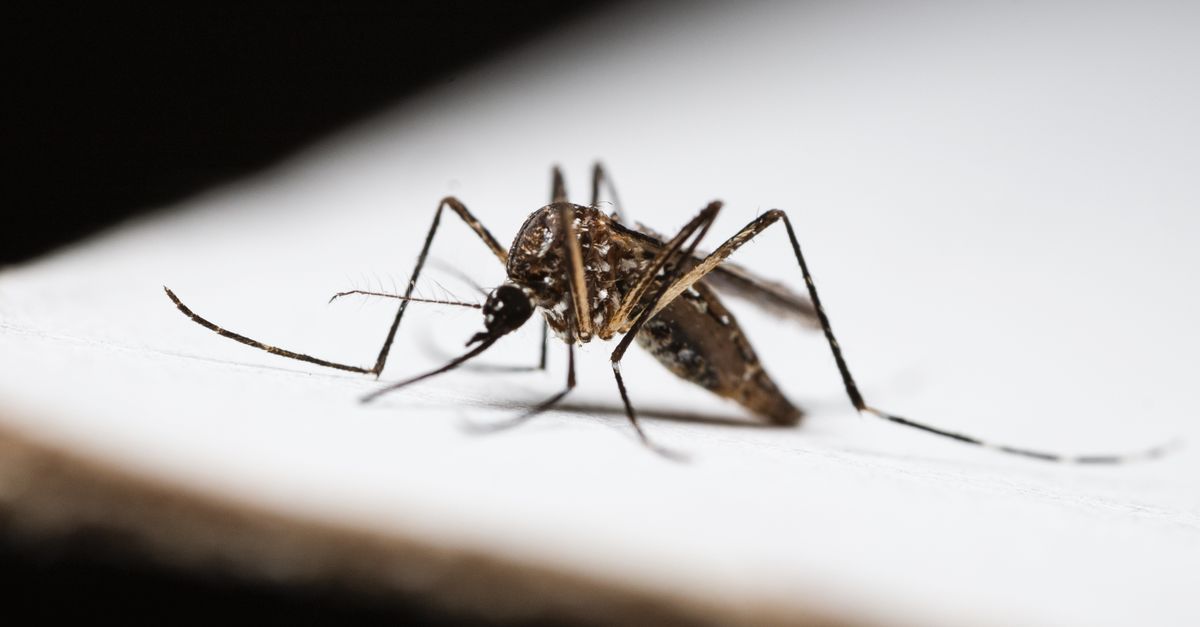
UK readers face a different threat landscape depending on context. Domestically, the most commonly encountered species are Culiseta annulata and various Aedes species — a nuisance, but not vectors of serious disease in the UK under current conditions. For travellers, the relevant species shift significantly: Anopheles mosquitoes are the vectors for malaria; Aedes aegypti and Aedes albopictus transmit dengue fever, Zika, and chikungunya; and Culex species are associated with West Nile virus. Repellent efficacy can vary by species and biting behaviour, which is why UKHSA and NaTHNaC publish country-by-country risk assessments — consult the NaTHNaC country information pages at travelhealthpro.org.uk before travelling to any destination with mosquito-borne disease risk. UKHSA data also informs domestic risk assessments for UK species activity by region and season.
UK Climate Considerations
UK summers are creating increasingly favourable breeding conditions for mosquitoes in gardens, parks, and campsites, consistent with the ECDC’s documented northward expansion of mosquito activity across Europe. For Scottish Highlands trips, domestic Aedes and biting midge species are the primary concern; for European campsites, particularly in Southern and Central Europe, Aedes albopictus is now well-established across a wider range than a decade ago, per ECDC vector surveillance data.
Frequently Asked Questions
Is DEET safe for children?
DEET-based repellents should not be used on children under 2 months old. For children aged 2 months and older, low-concentration DEET (under 10–30% depending on age) is generally considered safe when applied by an adult and kept away from hands, eyes, and mouth. The NHS and UKHSA advise consulting a pharmacist or travel health clinic before using DEET on young children, particularly for travel to malaria-endemic areas. Picaridin/Icaridin formulations are often preferred for children due to the more favourable skin-feel and smell profile — check individual product labels for age guidance.
How long does mosquito repellent last?
This depends heavily on the active ingredient and concentration. In real-world conditions, 50% DEET typically provides 7–10 hours per application; 20% Picaridin/Icaridin around 6–8 hours; and PMD/Citriodiol formulations around 4–6 hours. Natural citronella products provide under 20 minutes in field conditions, per Fradin & Day (2002). Sweat, water exposure, and heat all reduce effective duration — reapply accordingly.
Can you use mosquito repellent when pregnant?
UKHSA and NaTHNaC guidance advises that DEET can be used during pregnancy when travel to a malaria-risk area makes protection essential, as the risk from malaria during pregnancy is considered greater than the risk from DEET at recommended concentrations. However, pregnant travellers should consult their GP or a travel health clinic before use. Picaridin/Icaridin is also considered acceptable during pregnancy based on current evidence, but again, professional advice is recommended for any health-adjacent decision during pregnancy.
What percentage DEET do I need for malaria protection?
UKHSA and NaTHNaC recommend repellents containing at least 50% DEET for travellers to high-risk malaria destinations. This is the threshold cited in UK travel health guidance specifically — it is not a WHO-mandated figure, but reflects the UK’s national travel health advisory position. Always combine repellent use with other preventive measures (appropriate antimalarials, permethrin-treated clothing, mosquito nets) as recommended by NaTHNaC for your specific destination.
What is the difference between Picaridin, Icaridin, and Saltidin?
They are the same compound. Icaridin is the International Non-proprietary Name (INN); Picaridin is the name used predominantly in the US and Australia; Saltidin is Bayer’s registered trade name for the same active ingredient. All three terms appear on UK product labels, which can cause confusion when comparing products — if you see any of these three names, you are looking at the same active ingredient.