The Best Pot Belly Stove for 2026: UK Buyer's Guide & Reviews
The pot belly stove is the workhorse of British outdoor living. For more than a century it has kept workshops, shepherd's huts, glamping pods and canvas…
The Best Pot Belly Stove for 2026: UK Buyer’s Guide & Reviews
The pot belly stove is the workhorse of British outdoor living. For more than a century it has kept workshops, shepherd’s huts, glamping pods and canvas tents warm, and that curvy cast-iron silhouette still sells out every autumn. The 2026 market is bigger than ever, though: budget models from Machine Mart, glamping-grade cast iron and high-end steel stoves with panoramic glass doors. We researched the current UK stockists, manufacturer specifications, expert reviews and long-term owner feedback to separate the genuinely good stoves from the purely decorative ones.
There is a catch, however. Most stoves photographed in “pot belly” search results are non-compliant for habitable rooms. Under UK EcoDesign 2022 regulations, any new solid-fuel stove sold commercially for use in a home must meet strict minimum efficiency and emission ceilings. Many inexpensive pot bellies do not — meaning they are legal only in non-habitable outbuildings. This guide covers the legal landscape, flue sizing, and the five models that genuinely deserve your money in 2026.
At a Glance
| Product | Best for | Approx. price (as of 2026) |
|---|---|---|
| Clarke CB1SPB | Budget sheds and workshops (non-habitable only) | around £150–£200 |
| Winnerwell Woodlander M-sized | Portable camping in canvas tents | around £180–£280 |
| Vesta Stoves Pot Belly | DEFRA-exempt shepherd’s huts and glamping pods | around £350–£500 |
| Masport Pittsburgh MKII | Modern statement fire with high output | around £1,000–£1,400 |
| Ghan Heritage Stove | Cast-iron cooking and serious heat | around £800–£1,200 |
What Is a Pot Belly Stove?
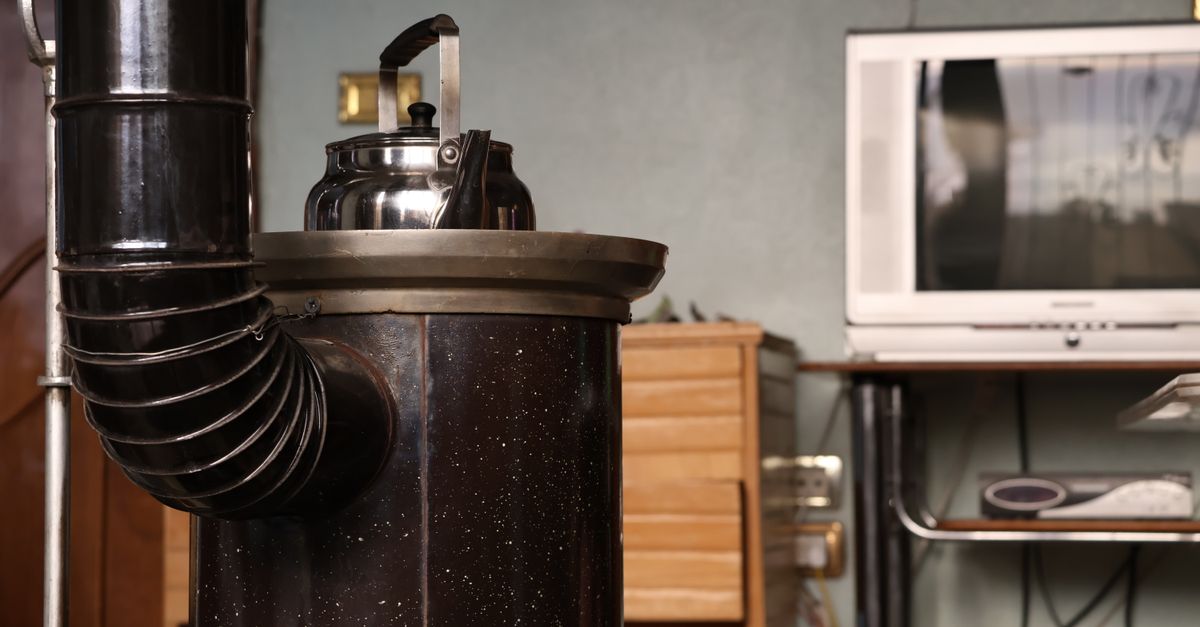
A pot belly stove is defined by its shape: a rounded, bulging body that sits on legs, with a fire door at the front and a flue outlet on top. The round belly is not just a design quirk — it creates a large, tall firebox that burns wood and coal efficiently in a compact footprint, radiating heat in every direction.
These stoves were once standard fittings in Victorian railway stations, engine sheds and workshops, and they remain a favourite of glamping operators, hut builders and anyone who needs serious heat without central heating. Today the category splits into traditional cast-iron models (the classic look, slow to warm up but brilliant at radiating heat for hours) and modern steel interpretations (faster heat-up, bigger glass doors, cleaner burn). Both are included in our roundup.
What to Look For in a Pot Belly Stove
Heat Output: Don’t Over-Spec
Heat output is measured in kilowatts (kW). A common rule of thumb is roughly 1kW per 14 cubic metres of space in a reasonably insulated room. In practice, that means a small greenhouse or bell tent needs roughly 2–3kW, a well-insulated shepherd’s hut or garden office suits a 4–5kW stove, and a draughty workshop or large marquee will want the 5–8kW end. Owner reviews consistently warn against over-specifying: an oversized stove in a small insulated space will have you throwing open the door within minutes.
Cast Iron vs Steel
Cast iron is the traditional pot-belly material — heavy, durable and excellent at storing heat, which it radiates long after the fire dies down. The trade-offs are weight, slower warm-up and a habit of rusting quickly if the paint is chipped and the stove is left out in the rain. Steel stoves are lighter, heat up faster and usually feature larger glass doors, but they cool down almost as quickly as they warm up. For a permanent hut or pod, cast iron is hard to beat; for a stove that moves between tent and trailer, steel wins.
Multi-Fuel or Wood-Only?
Many classic pot bellies are multi-fuel, meaning they have a grate and ashpan so you can burn coal or smokeless fuel as well as wood. Wood burns best on a flat bed of ash rather than a grate, so a dedicated wood-burner often produces a cleaner, hotter flame. The bigger consideration is where the stove lives: if it is in a permanent building inside a smoke control area, it needs to be DEFRA-exempt to burn wood legally. Most inexpensive pot bellies are not DEFRA-exempt.
EcoDesign, DEFRA and UK Law: What You Must Know
EcoDesign 2022
UK EcoDesign 2022 regulations set minimum efficiency (around 65%) and emission ceilings for all new solid-fuel stoves sold commercially. Non-compliant stoves cannot legally be sold as heating appliances for habitable spaces. The Clarke CB1SPB and most sub-£300 pot bellies fall into this category — they are legal for non-habitable outbuildings only. If a stove is going into a shed you do not sleep in, compliance is not required; if it is going into a shepherd’s hut, glamping pod or any structure people inhabit, it must be EcoDesign-compliant.
DEFRA Exemption
DEFRA-exempt means a stove is permitted to burn wood in Smoke Control Areas — typically urban areas and many towns across the UK. You must check the DEFRA exemptions register on gov.uk for each exact model, because exemption is granted per specific stove, not per brand. The Vesta Stoves Pot Belly is DEFRA-exempt (though you should verify current listings on vestastoves.co.uk before purchasing). The Masport Pittsburgh MKII is EcoDesign-compliant per the manufacturer’s spec sheet, but you must confirm DEFRA status with a UK importer before recommending it for residential use.
Flue Sizes and Twin-Wall Requirements
Flue diameters in this category are either 125mm (most budget and traditional cast-iron stoves) or 150mm (larger and EcoDesign models, including the Masport). Always verify the diameter in the individual manufacturer’s manual — do not generalise.
Where a flue pipe passes through a combustible roof or wall — as it almost always does in a wooden shed or canvas tent — a twin-wall insulated flue is mandatory under standard BS EN 1856-1. Twin-wall pipe keeps the outer casing cool enough to safely clear timber, thatch and tent fabric. Single-skin flue pipe is fine for the internal run inside the stove room, but the moment it touches a combustible surface, you need twin-wall.
Building Regs and HETAS
Document J of the UK Building Regulations governs hearth dimensions, clearances to combustibles and flue construction for permanent installations. Any permanent solid-fuel appliance must be installed by a HETAS-registered installer, who self-certifies the work to Building Control. This is a legal requirement, not a recommendation — and it applies to shepherd’s huts and glamping pods just as it does to living rooms.
Camping and Glamping Safety
For camping and glamping, many UK campsites require a spark arrestor on the flue outlet and fire-retardant canvas, typically rated to BS 7837. The Winnerwell Woodlander ships with a spark arrestor in the box; most other stoves do not, so factor that into your budget. Always check individual campsite rules before turning up with a lit stove.
A carbon monoxide alarm rated to BS EN 50291-1 is essential in any enclosed space with a solid-fuel appliance. These typically cost around £20–£30 and are non-negotiable for safety.
The Real Cost: Flue Kits and Hearths
The stove is often the cheapest part of a pot belly installation. A complete flue kit and hearth routinely exceeds the cost of the stove itself. A realistic shed installation — stove, twin-wall flue passing through a wooden roof, hearth plate and basic fittings — typically totals around £400–£500, even with a budget stove. That figure climbs fast with taller flues, complex roof penetrations or premium twin-wall systems.
Product Reviews
Clarke CB1SPB
Best for: Budget sheds and workshops (non-habitable only)
The Clarke CB1SPB, stocked by Machine Mart, is the entry point for most UK buyers looking for a no-frills pot belly stove. It delivers approximately 5kW of heat output — enough for a typical garden workshop or large shed — and uses a 125mm top flue, which is the standard diameter for budget traditional cast-iron stoves and makes sourcing single-skin pipe straightforward.
Priced at approximately £150–£200, it is one of the cheapest ways to get genuine radiant heat into an outbuilding. However, it is not EcoDesign-compliant and not DEFRA-exempt. This means it cannot legally be sold or installed as a heating appliance for a habitable space, and it cannot burn wood in a Smoke Control Area. It is strictly a shed and workshop stove.
The standout strength is value: for under £200 you get a functional 5kW heater with a classic pot belly profile. The honest caveat is durability. Owner consensus on Reddit’s r/woodstovers and UK glamping forums consistently flags the Clarke CB1SPB as prone to warping on the door seal after heavy use, with gasket replacement commonly needed within a single season. For occasional workshop use this is manageable; for daily burning, it becomes a recurring maintenance task.
Verdict: The cheapest pot belly that actually throws heat — but strictly for non-habitable sheds, and expect to replace the door gasket.
Where to buy: Machine Mart.
Winnerwell Woodlander M-sized
Best for: Portable camping in canvas tents
The Winnerwell Woodlander in the M-sized configuration is a steel stove designed specifically for canvas tents and bushcraft use. It delivers a nominal 7kW of heat — substantially more than the Clarke, reflecting its larger firebox and its intended use in drafty tents and shelters rather than insulated rooms. The steel construction means it heats up fast, which is exactly what you want when you crawl into a cold tent at night.
Priced at approximately £180–£280, it sits in the mid-range for portable stoves. The flue diameter is 76mm, which is narrower than the UK standard. Owner consensus on bushcraft forums notes that this requires a step-down adapter — typically costing around £15–£25 — to mate with standard UK 125mm twin-wall flue kits. This is not a flaw but a design choice: the 76mm flue is standard for the tent-stove category, and the adapter is a known, solved problem.
The standout strength is that the Woodlander ships with a spark arrestor included. As noted above, many UK campsites require a spark arrestor on the flue outlet, and fire-retardant canvas rated to BS 7837 is the other requirement competitors routinely omit mentioning. The Winnerwell solves the first out of the box; you must supply the canvas yourself.
The honest caveat is the adapter requirement. If you are buying this for a UK campsite with a twin-wall flue kit, budget for the step-down adapter and verify the campsite’s specific rules before arrival.
Verdict: The best portable tent stove on the UK market, with a spark arrestor in the box — just factor in the flue adapter.
Where to buy: Widely stocked by UK outdoor and bushcraft retailers; check specialist camping stores.
Vesta Stoves Pot Belly
Best for: DEFRA-exempt heating in shepherd’s huts and glamping pods
The Vesta Stoves Pot Belly is a cast-iron stove delivering approximately 5kW of heat output with a 125mm flue — the traditional diameter that makes flue sourcing simple. What sets it apart from the Clarke and most sub-£300 competitors is its legal status: it is DEFRA-exempt, meaning it is permitted to burn wood in Smoke Control Areas. You should verify the current listing on vestastoves.co.uk before purchasing, as exemption status can be updated.
Priced at approximately £350–£500, it costs roughly double the Clarke CB1SPB, but that premium buys legal compliance for habitable spaces. The cast-iron construction provides the slow radiant heat that makes pot belly stoves beloved — the body stores heat and releases it for hours after the fire dies down, which is ideal for overnight warmth in a shepherd’s hut or glamping pod.
The standout strength is DEFRA exemption at a relatively accessible price point. Finding a genuine pot belly stove that is both DEFRA-exempt and cast iron under £500 is unusual in the 2026 market. The honest caveat is that you must confirm the exemption is current on the DEFRA register (gov.uk) for the exact model you are buying, and verify the listing on vestastoves.co.uk, before committing.
Verdict: The most affordable DEFRA-exempt cast-iron pot belly — ideal for legal wood-burning in huts and pods.
Where to buy: Vesta Stoves (vestastoves.co.uk).
Masport Pittsburgh MKII
Best for: High-output heating with modern EcoDesign compliance
The Masport Pittsburgh MKII is a New Zealand-manufactured steel stove that sits at the premium end of the pot belly category. It delivers approximately 8kW of heat output — the highest in this roundup — making it suitable for large spaces, draughty workshops or substantial glamping structures. The flue diameter is 150mm, which is the larger standard used by EcoDesign-compliant models and requires matching twin-wall components.
Priced at approximately £1,000–£1,400 via UK importers, it is a serious investment. What you get for that money is EcoDesign-ready status per the Masport spec sheet, meaning it meets the UK 2022 minimum efficiency (around 65%) and emission ceilings required for sale as a heating appliance in habitable spaces. However, you must confirm DEFRA status with the UK importer before recommending it for residential use — EcoDesign compliance and DEFRA exemption are separate certifications, and one does not imply the other.
The standout strength is the combination of high output and EcoDesign compliance. An 8kW stove that meets modern emission standards is rare in the pot belly form factor. The honest caveat is price and availability: at over £1,000, and imported through specialist UK channels, it costs significantly more than every other stove here and may have longer lead times.
Verdict: The premium choice for large spaces — EcoDesign-compliant and powerful, but confirm DEFRA status with the importer.
Where to buy: UK importers of Masport stoves; check specialist stove retailers.
Ghan Heritage Stove
Best for: Cast-iron cooking and serious heat
The Ghan Heritage Stove is a cast-iron pot belly delivering approximately 6kW of heat output with a 125mm flue. It is priced at approximately £800–£1,200 and is stocked by specialist heritage stove retailers. The 6kW output places it in the middle of this roundup — more powerful than the Clarke and Vesta, less than the Masport — making it well-suited to medium-sized spaces that need sustained radiant heat.
The standout feature is the multi-fuel grate included as standard. A multi-fuel grate allows you to burn coal and smokeless fuel as well as wood, because it sits the fuel above an ashpan, allowing air to circulate from beneath. This is the configuration needed for smokeless fuels to burn efficiently — wood-only stoves lack this grate and struggle with coal. The cast-iron construction provides the classic slow-heat-release properties that make pot belly stoves effective overnight heaters.
The honest caveat is that at this price point, buyers should verify EcoDesign and DEFRA compliance with the retailer before purchase. The spine does not confirm either status for the Ghan, and at £800–£1,200, you are investing in a stove that should meet modern standards if it is going into a habitable space.
Verdict: A beautiful, traditional cast-iron stove with multi-fuel capability — verify compliance before buying for habitable use.
Where to buy: Specialist heritage stove retailers in the UK.
Frequently Asked Questions
Can I legally put a pot belly stove in my house?
Only if the stove is EcoDesign-compliant under UK 2022 regulations, which set minimum efficiency (around 65%) and emission ceilings. Most inexpensive pot bellies — including the Clarke CB1SPB and most sub-£300 models — are not compliant and are legal only for non-habitable outbuildings. For a habitable room, you need a compliant model such as the Vesta Stoves Pot Belly (DEFRA-exempt) or the Masport Pittsburgh MKII (EcoDesign-ready per manufacturer spec).
What is the difference between EcoDesign and DEFRA exemption?
EcoDesign 2022 is a regulatory standard that sets minimum efficiency and emission ceilings for all new solid-fuel stoves sold commercially in the UK. DEFRA exemption is a separate certification that permits a specific stove model to burn wood in Smoke Control Areas. A stove can be EcoDesign-compliant without being DEFRA-exempt, and vice versa. Check both the EcoDesign status and the DEFRA exemptions register on gov.uk for each exact model.
Do I need a HETAS installer for a shed stove?
If the installation is permanent, yes. Document J of the UK Building Regulations governs hearth dimensions, clearances to combustibles and flue construction, and a HETAS-registered installer must self-certify the work to Building Control. For a truly portable camping stove in a tent, HETAS does not apply — but campsite rules regarding spark arrestors and BS 7837 fire-retardant canvas still do.
How much does it cost to install a pot belly stove in a shed?
A realistic shed installation — including the stove, twin-wall insulated flue passing through a combustible roof, hearth plate and fittings — typically totals around £400–£500. The flue kit and hearth routinely exceed the cost of the stove itself, so do not assume a £150 stove means a £150 installation. Taller flues, complex roof penetrations and premium twin-wall systems push the total higher.
What flue size do I need?
It depends on the stove. Most budget and traditional cast-iron pot belly stoves use a 125mm flue, while larger and EcoDesign-compliant models such as the Masport Pittsburgh MKII use 150mm. The Winnerwell Woodlander uses a 76mm flue, which requires a step-down adapter (around £15–£25) to mate with standard UK 125mm twin-wall kits. Always verify the diameter in the manufacturer’s manual before buying flue components.
Can I use a pot belly stove in a canvas tent?
Yes, but you need specific safety equipment. Many UK campsites require a spark arrestor on the flue outlet and fire-retardant canvas rated to BS 7837. The Winnerwell Woodlander ships with a spark arrestor included; most other stoves do not. You also need a carbon monoxide alarm rated to BS EN 50291-1 (typically around £20–£30) in any enclosed space with a solid-fuel appliance. Always check individual campsite rules before arrival.