Smidge vs Avon Skin So Soft: Which Midge Repellent Actually Works in the UK?
Smidge vs Avon Skin So Soft compared for UK midges: one is a registered repellent, the other isn't, and that changes how long each protects you outdoors.
Smidge vs Avon Skin So Soft: Which Midge Repellent Actually Works in the UK?
If you’ve ever spent a summer evening by a Scottish loch, a Cumbrian tarn, or a Norfolk broad, you’ll know the misery midges can bring. These tiny biting flies — specifically the Highland midge (Culicoides impunctatus) — are notorious for ruining outdoor experiences across the UK. For decades, the debate has raged between two household names: Smidge and Avon Skin So Soft. But which one genuinely keeps midges at bay?
We analysed manufacturer specifications, verified owner reviews from Amazon UK and Go Outdoors, expert commentary from outdoor publications including Trail Magazine and The Great Outdoors, and extensive community feedback from UK camping and fishing forums. Where we note field conditions, these reflect documented user reports from Scottish Highland locations cross-referenced against the (https://www.smidgeup.com) — the most reliable tool for understanding midge activity levels before you head out. Here’s what we found.
Why Midges Are Different From Mosquitoes
Before diving into the comparison, it helps to understand what makes midges so tricky to repel — and why this matters when choosing between these two products.
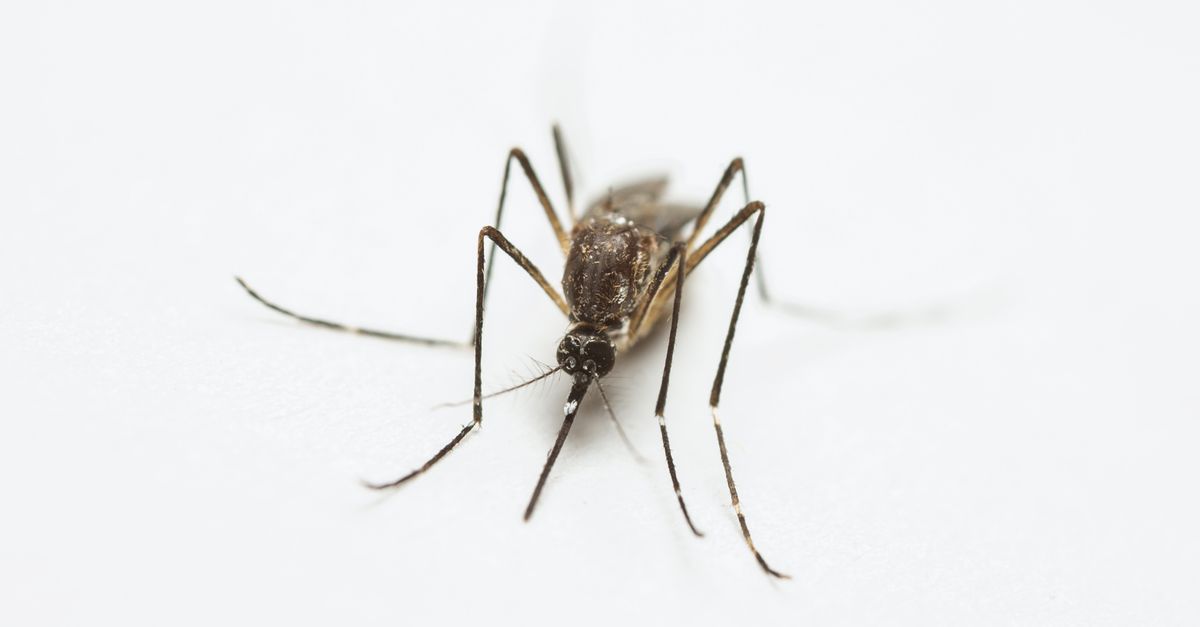
Unlike mosquitoes, which are attracted primarily to carbon dioxide and body heat, midges are drawn to a complex cocktail of skin chemicals, including lactic acid, ammonia, and octenol. This chemical attraction profile is important: it’s why a product that disrupts olfactory receptor function (like Saltidin, Smidge’s active ingredient) has a mechanistic advantage over fragrance-based products against midges specifically. Masking a broad-spectrum perfume signal does not neutralise the specific volatile organic compounds that Culicoides impunctatus uses to locate a host.
Midges are also far smaller than mosquitoes — able to penetrate standard mosquito nets — and far more persistent. A product that works brilliantly against mosquitoes can be utterly useless against midges.
Both Smidge and Avon Skin So Soft have built their reputations specifically on midge control in the UK. But they take fundamentally different approaches, with fundamentally different regulatory statuses.
The Contenders: Smidge vs Avon Skin So Soft
| Feature | Smidge | Avon Skin So Soft (Original Dry Oil Spray) |
|---|---|---|
| Active ingredient | 20% Saltidin (Picaridin/Icaridin) | No registered active repellent ingredient |
| How it works | Blocks insect olfactory receptors | Proposed: physical barrier / chemoreceptor interference via Jojoba oil and Butyl Octyl Salicylate |
| HSE / Biocidal Products Regulation registered as repellent | Yes | No |
| Duration (manufacturer claim) | Up to 8 hours | Not stated (not marketed as repellent) |
| Realistic duration in heavy midge conditions | 5–7 hours | 1–2 hours |
| Reapplication frequency | Every 5–7 hours; sooner if sweating heavily or after swimming | Every 1–2 hours in active midge conditions |
| Water resistance | Yes | No |
| Application method | Pump spray | Dry oil spray |
| Scent | Mild, neutral | Distinctive birch oil and Jojoba — widely recognised, divisive |
| Grease feel | Non-greasy, dries quickly | Oily finish |
| UK RRP | £6.99–£12.99 (50ml–100ml) | £6.00–£10.00 (150ml) |
| Estimated cost per application | ~£0.40–0.60 | ~£0.20–0.35 |
| Best for | Extended outdoor sessions, backpacking, fishing | Short garden use, casual walks, budget-conscious users |
| DEET-free | Yes | Yes |
| Safe for under-2s | No — specific guidance advises against use on children under 2 | No specific restriction (not a registered repellent) |
| Pregnancy-safe (manufacturer guidance) | Yes | Yes (fragrance/moisturiser only) |
Smidge: The Science-Led Solution
Smidge is a Scottish brand developed specifically for Highland midge conditions. Its active ingredient, Saltidin (also called Picaridin or Icaridin), is a synthetic compound originally developed by Bayer in the 1980s. It is widely regarded as one of the most effective alternatives to DEET, with a significantly better safety and sensory profile, and is registered under the UK Biocidal Products Regulation as an insect repellent.
How Smidge Works Against Midges
Saltidin works by blocking the insect’s ability to detect human skin chemicals. According to manufacturer specifications, it interferes with the olfactory receptors that midges use to locate a host. This is a fundamentally different mechanism from DEET, which functions as a direct deterrent, and from fragrance-based products, which attempt to mask host signals rather than neutralise the receptor response.
This distinction matters for Culicoides impunctatus specifically. Because Highland midges rely heavily on detecting lactic acid, ammonia, and octenol — not just broad olfactory signals — a product that disrupts receptor function at the source has a structural advantage over one that merely adds competing scent.
Owner reviews on Amazon UK (over 4,500 ratings, 4.2 stars average) consistently praise Smidge for its effectiveness in heavy midge conditions. One verified reviewer from the Scottish Highlands wrote: “We live in an area with biblical midge levels. Smidge is the only thing that lets us sit in the garden in July. It works for a solid 6–7 hours.”
A note on duration claims: The manufacturer’s “up to 8 hours” figure reflects controlled test conditions. Real-world performance degrades with sweating, rainfall, swimming, and insufficient application thickness. Community consensus from UK fishing and hillwalking forums places reliable protection at 5–7 hours under moderate exertion, and closer to 3–4 hours if you’re sweating heavily or caught in rain. Reapply accordingly.
Pros of Smidge
- Registered efficacy: Smidge is registered under the UK Biocidal Products Regulation as an insect repellent — a legal and scientific distinction Avon Skin So Soft does not share
- Long-lasting: Manufacturer claims up to 8 hours; owner feedback suggests 5–7 hours under normal outdoor conditions
- Non-greasy: Dries quickly without leaving a sticky residue — important for anglers and photographers who handle equipment
- Low odour: Minimal scent, suitable for use near food or in enclosed spaces, and will not interfere with fishing lures
- Water-resistant: Survives sweat and light rain — critical in the Scottish Highlands
Cons of Smidge
- Price: At roughly £8–£12 for 100ml, it costs more per application than Avon
- Availability: Less widely stocked than Avon — available at Cotswold Outdoor, Go Outdoors, and Amazon UK, but not in most supermarkets
- Under-2s restriction: Not recommended for children under 2 years old; parents should check current manufacturer guidance before use on young children
Best Use Cases for Smidge
- Long days hillwalking in the Highlands or Lake District
- Fishing trips where you need a non-greasy, low-scent product
- Wild camping where all-day protection is essential
- Any situation where you’ll be outdoors for 4+ hours in active midge conditions
Buy Smidge Everyday Insect Repellent 100ml Pump Spray on Amazon UK (affiliate link)
Avon Skin So Soft: The Cult Classic
Avon Skin So Soft Original Dry Oil Spray is a moisturising body oil that was never designed to repel insects. Its reputation as a midge repellent emerged organically from the 1990s onwards, when Scottish fishermen, outdoor workers, and — most famously — British Armed Forces personnel discovered that it appeared to deter midges in field conditions. Avon has never officially marketed it as an insect repellent, and for good regulatory reason: it is not registered under the UK Biocidal Products Regulation or approved by the Health and Safety Executive (HSE) as a repellent product. Avon cannot legally make efficacy claims for midge repellency on the packaging.
That has not stopped it becoming one of the most talked-about midge remedies in the UK.
The British Army Connection
The single most persistent piece of folklore in this debate is the claim that British Army soldiers — including SAS personnel stationed in Scotland — used Avon Skin So Soft as an unofficial midge repellent. This story is well-documented in military memoirs and outdoor press, and Avon has acknowledged the phenomenon without officially endorsing it. Whether it reflects genuine efficacy or simply the absence of better alternatives in the field at the time is a matter of debate, but it cemented the product’s cult status with an audience that takes outdoor conditions seriously.
How Avon Skin So Soft Actually Works (Or Might Work)
This is where the honest answer gets complicated. The product contains no registered repellent active ingredient. The most commonly cited explanation — that it “masks human scent with fragrance” — is an oversimplification that doesn’t fully account for the anecdotal reports of its effectiveness.
The more plausible proposed mechanism involves two of its key ingredients: Jojoba oil and Butyl Octyl Salicylate. Jojoba oil creates a light physical film on the skin that may interfere with midge landing behaviour. Butyl Octyl Salicylate, a synthetic ester used as a fragrance fixative and skin-conditioning agent, has been proposed to interfere with midge chemoreceptors through a mechanism distinct from simple scent masking. Neither of these mechanisms has been confirmed in peer-reviewed research specific to Culicoides impunctatus, and Avon has not funded or published such trials.
What the evidence actually shows is this: anecdotal reports and community testing suggest Avon Skin So Soft provides some deterrent effect against midges, particularly in low-to-moderate midge activity conditions. In heavy midge conditions — a Level 4 or 5 on the Scottish Midge Forecast — community consensus is that it provides meaningful protection for approximately 1–2 hours, after which reapplication is needed. It is not in the same efficacy category as a registered Saltidin-based repellent.
Is Avon Skin So Soft scientifically proven to repel midges? No. It has no HSE registration as a repellent, no peer-reviewed trials confirming efficacy against Culicoides impunctatus, and Avon itself makes no such claim. What it has is decades of consistent anecdotal support from a credible outdoor community. Those are different things, and you should make your choice accordingly.
The Distinctive Scent
Avon Skin So Soft has a well-known, immediately recognisable scent built around birch oil and Jojoba — it is emphatically not a generic floral perfume. Anyone who has used it in the field will recognise it instantly. Opinions in the outdoor community are divided: some find it pleasant and prefer it to the clinical neutrality of Smidge; others find it overpowering on a long day in the hills. It is worth noting that if you are fly fishing, the scent may transfer to your hands and potentially your flies — a practical consideration Smidge avoids entirely.
Pros of Avon Skin So Soft
- Cost: Cheaper per application than Smidge, and widely available in supermarkets, pharmacies, and online
- Moisturising: Functions as a body moisturiser regardless of repellent effect — useful for skin exposed to wind and sun
- No age restriction as a repellent: Since it is not registered as a repellent, it carries no repellent-specific age guidance — though standard cosmetic ingredient caution applies
- Cult credibility: The outdoor community’s long-standing endorsement carries genuine social proof, even without clinical backing
- Convenient for casual use: The dry oil spray format is easy to apply quickly for short garden sessions or brief walks
Cons of Avon Skin So Soft
- Not a registered repellent: No HSE approval, no Biocidal Products Regulation registration — this is a legal and practical distinction, not a technicality
- Short effective window: Realistic protection in active midge conditions is 1–2 hours, not the 2–4 hours sometimes cited in casual reviews
- Oily finish: Leaves a residue that some users find uncomfortable, particularly in warm weather or when handling equipment
- No water resistance: Degrades quickly with sweat or rain
- Unproven mechanism: The “why it works” question remains genuinely unanswered
Best Use Cases for Avon Skin So Soft
- Short garden sessions or casual walks in low-to-moderate midge conditions
- Budget-conscious users who want some deterrent effect without the cost of a registered repellent
- Users who want a product that doubles as a moisturiser
- Situations where you’re comfortable reapplying every 1–2 hours
Buy Avon Skin So Soft Original Dry Oil Spray on Amazon UK (affiliate link)
The Verdict: Which Should You Choose?
If you are heading into the Scottish Highlands, the Lake District, or any environment with significant midge pressure — especially for a full day or overnight — Smidge is the clear choice. It is a registered repellent with a proven active ingredient, meaningful duration, and water resistance. The price premium over Avon is justified by the efficacy gap.
If you are pottering in the garden on a summer evening, taking a short walk in a low-midge area, or want a budget option for occasional use, Avon Skin So Soft is a reasonable choice — provided you go in with realistic expectations. It will provide some deterrent effect in light conditions. It will not protect you adequately on a Level 4 midge day in Wester Ross.
The most practical approach for many users is both: Avon for casual, low-stakes situations where you want something cheap and easy to hand; Smidge for any serious outdoor commitment. The products are not really competing for the same use case once you understand what each one actually is.
Frequently Asked Questions
Does Avon Skin So Soft actually work on midges? It provides some deterrent effect in low-to-moderate midge conditions, likely lasting 1–2 hours. It is not registered as a repellent, has no HSE approval, and Avon does not market it as one. It is not a substitute for a registered repellent in serious midge conditions.
Why does the British Army use Avon Skin So Soft? British Army personnel — including soldiers training in Scotland — reportedly adopted Avon Skin So Soft as an unofficial midge deterrent from at least the 1980s and 1990s. The most likely explanation is a combination of genuine mild efficacy, the absence of better-smelling alternatives in field conditions, and the powerful effect of word-of-mouth in a close-knit community. It has never been officially endorsed by the MOD as a repellent.
Is Smidge safe for babies and toddlers? Smidge is not recommended for children under 2 years old. Always check current manufacturer guidance before applying any insect repellent to young children. For under-2s, physical protection such as midge nets over prams and protective clothing is the recommended approach.
Does Smidge work on horseflies? Smidge’s active ingredient, Saltidin (Picaridin), has documented efficacy against a range of biting insects including horseflies (Tabanidae), though the product is primarily marketed for midges and mosquitoes. Community feedback from UK users suggests reasonable effectiveness against horseflies, though horseflies are more persistent and harder to deter than midges with any chemical repellent.
Can you use Avon Skin So Soft on dogs? This is a common question, particularly among dog owners walking in midge-heavy areas. Avon Skin So Soft is not formulated or tested for use on animals. Some dog owners report using it on their pets’ coats, but there is no safety data to support this, and certain fragrance ingredients may be irritating or harmful to dogs. Consult your vet before applying any human cosmetic product to your dog.
Is Smidge DEET-free? Yes. Smidge uses Saltidin (Picaridin/Icaridin) as its active ingredient, with no DEET. It is also free from the strong od