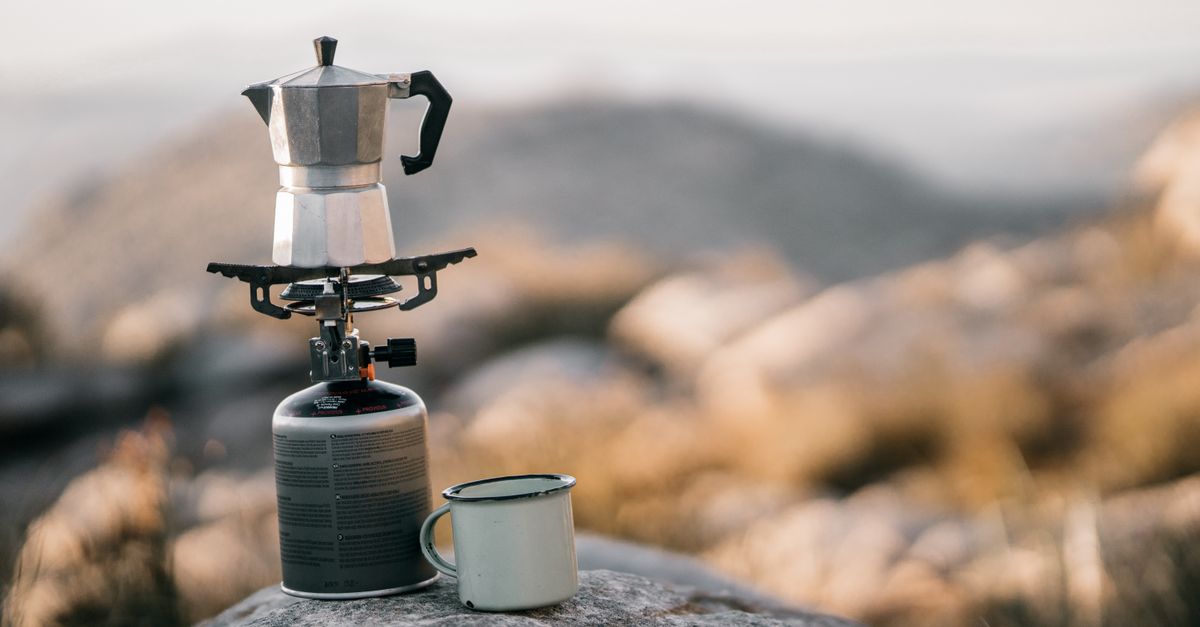
Best Lightweight Camping Stove 2026: Five Picks for UK Backpackers
A good lightweight camping stove disappears into your pack on the walk-in and still behaves on the third morning, when the wind is coming off the sea at…

Best Lightweight Camping Stove 2026: Five Picks for UK Backpackers
A good lightweight camping stove disappears into your pack on the walk-in and still behaves on the third morning, when the wind is coming off the sea at force five and your hands have stopped cooperating. That is the bar, and modern canister burners clear the weight half of it comfortably — several in this guide weigh less than the smartphone in your pocket. What they don’t all clear is the performance half. Light and good are not the same thing, and the lightest burner on the shelf is rarely the one you’ll want when you’re actually cooking.
This guide covers five stoves UK backpackers genuinely buy: the Soto WindMaster, the MSR PocketRocket Deluxe, the Alpkit Kraku, the BRS-3000T and the Jetboil Stash. It is built from desk research — manufacturer specification pages, published expert rankings and aggregated owner feedback from UK and international backpacking communities — rather than hands-on field testing. Where a figure comes from a named source, it is attributed so you can check it yourself, and every price is a hedged approximation to verify before you spend.
One point worth holding in mind throughout: the decision that actually changes how a stove performs in Britain is regulated versus unregulated, not grams. That’s explained in full below, and it’s the reason the two lightest stoves here are not automatically the two best.
Quick picks at a glance
| Stove | Best for | Stated weight | Regulated? |
|---|---|---|---|
| Soto WindMaster | Best overall for three-season UK use | ~67 g body with TriFlex support / ~87 g with Quad support | Yes |
| MSR PocketRocket Deluxe | Best-value regulated option | ~83 g | Yes |
| Alpkit Kraku | Best sub-50 g stove with reliable UK stock | ~45 g | No |
| BRS-3000T | Best on a tight budget | ~25–26 g bare stove (manufacturer-listed) | No |
| Jetboil Stash | Best integrated system | ~230 g complete / ~79 g burner alone | No |
Indicative UK pricing, all approximate and worth checking against the retailer before you buy: the BRS-3000T typically around £10–£15, the Alpkit Kraku typically around £20, the MSR PocketRocket Deluxe typically around £65–£75, and the Soto WindMaster typically around £75–£85. The Jetboil Stash is sold as a complete cooking system rather than a bare burner, so it isn’t priced like the others — see its section below for what’s in the box.
Short answer: buy the Soto WindMaster unless you specifically want an all-in-one system, in which case the Jetboil Stash is the lightest credible integrated option. If your budget is tighter than your principles, the Alpkit Kraku is the one to look at first.
How to choose a lightweight camping stove
Weight: the number that counts isn’t the one on the box
Manufacturers quote burner weight, and that figure is only a fraction of what goes in your pack. The canister is the heavy part. According to the specification pages published by MSR (IsoPro), Jetboil (Jetpower) and Coleman, gross canister weights run roughly as follows:
| Net gas content | Gross canister weight (approx.) |
|---|---|
| 100 g | ~200 g |
| 230 g | ~370–380 g |
| 450 g | ~640–660 g |
The practical meaning: a 100 g canister adds roughly 200 g to your pack, which is several times the weight of the lightest burner in this guide and comfortably more than the heaviest. Choosing between a 26 g stove and an 87 g stove is a rounding error next to choosing between a 100 g and a 230 g canister. Fuel quantity, not burner choice, dominates your cooking weight — and the pot you pair with it can weigh more than the stove and the canister combined.
This is why integrated systems compete on a different playing field. A Jetboil Stash is listed at around 230 g all-in — burner, 0.8 L pot, lid and pot support — so it doesn’t undercut a carefully assembled separate kit (more on that in its section), but it does remove the guesswork about which pot, lid and windscreen you’ll be carrying.
Regulated vs unregulated: the decision that actually matters
A pressure regulator holds gas flowing at a consistent rate as the canister cools and as it empties. Without one, output simply tapers with canister pressure, so the stove behaves differently on the first brew of a trip than on the last, and in the cold than in the warm. A regulated burner also holds a genuine simmer, rather than flip-flopping between a roar and a splutter as you try to keep a sauce at a low bubble.
Unregulated stoves are lighter, cheaper and mechanically simpler, and for boiling water they are perfectly adequate. For actual cooking — a risotto, a rehydrated meal you want to control, anything that needs to sit at a gentle simmer — the extra grams of a regulator earn their place.
This is the sharpest point in the whole category: the Soto WindMaster and the MSR PocketRocket Deluxe are the only sub-90 g regulated stoves with reliable UK retail presence. Every other pick in this guide is unregulated. Everything else you read about windshields and handles is secondary to that distinction.
Wind resistance
Wind is the single biggest variable in real-world stove performance, and British hill weather supplies it generously. A concave or recessed burner head shelters the flame from the side, which is exactly what the WindMaster’s recessed Micro Regulator burner is designed to do. The MSR PocketRocket Deluxe pairs its regulator with a built-in windscreen. Integrated systems go further still, combining a shielded pot with a flux ring so the flame is enclosed rather than exposed. If you regularly cook in exposed ground outside a tent vestibule, prioritise this over a 20 g weight saving.
Ignition
Built-in piezo igniters are convenient, and they are also the most common failure point reported in owner reviews across Amazon UK and Cotswold Outdoor product pages. They generally work well at low altitude in mild conditions; they become unreliable in cold and wet weather. Carry a backup lighter regardless — it weighs almost nothing and it turns a dead stove into a working one. Of the picks here, the MSR PocketRocket Deluxe ships with a built-in piezo igniter, while the Alpkit Kraku and the BRS-3000T have no igniter at all, so a lighter is mandatory with those two rather than merely sensible.
Boil times: read the conditions before you compare
Manufacturer boil-time figures are quoted for 500 ml of water at approximately 20 °C ambient, and that qualification is the whole point. A figure measured on half a litre in warm conditions cannot honestly be presented as “one litre in under four minutes” — a litre takes substantially longer, and cold water, wind and altitude stretch it further. When you compare stoves, normalise every figure to 500 ml, note the stated conditions, and check it against the manufacturer’s own specification page rather than a retailer’s marketing copy. Two stoves quoted under different conditions are not being compared at all.
The five picks reviewed
Soto WindMaster — best overall
Best for: UK three-season backpackers who cook rather than merely boil, and who want one regulated stove that behaves the same in March as it does in September.
Key specifications:
- Stove body approximately 67 g with the three-prong TriFlex support
- The four-prong Quad support adds roughly 20 g, bringing the total to around 87 g
- Regulated, with a recessed Micro Regulator burner
- Manufacturer-stated maximum pot diameter of 18 cm when used with the four-prong Quad support
- EN417 canister compatible
Why it’s here: the recessed Micro Regulator burner is the combination that makes this stove the default recommendation for British conditions — regulation smooths output as the canister cools, and the recessed head shields the flame from crosswind. It also simmers, which matters more than most buyers expect until the first time they try to rehydrate a proper meal rather than a pot noodle.
The honest caveat: it’s the most expensive bare burner in this guide at typically around £75–£85, and if you fit the four-prong Quad support for stability you’re carrying around 87 g — which all but erases the weight gap to the 83 g MSR PocketRocket Deluxe below. The 18 cm pot limit with the Quad support is also worth noting if you favour a wide pan.
Verdict: the most capable all-round light stove for UK use, provided you’re happy paying a premium for regulation and wind tolerance rather than chasing the smallest possible number.
Where to buy: Cotswold Outdoor, Ultralight Outdoor Gear and Amazon UK; typically around £75–£85.
MSR PocketRocket Deluxe — best value regulated option
Best for: anyone who wants regulated performance and an igniter out of the box, at a lower price than the WindMaster.
Key specifications:
- Approximately 83 g
- Regulated — pressure regulator
- Built-in windscreen
- Piezo igniter included
- EN417 canister compatible
Why it’s here: this is the closest regulated UK rival to the WindMaster, and it was missing from earlier versions of this guide — it belongs in any honest comparison of sub-90 g regulated stoves. It matches the WindMaster on the core advantage, regulation, while adding a built-in windscreen and a piezo igniter, and typically undercutting it by around £10 at roughly £65–£75.
The honest caveat: that piezo igniter is a convenience, not a guarantee. Owner reviews on Amazon UK and Cotswold Outdoor product pages repeatedly flag piezo ignition as the first thing to fail, particularly in cold, wet conditions — so pack a lighter even though the stove lights itself.
Verdict: the sensible buy if you want regulation without paying top of the market, and close enough to the WindMaster that the decision comes down to price and personal preference.
Where to buy: Cotswold Outdoor and Go Outdoors; typically around £65–£75.
Alpkit Kraku — best sub-50 g stove with reliable UK stock
Best for: UK buyers who want the lightest stove they can walk into a shop and buy, and anyone building a minimal titanium-pot kit around a featherweight burner.
Key specifications:
- Approximately 45 g
- Unregulated
- No igniter
- EN417 compatible
Why it’s here: this is the sharpest UK-specific angle in the category. At around 45 g, the Kraku is the only sub-50 g stove with consistent UK high-street availability, stocked reliably at Alpkit directly (alpkit.com) and in Alpkit stores. For a British buyer who wants to see the thing before buying it — or replace it without waiting on an international parcel — that reliability is worth as much as the gram count.
The honest caveat: it is unregulated and has no igniter, so output tapers as the canister cools and empties (the mechanism is covered in the regulated versus unregulated section above), and you must carry a lighter. Pairing it with a good windshield gets you most of the way to a stable flame, but not all the way.
Verdict: the best balance of price, weight and availability for UK buyers who don’t need regulation — typically around £20 and genuinely easy to buy.
Where to buy: Alpkit directly at alpkit.com and in Alpkit stores; typically around £20.
BRS-3000T — best on a tight budget
Best for: gram-counting minimalists, buyers on the smallest budget, and anyone wanting a spare or backup burner that weighs nothing.
Key specifications:
- Bare stove approximately 25–26 g per the manufacturer’s listing
- Unregulated
- No igniter
- EN417 canister compatible
Why it’s here: at roughly 25–26 g it is the lightest burner in this guide, and at typically around £10–£15 it is by some distance the cheapest. For boiling water on a fair-weather trip it does the job. Note on the weight figure: the widely repeated 40 g number you’ll see in some listings and older write-ups appears to be a bundled-kit figure rather than the stove alone — the manufacturer’s own listing is 25–26 g, so treat 40 g as the packed weight of the stove plus accessories, not the burner.
The honest caveat: two of them. First, UK retail availability is inconsistent — Alpkit and Amazon UK carry it intermittently, and it isn’t stocked reliably at bricks-and-mortar UK chains, so you may be waiting on a restock. Second, community consensus on Reddit’s r/Ultralight reports quality that varies batch to batch, so two identical-looking stoves may not perform identically.
Verdict: unbeatable on price and grams if you accept the unregulated flame, the missing igniter and the erratic UK supply.
Where to buy: Alpkit and Amazon UK, when in stock; typically around £10–£15.
Jetboil Stash — best integrated system
Best for: buyers who want one package, integrated wind protection and no faff — a stove you can hand to someone who has never assembled a canister burner before.
Key specifications:
- Complete system weight approximately 230 g, comprising the 0.8 L pot, burner, lid and pot support
- Burner alone approximately 79 g
- Unregulated
- EN417 canister compatible
Why it’s here: the Stash wins on convenience and on integrated wind protection, not on grams — and it’s worth being blunt about that. A bare BRS-3000T paired with a 750 ml titanium pot and a foil windscreen comes to roughly 150–170 g, which is distinctly lighter than the Stash’s ~230 g. What you get for the extra weight is a shielded pot-and-burner combination that stands up to wind without any improvisation, plus a lid and pot support that are already part of the system.
The honest caveat: it’s unregulated, and because the pot is part of the system you’re committed to the supplied 0.8 L vessel rather than your own cookware. If you prize flexibility or the lowest possible pack weight, a separate kit is the better answer.
Verdict: the most sensible integrated choice for UK conditions — just don’t buy it expecting it to be the lightest option on the hill, because it isn’t.
Where to buy: Jetboil systems of this type are typically stocked by larger UK outdoor chains and established online outdoor retailers rather than small specialists, so check current availability with the retailer before ordering.
UK-specific notes: standards, cold weather, resupply and safety
EN417 and the Lindal valve. EN417 is the UK and EU canister standard, using the Lindal valve, and every stove in this guide is compatible with it. In practice that means canisters from different brands will physically fit any of these burners, which is a real advantage when you’re buying fuel in an unfamiliar town. The valve being standard doesn’t mean the contents are: the blend inside differs between brands, which brings us to cold weather.
Cold weather and canister pressure. Typical UK three-season canisters — MSR IsoPro, for example, is an 80/20 isobutane/propane blend — lose pressure as temperatures approach 0 °C, so output drops even on a regulated stove. Regulation partially compensates, smoothing the flow and keeping more usable pressure at the burner head than an unregulated stove manages in the same conditions; it doesn’t manufacture pressure that isn’t there. Below roughly −5 °C sustained, canister stoves stop being the right tool and liquid fuel becomes the reliable answer. If your winter plans involve sustained sub-zero nights, budget for a liquid-fuel stove as well.
Resupply. Canister resupply is unreliable in remote Scottish glens, so don’t plan on topping up mid-route. Cotswold Outdoor and Go Outdoors stock canisters reliably in larger towns, which means buying your fuel before you head for the hills is the practical approach rather than a matter of preference.
Carbon monoxide. Jetboil, MSR and Soto all publish manufacturer warnings that explicitly prohibit using their stoves inside tents or bothies. This is not overcautious box-ticking: a burning canister stove produces carbon monoxide, and an enclosed space with the door zipped shut is precisely where that becomes dangerous. Cook outside the tent, in a vestibule with ventilation if you must shelter, and treat the manufacturer’s guidance as the authority on the subject.
Frequently asked questions
Will any gas canister fit these stoves? Yes, provided it’s an EN417 canister with a Lindal valve, which is the UK and EU standard. All five stoves here accept them, so an MSR canister will fit a Soto burner and a Coleman canister will fit a Jetboil system. What varies between brands is the gas blend inside rather than the fitting, and blend is what governs cold-weather performance — so if you’re camping near freezing, check the isobutane-to-propane ratio on the label rather than assuming all canisters behave alike.
How much of my pack weight is actually the gas? Far more than most buyers expect. Per MSR, Jetboil and Coleman specification pages, a 100 g net canister weighs roughly 200 g gross, a 230 g net canister around 370–380 g, and a 450 g net canister around 640–660 g. That means the canister typically outweighs the burner several times over. If you’re shaving grams, deciding how much gas you actually need for the trip is more productive than agonising over a 20 g difference between stoves.
Do I need a regulated stove for UK three-season use? Not strictly — if all you do is boil water, an unregulated stove such as the Alpkit Kraku or BRS-3000T will do it, particularly in mild conditions with a windshield. Where a regulator earns its keep is cooking at a controlled simmer and performing consistently on the last brew as the canister cools and empties, which is exactly when a British three-season trip tends to use its last gas. That trade-off is why the WindMaster and PocketRocket Deluxe sit at the top of this guide.
Is it safe to use a canister stove inside a tent or bothy? No. Jetboil, MSR and Soto all publish manufacturer warnings that explicitly prohibit it because burning gas produces carbon monoxide in an enclosed space. A bothy with the door closed or a fully zipped tent is the highest-risk scenario you can create with a stove, and no amount of convenience justifies it. Cook outside, or in a well-ventilated vestibule at most, and follow the wording on the manufacturer’s own safety page.
Why do stove boil times all seem to be quoted for 500 ml? Because that’s the test condition manufacturers standardise on: 500 ml of water at approximately 20 °C ambient, as stated on their own specification pages. It gives a consistent basis for comparing burners, but it is not the same as a litre in cold, windy conditions on a Scottish hillside, which takes considerably longer. If you see a claim like “one litre in under four minutes”, treat it as marketing rather than a specification — and always compare stoves on identical, stated conditions.
What’s the catch with the very cheapest ultralight stoves? The BRS-3000T is the case in point at around £10–£15 and roughly 25–26 g, but the saving comes with three strings attached: it’s unregulated, it has no igniter, and UK availability is intermittent — Alpkit and Amazon UK carry it only sporadically, and bricks-and-mortar chains don’t stock it reliably. Reddit’s r/Ultralight community also reports batch-to-batch quality variation, so performance isn’t guaranteed to match between two otherwise identical stoves. If you want budget and UK support together, the Alpkit Kraku at around £20 is the steadier bet.
Will my existing pot work with these stoves? For the bare burners, generally yes, with one specific limit worth knowing: Soto states a maximum pot diameter of 18 cm for the WindMaster when it’s fitted with the four-prong Quad support, so a wider pan overhangs the supports and becomes unstable. Wider, heavier pots also make a wider support worthwhile, which is the reason the Quad accessory exists and why it adds roughly 20 g. The Jetboil Stash is the exception in the other direction — it comes with its own 0.8 L pot as part of the system, so you use that rather than your own cookware.
The bottom line
If you want one stove that handles British three-season conditions without drama, the regulated Soto WindMaster is the pick — and the MSR PocketRocket Deluxe is its closest rival, typically around £10 cheaper and worth a serious look. If you’d rather carry a complete system than assemble one, the Jetboil Stash earns its ~230 g through integrated wind protection and zero setup, as long as you accept that it isn’t the lightest thing you could carry. And if the budget is the binding constraint, the Alpkit Kraku at around £20 and ~45 g is the best-supported ultralight option you can actually buy in Britain today.