Lake District Wild Camping Map: Where It's Tolerated and the Rules
Where wild camping is tolerated in the Lake District, the legal position, a map-by-area breakdown, and the rules that keep it permitted.
Lake District Wild Camping Map: Where It’s Tolerated and the Rules
Wild camping high in the Lakeland fells is one of the best nights out in England — and it sits on a very different legal footing from the equivalent in Scotland. This guide is based on desk research: National Park Authority and National Trust guidance, Ordnance Survey mapping, and published fell-walking sources rather than first-hand testing. Below you will find the legal position stated plainly, an area-by-area breakdown of where camping is tolerated, the specific places to avoid, and the practical rules that keep the tolerance in place.
Quick Reference
| Area | Tolerance | Notes |
|---|---|---|
| High fells above the intake wall | Generally tolerated | The established convention across most of the Park |
| Valley floors, fields, farmland | Not tolerated | Enclosed land in active agricultural use |
| Lakeshores and roadside laybys | Not tolerated | Persistent problem areas with active enforcement |
The Legal Position — Read This First
This is the part most guides skate over, so it is worth being direct.
Wild camping in the Lake District is not a legal right. England has no general right to camp on open country. The Countryside and Rights of Way Act 2000 created a right of access on foot to mapped open access land, but camping is specifically excluded from that right. In strict legal terms, pitching a tent without the landowner’s permission is a civil trespass.
What exists instead is a long-standing tolerance. The Lake District National Park Authority and major landowners — the National Trust in particular, which owns a very large share of the central fells — publish guidance that accepts responsible wild camping high on the fells while asking campers to follow specific conditions. That is a discretionary accommodation, not a permission, and it can be withdrawn.
Two comparisons help place it:
- Scotland is genuinely different. The Land Reform (Scotland) Act 2003 created a statutory right of responsible access that expressly includes wild camping, subject to the Scottish Outdoor Access Code. That is a right, not a tolerance.
- Dartmoor is different again, having its own specific statutory backdrop for backpack camping on parts of the commons, which was the subject of prolonged litigation. Do not assume the Dartmoor position transfers to Cumbria; it does not.
The practical upshot for the Lakes: you are relying on goodwill. If a landowner or ranger asks you to move on, the correct response is to pack up and move on politely. The tolerance survives because the overwhelming majority of fell campers behave well.
The Rule That Defines Everything: Above the Intake Wall
The single convention that governs where wild camping is accepted in the Lake District is the highest intake wall — sometimes called the highest fell wall.
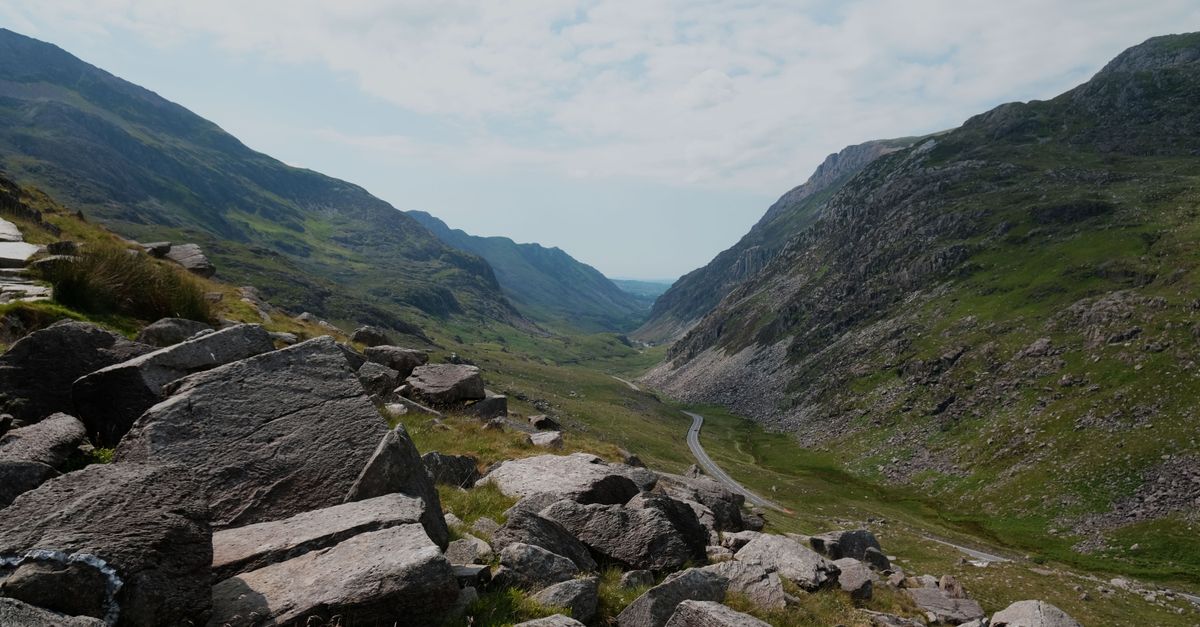
Lakeland valleys are enclosed by drystone walls into fields used for grazing and hay. Above the topmost of those walls, the ground opens out into unenclosed fell: rough grass, bracken, scree and tarns. That upper ground is where wild camping is tolerated. Below it, you are in enclosed farmland, and camping there is neither tolerated nor sensible.
On an Ordnance Survey map, the transition is easy to read. Field boundaries drawn as thin black lines stop; above them the map shows open contours, tarns, and access land tinted a pale yellow-buff. Aim to be meaningfully above that last wall, not just over it.
Two further conventions travel with it:
- High, not low. The tolerance is for high fell camping, not for pitching just out of sight of a road.
- Out of sight of habitation. If your tent is visible from houses, a road, or a car park, you are in the wrong place.
Area-by-Area
Central fells — Great Gable, Scafell, Esk Pike, Bowfell. The heart of the Park and the most established wild camping country. Tarns such as Styhead Tarn, Sprinkling Tarn and Angle Tarn (the one near Esk Hause) are long-standing pitches with flat ground and water. They are also popular, so expect company on a fine summer weekend, and go further if you want solitude. Most of this ground is National Trust land.
Eastern fells — Helvellyn, Fairfield, Dollywaggon. Red Tarn beneath Helvellyn is the obvious high pitch, in a spectacular position under Striding Edge. Grisedale Tarn between Fairfield and Dollywaggon Pike is another. Both are exposed; wind is the practical constraint rather than permission.
Far Eastern fells — High Street, Haweswater, Kentmere. Quieter than the centre and good for a first solo wild camp. Angle Tarn above Patterdale (a different tarn from the central one, and a beautiful pitch) and Small Water above Haweswater are well known. Note that Haweswater is a working reservoir owned by United Utilities, so stay well clear of the water’s edge and any operational infrastructure.
Western fells — Ennerdale, Pillar, Buttermere. Genuinely remote by English standards, with the long walk-in to Ennerdale rewarding anyone wanting quiet. Fewer obvious tarn pitches, more rough ground; pick your spot carefully.
Southern fells and the Coniston group. Levers Water and the ground around the Old Man of Coniston are used, though the area carries a good deal of old mining infrastructure — spoil heaps, shafts and levels — so be careful where you pitch and keep away from any opening.
Borrowdale, Langdale and Wasdale valley floors. These are the honeypots and they are precisely where wild camping is not accepted. The valley bottoms are farmland, and the problems associated with roadside camping have made landowners there considerably less tolerant. Use a campsite in the valley or walk up onto the fell.
Where Not to Camp
- Enclosed fields and farmland. Below the intake wall, in active agricultural use, and off limits.
- Lakeshores. Camping beside Windermere, Derwentwater, Coniston and Ullswater is a persistent problem, and enforcement is active in places. The tolerance is for high fells, not lakesides.
- Roadside laybys and car parks. Campervan and car-adjacent camping is not what the tolerance covers, and several areas have byelaws or restrictions.
- Anywhere within sight of a house.
- Directly beside a tarn outflow or a beck used as a water supply. Pitch a good distance from water.
- On archaeology. The fells are full of cairns, sheepfolds, mine workings and prehistoric remains. Do not pitch on or move any of it.
The Rules That Keep It Tolerated
These are not arbitrary etiquette — they are the specific conditions the National Trust and the National Park Authority ask for, and the tolerance depends on them.
- Arrive late, leave early. Pitch at or near dusk, strike camp early. A tent that stands all day looks like an encampment rather than a night’s shelter.
- Small groups, one or two tents. Larger groups should use a campsite. Several tents together reads as a gathering and attracts complaints.
- One night only in any one spot.
- No campfires. None. This is the one that causes real damage. The fells include deep peat, which can smoulder underground for weeks, and fire scars on turf take years to recover. Use a stove.
- Take everything out. All litter, including food waste and fruit peel, which does not rot away quickly at altitude.
- Deal with toilet waste properly. Go at least 30 metres from any water, dig a hole around 15cm deep with a trowel, bury the waste, and carry out all paper and hygiene products. Toilet paper tucked under a stone is the single most common and most unpleasant failure on popular fells.
- Leave no trace of the pitch. Do not build walls or shelters, do not dig drainage trenches around the tent, and replace any stone you move.
- If asked to move, move. Politely and promptly.
Practical Notes for a Lakeland Wild Camp
- Water. Tarn and beck water should be filtered or treated. The fells carry sheep, and giardia and other pathogens are a genuine risk from untreated water. Take from flowing becks above grazing where you can.
- Wind is the main problem, not cold. High Lakeland pitches are exposed and the weather turns quickly. A tent that stands up to wind matters more than one rated for low temperatures, and pitching in the lee of a rise beats a scenic but exposed spot.
- Midges. From roughly late May to September, still, damp evenings near standing water bring them out. A breezy pitch is worth a great deal more than repellent.
- Sleeping mat R-value. Fell ground is cold and often damp even in summer. An R-value around 3 to 4 is the sensible three-season target; the mat matters more than the bag for warmth from below.
- Navigation. Carry OS Explorer OL4, OL5, OL6 and OL7 as appropriate, plus a compass and the ability to use them. Phone mapping is excellent right up until the battery dies or the cloud comes down.
- Tell someone. Leave your intended area and expected return with a person who will notice, and check the mountain weather forecast rather than the town forecast.
FAQ
Is wild camping legal in the Lake District? Not as a right. England has no general legal right to camp on open country — the Countryside and Rights of Way Act 2000 grants access on foot to mapped open access land but specifically excludes camping, so pitching without the landowner’s permission is technically a civil trespass. What exists is a tolerance: the National Park Authority and major landowners including the National Trust accept responsible wild camping high on the fells, subject to conditions. It is goodwill rather than entitlement, and if someone asks you to move on, you should.
Where can I wild camp in the Lake District? The convention is above the highest intake wall — the topmost drystone wall enclosing the valley fields — on open fell, out of sight of roads and houses. Established high pitches include Styhead Tarn, Sprinkling Tarn and Angle Tarn in the central fells, Red Tarn beneath Helvellyn, and Small Water above Haweswater. Valley floors, lakeshores, farmland and roadside laybys are not covered by the tolerance and are where problems and enforcement concentrate.
Can I have a campfire when wild camping in the Lakes? No. Campfires are the clearest breach of the conditions the tolerance depends on. Much of the high ground is peat, which can catch and smoulder underground for weeks before resurfacing, and burnt patches on fell turf take years to recover. Use a camping stove for cooking, keep it stable and clear of dry vegetation, and take every scrap of rubbish home with you.
How is this different from wild camping in Scotland? Scotland has a statutory right. The Land Reform (Scotland) Act 2003 established a right of responsible access that expressly includes wild camping, governed by the Scottish Outdoor Access Code, with some seasonal byelaw exceptions in specific areas such as parts of Loch Lomond and the Trossachs. The Lake District has no equivalent right — only a tolerance that depends on campers following the conditions. Practically the behaviour expected is similar; legally the footing is not.