Wild Camping in Iceland: The Kit and the Rules for 2026
Wild camping in Iceland rewards preparation more than ambition. The country hands you black sand, glacial rivers, steam rising out of the ground and a…
Wild Camping in Iceland: The Kit and the Rules for 2026
Wild camping in Iceland rewards preparation more than ambition. The country hands you black sand, glacial rivers, steam rising out of the ground and a horizon with nothing on it — and in return it asks you to understand two things before you fly: exactly where you are allowed to sleep, and whether your kit can survive a night of horizontal wind on an ash plain. Get those two right and almost everything else about the trip looks after itself.
This guide covers both. Every regulation below comes from Icelandic statute and the Environment Agency of Iceland (Umhverfisstofnun); every piece of kit is described using manufacturer-published specifications and aggregated owner and community feedback from long-term users — researched and compared, not invented. Nothing here is based on hands-on testing.
Quick picks at a glance
| Product | Best for | Key specification |
|---|---|---|
| MSR Access 2 | Best all-round Iceland tent — freestanding, so it pitches on ground you cannot peg | Four-season, freestanding, approximately 2.3 kg packed (MSR published spec) |
| Hilleberg Nallo 2 | Storm performance, if you accept pitching end-on to the wind | Kerlon 1200 fabric, 9 mm DAC poles, approximately 2.4 kg packed (Hilleberg published spec) |
| Rab Neutrino 400 | Icelandic summer nights on a properly rated pad | 800 fill power down; ISO 23537 comfort and lower-limit figures published by Rab |
| Therm-a-Rest NeoAir XTherm NXT | Cold sleepers and shoulder-season trips | R-value 7.3 — winter-spec insulation |
| Therm-a-Rest NeoAir XLite NXT class | Icelandic summer lowland camping, without paying for warmth you will not use | R-value approximately 4.5 |
| MSR Blizzard stakes | Sandur, volcanic ash and loose black sand | Sand and snow stakes; standard aluminium pegs will not hold |
| MSR WhisperLite Universal | Cold mornings and fuel flexibility | Liquid-fuel stove; outperforms canister stoves below roughly 5 °C |
Prices for this equipment move with season, exchange rate and retailer, so this guide does not quote figures for the hardware — check current UK listings before you commit. Camping card and campsite pricing is set in Iceland and covered below.
How to choose kit for Iceland
Wind, not rain, is the variable that decides
Iceland’s weather is a wind problem wearing a raincoat. Gusts that would flatten a three-season dome on a Hebridean beach are an ordinary Tuesday on the south coast, and because the interior has essentially no trees, there is no natural shelter to fall back on. That has two practical consequences.
First, pitch low, pitch tight, and deploy every guy line the tent carries — then carry more pegs than the manufacturer supplies, because a peg that pulls at 2 a.m. is a pole that snaps at 2.05 a.m. Second, understand how your tent’s shape interacts with wind direction. A tunnel tent like the Nallo 2 sheds wind superbly when pitched end-on to it, and behaves poorly when broadsided; a freestanding dome or geodesic design is more forgiving of a bad pitch angle. Neither is universally “best” — the right answer depends on whether you will commit to pitching into the wind.
The ground: ash, sandur and why pegs matter
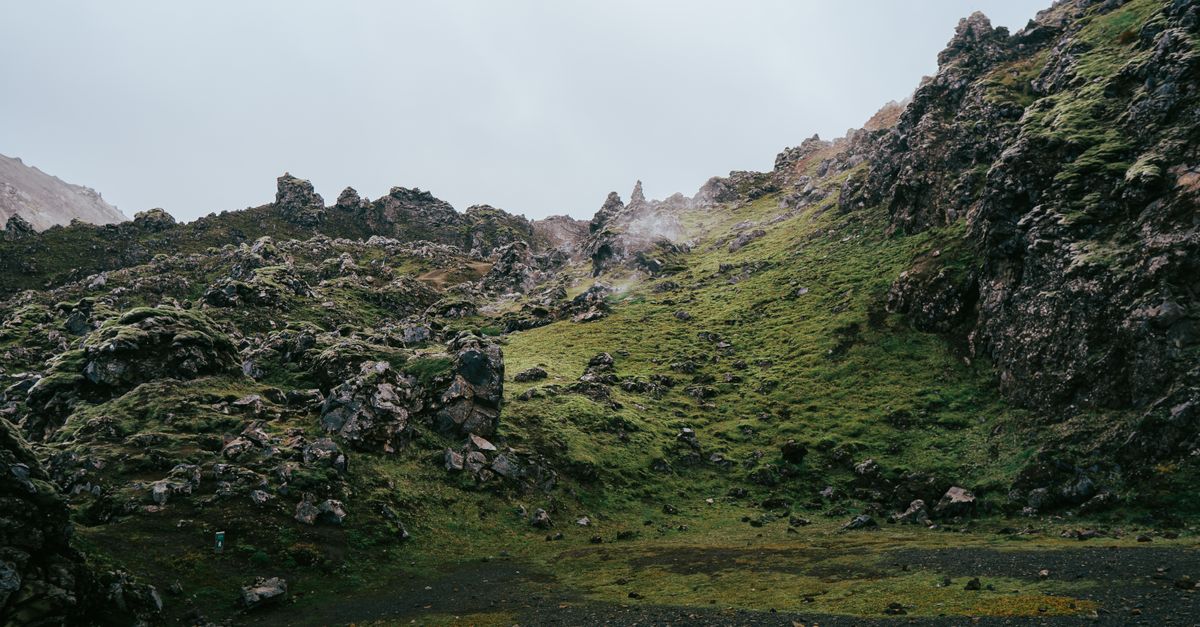
Much of Iceland’s highland camping sits on sandur — glacial outwash plains built from volcanic ash and fine sand. It looks firm and compacted and behaves like ballast. Standard aluminium pegs skate straight out of it under load, which turns every gust into a slow-motion collapse. Sand and snow stakes with a broad, deep blade hold where thin pegs fail, and they are the single cheapest upgrade you can make to an Icelandic pitch.
Cold, and how low it actually gets
Icelandic summer highland nights typically sit between 2 °C and 8 °C, according to historical data published by the Icelandic Met Office (vedur.is). That is not extreme by mountaineering standards, but it is cold enough that the ground, not the air, becomes the dominant heat loss — which is why the pad matters as much as the bag. Match your sleep system to the terrain you are actually camping on rather than to the coldest place you might theoretically visit.
Fuel, canisters and flying
Gas canisters in the EN 417 thread format — the standard screw-on fitting used by most modern canister stoves — are available in Iceland at Ellingsen and other outdoor shops in Reykjavík. You cannot fly with them: pressurised gas canisters are prohibited in both cabin and checked baggage. Plan to buy on arrival rather than gambling on an airport shop.
White gas, sold at Icelandic petrol stations as bensín, is the alternative. It matters because canister stoves lose pressure and therefore output as temperatures fall — liquid-fuel stoves such as the MSR WhisperLite Universal outperform canister stoves below roughly 5 °C, which is squarely within Icelandic summer range for a cold dawn.
Midges, black flies and the mosquito question
Mývatn — the lake district in the north — is famous for its insects, and the naming is worth getting right. The dominant species there belong to Chironomidae, the non-biting midges that swarm in clouds but do not feed on people, alongside Simuliidae, the black flies, which do bite. The Mývatn Research Station and the Icelandic Institute of Natural History both document this split, and it matters because it changes how you react: black flies warrant a head net and repellent, chironomids warrant patience.
Peak activity runs June to August, and the worst conditions are calm and warm — exactly the evenings you would otherwise choose for sitting outside. Wind suppresses activity almost entirely, which is one more reason Icelandic campers learn not to resent a breeze.
And the question everyone asks: there are no mosquitoes in Iceland. Not one species. This is stated plainly by the Icelandic Institute of Natural History, and it makes the midge problem considerably easier to live with than the one you would face in Arctic Scandinavia.
Light: the midnight sun, precisely
Iceland’s summer light is more nuanced than the postcards suggest. There is no true darkness on the mainland roughly from late May to mid-July — the sun dips, the sky stays lit, and a head torch becomes decorative. But true midnight sun, where the sun’s disc stays above the horizon all night, occurs only on Grímsey, the small island sitting directly on the Arctic Circle. Daylight data from timeanddate.com and vedur.is both confirm the distinction.
Practically, this means you can walk at 1 a.m. in June without a lamp anywhere in Iceland, but you should book Grímsey specifically if seeing the midnight sun itself is the point of the trip.
The rules: what the law actually allows
Iceland’s rules are not complicated, but they are routinely broken by visitors who assume “wild camping” means what it means in Scotland. The governing statute is the Nature Conservation Act No. 60/2013 (Lög um náttúruvernd nr. 60/2013). Because the finer points are periodically revised, check the English-language camping pages published by Umhverfisstofnun before you travel.
Tent camping on uncultivated land
Tent camping on uncultivated land is generally permitted for one night in the same place, provided you stay away from cultivated land, farmland and buildings, and you move on the next day. This is a single-night tolerance rather than a right to camp anywhere: it is not a Scottish-style access regime, and it has been tightened repeatedly since the mid-2010s as visitor numbers rose.
Where wild camping is not allowed
You cannot wild camp in:
- National parks — Þingvellir, Vatnajökull and Snæfellsjökull. Note that Vatnajökull National Park is an umbrella designation that now covers both Skaftafell and the former Jökulsárgljúfur area, so it applies as one merged park rather than as separate sites.
- Nature reserves and other named protected areas.
- Cultivated land or farmland without the landowner’s explicit permission.
- Designated campsite-only zones — at Landmannalaugar and Mývatn, for example, camping is permitted only on the official campsite. Rangers actively patrol the popular highland routes through July and August, and fines are issued.
Campervans, motorhomes and the off-road trap
This is where most visitors come unstuck. Wild camping in a vehicle is a completely different legal question from wild camping in a tent, and it is considerably more restricted. Municipal bans on overnight vehicle parking are growing, and a number of Icelandic municipalities now require campervans, motorhomes and roof tents to use a designated campsite overnight. If you are hiring a campervan, treat every night as a campsite night unless explicit signage tells you otherwise.
Separately, off-road driving — driving off marked tracks — is illegal and carries heavy fines, enforced with real vigour. The Environment Agency and the Icelandic Road and Coastal Administration (Vegagerðin) both publish guidance on this, and the damage caused by tyre tracks in Icelandic moss and lava can take decades to recover.
Volcanic activity and the safety apps you need
The Reykjanes eruption series has flared repeatedly in recent years, closing roads and forcing evacuations at short notice. That activity is localised to the peninsula; the great majority of highland camping zones are unaffected, and a trip built around Landmannalaugar, Þórsmörk or the northern lakes is not automatically in the blast radius. But the live picture can change quickly, so check before you set out.
Four resources cover almost everything: vedur.is, the Icelandic Met Office, which carries live gas and SO₂ readings as well as weather; SafeTravel.is, where you should register your itinerary; road.is, for real-time road closures and conditions; and the 112 Iceland app, which lets you send your location to emergency services. Register your plans, and tell someone at home what they are.
The Iceland Camping Card and campsite economics
The Iceland Camping Card, sold through Tjalda.is, covers two adults and is accepted at approximately 60-plus campsites across the country. It is a season product, so the price for the 2026 season is best checked directly at tjalda.is rather than taken from any third-party summary — the figure changes year to year.
Municipal campsite fees, for nights you are not covered by the card, typically fall somewhere between a few hundred and the low thousands of ISK per person per night, depending on the site and its facilities. Larger sites with showers, cooking areas and electrical hook-ups sit at the upper end; simple highland sites with a toilet block sit at the lower.
Whether the card pays for itself depends entirely on your itinerary. A ten-day ring-road trip that stops at serviced campsites most nights will usually benefit; a trip spent largely on the highland interior, where campsites are sparse and the single-night rule applies instead, may not. Run the arithmetic against your own route rather than the average traveller’s.
The kit, reviewed
MSR Access 2 — best all-round Iceland tent
Best for: the camper who wants one tent that performs everywhere and pitches on ground they cannot trust.
MSR’s manufacturer-published packed weight for the Access 2 is approximately 2.3 kg, and it is a four-season, freestanding design. Freestanding matters disproportionately in Iceland: on the sandur and ash plains described above, a freestanding tent can be pitched and tensioned before a single peg goes in, so a failure to find purchase degrades the pitch rather than preventing it entirely. The four-season build means a stronger pole set and reduced mesh than a summer tent, which is what keeps spindrift and fine ash out and stops the inner from flapping itself apart.
Caveat: four-season construction costs you weight and ventilation. If your trip is a lowland summer tour in good forecast windows, you are carrying capability you will not use.
Verdict: the versatility pick, and the sensible choice for anyone who does not want to think about wind direction when they pitch. Typically stocked by specialist outdoor retailers rather than general high-street chains.
Hilleberg Nallo 2 — best if you accept pitching end-on to wind
Best for: experienced campers who will commit to pitching into the weather.
Let us resolve a contradiction that floats around this category: the Hilleberg Nallo 2 is a tunnel tent. Anyone describing it as an all-round freestanding option has it wrong. What it is, though, is superb at the thing tunnels do best. Hilleberg’s own spec page lists Kerlon 1200 fabric — a silicone-coated, high-tenacity nylon chosen for tear strength relative to weight — 9 mm DAC poles, and a packed weight of approximately 2.4 kg. DAC poles are the industry reference point for straightness and durability under load, which is why they keep a tunnel’s structure intact when a crosswind tries to fold it.
Caveat: pitch a tunnel broadside to a serious gust and you will feel every bit of the design compromise. The Nallo 2 rewards good judgement and punishes lazy pitching.
Verdict: the strongest storm performer here for those who accept its one condition. Sold through specialist outdoor retailers; stock is limited and lead times can be long, so order early. Buy the matching footprint if you can — a tunnel on abrasive volcanic ground will find every unprotected patch of floor.
Rab Neutrino 400 — best sleeping bag for Icelandic summer nights
Best for: summer and early-autumn trips where you are sleeping on a properly insulated pad.
The Neutrino 400 uses 800 fill power down in Rab’s published specification. Fill power measures how much volume an ounce of down lofts to — a higher number means more trapped air per gram, so more warmth for less packed weight and bulk. The relevant figures for a buyer, though, are the ISO 23537 comfort and lower-limit ratings, which Rab publishes on its spec sheet.
Worth understanding before you compare bags: ISO 23537 is the standardised laboratory test that produces those two numbers. The comfort rating is the temperature at which a standard female sleeper stays comfortable; the lower limit is the point at which a standard male sleeper is in a curled-up posture but not shivering. Marketing departments quote the lower limit because it looks more impressive. For Icelandic summer use, compare the comfort figure against the 2–8 °C highland night range from vedur.is data and add margin, because that range assumes wind and damp are doing their worst.
Caveat: whether the current production Neutrino 400 carries Nikwax Hydrophobic Down — Rab applies hydrophobic treatment to some lines but not all — should be confirmed per the current specification sheet before purchase, because treated down resists the damp that Icelandic camping delivers nightly.
Verdict: a genuinely capable three-season down bag for the Icelandic summer, provided your pad is up to its job. Typically stocked by UK outdoor specialists.
Therm-a-Rest NeoAir XTherm NXT — best for cold sleepers and shoulder season
Best for: anyone travelling outside high summer, or who sleeps cold in any conditions.
This pad carries an R-value of 7.3, which is winter-spec insulation. R-value measures a material’s resistance to heat flow: each additional point represents meaningful resistance, and the scale compounds rather than adding linearly in effect. An R-7.3 pad is designed for snow camping and deep cold, where the ground pulls heat out of a sleeping bag faster than the air ever will.
Caveat: for Icelandic summer lowland camping, R-7.3 is more than you need, and it carries a price premium for that surplus. Do not buy it because a blog told you Icelandic camping is extreme.
Verdict: the right answer for shoulder-season trips and cold sleepers — and an unnecessary expense for a July ring-road tour. Usually available through specialist outdoor retailers.
Therm-a-Rest NeoAir XLite NXT class — best for summer lowland camping
Best for: Icelandic summer trips at lower altitude, where you want warmth appropriate to the season.
A R-4.5 pad — the NeoAir XLite NXT class — is sufficient for summer lowland camping in Iceland. This is the honest recommendation, and it is worth stating plainly to counter the upsell reflex: an R-4.5 pad plus a properly rated down bag handles a 2–8 °C night comfortably. The roughly three-point gap between R-4.5 and R-7.3 translates into real money and real packed bulk, and on a summer route you are buying insurance against a cold that is unlikely to arrive.
Caveat: drop down to a highland site in a cold snap in late August and you may find yourself wishing for the extra insulation. The XTherm’s margin exists for a reason.
Verdict: the thoughtful summer choice. Widely stocked by outdoor retailers.
MSR Blizzard stakes — best pegs for sandur and ash
Best for: anyone camping on volcanic ash, black sand or loose outwash plains.
These are sand and snow stakes: broad, deep-bladed pegs designed to hold in material that offers almost no friction to a thin shaft. The problem they solve is specific. Standard aluminium pegs — the sort that come in the bag with most tents — fail in ash and sandur because the medium simply flows around them; you can push one in by hand and it will pull out by hand. A wide stake gives the material something to bind against.
Caveat: they are heavier and bulkier than the pegs your tent came with, and on firm grass or moss they offer no advantage at all.
Verdict: the cheapest meaningful upgrade to an Icelandic pitch, and worth six or eight of them in the bag. Typically sold alongside other snow and sand anchors at outdoor retailers.
MSR WhisperLite Universal — best stove for cold-weather reliability
Best for: cold mornings, long trips, and anyone who does not want their breakfast to depend on canister pressure.
This is a liquid-fuel stove. The mechanism difference matters: a canister stove relies on the vapour pressure of the gas blend inside the cartridge, and that pressure falls as the canister cools — so output drops precisely when you need it most, at dawn at 3 °C. A liquid-fuel stove vaporises fuel in a pre-heat tube before burning it, so cold ambient temperature has far less effect. Below roughly 5 °C, liquid-fuel stoves outperform canister stoves.
In Iceland you have two realistic fuel routes. EN 417 canisters — the standard screw-thread fitting — are available at Ellingsen and other outdoor shops in Reykjavík, but you cannot fly with them, so they must be bought on arrival. White gas, sold at Icelandic petrol stations as bensín, is the liquid-fuel alternative and is widely available.
Caveat: liquid fuel involves priming, a small learning curve and more faff than screwing a canister onto a burner. It is not the right choice for a relaxed hotel-based trip.
Verdict: the dependable option in Icelandic conditions, and the one that removes fuel as a variable. MSR stoves are typically stocked by specialist outdoor retailers; fuel is bought in Iceland.
FAQ
Can you wild camp in a campervan in Iceland? Effectively, no — not without risk. Vehicle camping is governed separately from tent camping and is much more restricted, with a growing number of municipalities requiring campervans and motorhomes to use a designated campsite overnight. Treat every night as a campsite night unless explicit signage permits otherwise, and budget for site fees across the whole trip rather than assuming you will save money by parking up.
Is the Iceland Camping Card worth buying? It depends on how many serviced campsites you plan to use. The card covers two adults at approximately 60-plus campsites, and pricing for the 2026 season should be checked directly at tjalda.is. A ring-road itinerary of ten days or more will usually come out ahead; a highland trip relying on the single-night rule will not.
Can I take a camping gas canister on the plane to Iceland? No. Pressurised gas canisters are prohibited in both cabin and checked baggage. Buy EN 417 canisters on arrival — Ellingsen and other outdoor shops in Reykjavík stock them — or plan on white gas, sold at Icelandic petrol stations as bensín.
Are there mosquitoes in Iceland? There are none. Iceland has no mosquito species at all, as documented by the Icelandic Institute of Natural History. What you will meet at Mývatn are Chironomidae midges, which do not bite, and Simuliidae black flies, which do — and a head net is the simplest defence against the latter.
How cold does it get at night in the Icelandic highlands in summer? Typically between 2 °C and 8 °C, based on historical data from vedur.is. That is cold enough that ground insulation matters as much as your sleeping bag, which is why pad R-value and bag comfort rating should be chosen together rather than independently.
Where exactly am I not allowed to wild camp? Inside national parks (Þingvellir, Vatnajökull — which covers Skaftafell and the former Jökulsárgljúfur area — and Snæfellsjökull), in nature reserves and other protected areas, on farmland or cultivated land without permission, and within campsite-only zones such as Landmannalaugar and Mývatn. Rangers patrol the busy highland routes in July and August.
Is it safe to travel given Iceland’s volcanic activity? The Reykjanes eruption series is localised to the peninsula and leaves most highland camping zones unaffected, but conditions can change quickly. Check vedur.is for live weather and SO₂ readings, road.is for closures, register your itinerary at SafeTravel.is, and install the 112 Iceland app before you go.
When can I see the midnight sun? There is no true darkness anywhere on the mainland from roughly late May to mid-July, so you can walk at 1 a.m. without a head torch. But the sun’s disc only stays above the horizon all night on Grímsey, the island sitting on the Arctic Circle — data from timeanddate.com and vedur.is confirm the distinction. Book Grímsey specifically if that is the experience you are after.