The Best Wild Camping Scotland Gear for 2026
The best wild camping gear for Scotland in 2026: tents, sleeping mats, stoves and midge defences chosen for Highland wind, rain and cold ground.
The Best Wild Camping Scotland Gear for 2026
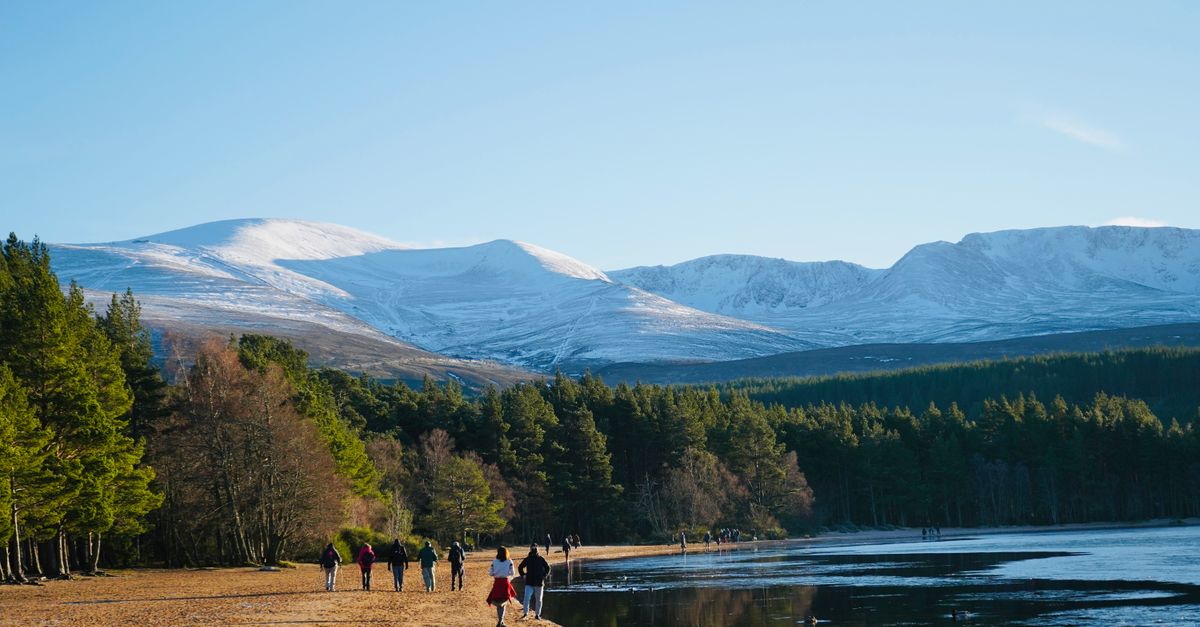
Wild camping in Scotland offers a freedom found almost nowhere else in the UK, but that freedom comes with a demanding environment that punishes inadequate kit. Between statutory access rights, weather systems that sweep in off the Atlantic, and ground that stays cold when the air feels warm, the Highlands require carefully chosen equipment. Whether you are planning a solo Munro summit camp or a multi-day traverse through the Cairngorms, this guide breaks down the legal framework, the meteorological realities, and the specific gear that performs when conditions deteriorate.
At a Glance: Quick Picks for 2026
| Product | Category | Best For | Approximate Price |
|---|---|---|---|
| Hilleberg Anjan 2 GT | Tent | Exposed Highland ridges and tunnel-tent aerodynamics | Around £650–£750 |
| MSR Hubba Hubba NX 2 | Tent | Versatile three-season use with reliable waterproofing | Around £400–£480 |
| Therm-a-Rest NeoAir XTherm NXT | Sleeping Mat | Insulation against cold Scottish peat bog ground | Around £200–£230 |
| Rab Neutrino 400 | Sleeping Bag | UK-brand down bag with ISO comfort rating for Scottish summers | Around £330 |
| MSR PocketRocket 2 | Stove | Lightweight canister cooking at a reasonable price | Around £45 |
| Alpkit Koro | Stove | Budget canister option for short trips | Around £25 |
The Legal Framework: Where and How You Can Camp
Scotland’s wild camping access is underpinned by the Land Reform (Scotland) Act 2003, which grants a statutory right of responsible access to most unenclosed land for camping. It is important to understand that the Scottish Outdoor Access Code (SOAC) is guidance only — it is not the legal source of your right to camp. The Act itself is the legal instrument; SOAC simply explains how to exercise that right responsibly.
However, certain areas carry additional restrictions that every camper must verify before setting out:
Loch Lomond & The Trossachs National Park operates camping byelaws that were introduced in 2017 and remain enforced in 2026. These byelaws require a permit for camping within designated zones between March and September. Camping without a permit in these zones during this period constitutes a criminal offence — not a civil matter. If you plan to camp anywhere around Loch Lomond, Loch Long, Loch Earn, or the Trossachs corridor, you must check the National Park authority’s website and obtain a permit in advance.
Cairngorms National Park has seen byelaw proposals discussed in recent years. As of 2026, campers should verify the current status directly with the park authority or NatureScot before assuming unrestricted access, as the regulatory landscape here may be evolving.
The Isle of Skye has no camping byelaws, but heavy visitor pressure has made responsible camping especially critical. NatureScot publishes specific guidance on responsible access for Skye, and campers should familiarise themselves with it — the island’s fragile infrastructure and local communities are under strain from visitor numbers, and poor behaviour risks triggering future restrictions.
Weather: Specific, Not Vague
Generic advice about “Scottish weather being changeable” is useless for gear selection. Here are the specifics that should inform your choices.
Rainfall varies dramatically across the country. Fort William, served by a Met Office weather station, is one of the UK’s wettest towns, recording annual rainfall of approximately 2,000 mm. The western Highlands — areas such as Loch Quoich — can exceed 3,000 mm annually. If your route takes you into the western Highlands, your waterproofing needs are fundamentally different from someone camping in the drier eastern Cairngorms. Always localise your weather research to the specific glen or range, not just “the Highlands.”
Wind is the more dangerous element. At Cairngorm summit (1,245 m), Mountaineering Scotland notes that mean wind speeds frequently reach Beaufort 6–7 — that is 22–33 mph sustained — with gusts exceeding 60 mph recorded in most months of the year. This is not a winter-only phenomenon; these conditions occur year-round at altitude. Your tent must be capable of withstanding serious wind loading, and your pitching skills — selecting sheltered ground, orienting the narrowest profile into the prevailing wind — matter as much as the tent itself.
How to Choose Wild Camping Gear for Scotland
Selecting gear for Scottish wild camping means prioritising three things above all else:
Wind resistance in your shelter. A tent that collapses in a 40 mph gust is not merely inconvenient — it is dangerous on a remote Highland pitch. Tunnel tents generally shed wind more effectively than dome designs on exposed ground, as their aerodynamic profile presents a narrower face to the wind.
Insulation against cold ground. Scottish glens and peat bogs maintain low ground temperatures even in July. A sleeping mat with an insufficient R-value will allow conductive heat loss to drain your body warmth regardless of how warm the air temperature feels when you set off. An R-value below 4 is a risk for Scottish wild camping at any time of year.
Midge protection from May through September. The Scottish midge (Culicoides impunctatus) can make a beautiful campsite unbearable. Your gear kit and planning must account for this reality — it is not optional.
The Best Tents for Wild Camping Scotland
Hilleberg Anjan 2 GT
The Hilleberg Anjan 2 GT is widely regarded as the benchmark tent for serious Scottish wild camping, particularly for exposed pitches on ridges and summits where wind stability is paramount.
Who it is best for: Experienced campers tackling exposed Highland routes — Munro summits, ridgeline traverses, and coastal headlands — where wind loading is the primary threat.
Key specifications:
- Uses Hilleberg’s own proprietary 9 mm poles — not DAC Featherlite, as is sometimes incorrectly stated in third-party listings
- Kerlon 1200 flysheet fabric with a minimum hydrostatic head of exactly 2,000 mm per manufacturer specification
- Tunnel design with three pole hoops and an all-in-one pitch system
- GT version includes an extended vestibule for gear storage in wet conditions
Standout strength: The tunnel design is measurably superior to dome tents on exposed ridges, according to TGO Magazine field notes. Tunnel tents present a narrower profile to crosswinds and flex rather than resist, which means they shed gusts rather than absorbing the full force. The all-in-one pitch — where the inner and outer go up together — is invaluable in Scottish rain, as it prevents the inner tent from soaking through during setup.
Honest caveat: This is a serious financial investment, typically retailing at around £650–£750 at UK stockists including Cotswold Outdoor and Tiso. For casual campers doing one or two nights a year in sheltered glens, this level of investment may be difficult to justify.
Verdict: The gold standard for exposed Scottish pitches — if your routes take you above the tree line, the investment is justified.
Where to buy: Cotswold Outdoor, Tiso.
MSR Hubba Hubba NX 2
The MSR Hubba Hubba NX 2 is the most commonly recommended alternative to the Anjan — a versatile three-season dome tent that balances weight, weatherproofing, and price for campers who do not need a tunnel design.
Who it is best for: Campers seeking a reliable, lighter-investment tent for predominantly glen-level and forest-edge pitches, where wind exposure is moderate rather than extreme.
Key specifications:
- Uses MSR’s Xtreme Shield waterproof coating on the flysheet
- Flysheet hydrostatic head: 1,200 mm (manufacturer spec)
- Floor hydrostatic head: 3,000 mm (manufacturer spec)
- Freestanding dome design with two doors and two vestibules
Standout strength: The floor’s 3,000 mm hydrostatic head provides robust protection against water pooling under the tent — a common scenario on Scottish peat bog ground where drainage is poor and rainwater can collect beneath the footprint. The Xtreme Shield coating is MSR’s proprietary treatment, designed to maintain waterproofing performance over more trips than standard polyurethane coatings.
Honest caveat: The flysheet hydrostatic head of 1,200 mm is lower than the Hilleberg Anjan’s 2,000 mm. While 1,200 mm is adequate for most three-season rain, in sustained western Highlands downpours — where rainfall can be torrential and prolonged — the margin of safety is narrower. The dome design is also less aerodynamically efficient on fully exposed ridges than a tunnel tent.
Verdict: A well-rounded three-season tent at a more accessible price point — ideal for sheltered to moderate pitches, less suited to summit camps.
Where to buy: Blacks, Go Outdoors.
Sleeping Mats
Therm-a-Rest NeoAir XTherm NXT
The Therm-a-Rest NeoAir XTherm NXT addresses one of the most underestimated challenges in Scottish wild camping: cold ground.
Who it is best for: Any wild camper in Scotland, regardless of season. The combination of low ground temperatures and high insulation makes this relevant for summer trips as much as shoulder-season ones.
Key specifications:
- R-value of 7.3 (manufacturer specification)
- Inflatable design with internal reflective layers
- Packs to a compact size for the insulation provided
Standout strength: The R-value of 7.3 is exceptionally high for a mat of this weight, and it is critical for Scottish conditions. Ground temperatures in Scottish glens remain low even in summer, because peat bog and rock act as thermal sinks that draw heat away from the body through conduction. An R-value below 4 risks conductive heat loss regardless of air temperature — meaning you can feel cold at night even when the daytime air temperature was pleasant. The XTherm NXT’s 7.3 rating provides a substantial safety margin against this effect.
Honest caveat: At around £200–£230 from stockists including Alpkit and Cotswold Outdoor, it is an expensive mat. Additionally, the internal reflective construction can produce a crinkling noise when you shift in your sleep, which some owners find disruptive.
Verdict: The highest warmth-to-weight ratio available — non-negotiable for comfortable Scottish wild camping on cold ground.
Where to buy: Alpkit, Cotswold Outdoor.
Sleeping Bags
Rab Neutrino 400
For Scottish summer wild camping, the target specification is an ISO comfort rating of 0°C to -2°C. This range accounts for the reality that Highland nights, even in July, can drop to near freezing — particularly at altitude or in glens where cold air pools overnight.
The Rab Neutrino 400 is a community-favoured UK-brand option that hits this specification. Rab, a Sheffield-based manufacturer, designs specifically for British conditions, and the Neutrino 400 is consistently recommended in UK outdoor communities for its balance of warmth, weight, and compressibility. It typically retails at around £330.
The Mountain Equipment Glacier is another UK-brand option frequently cited as a community favourite in the same category. Both brands have deep roots in British mountaineering and design their sleeping bags with an understanding of damp, cool UK conditions that some international brands do not fully account for.
Key consideration: The ISO comfort rating is the temperature at which a standard adult female can sleep comfortably. The ISO lower limit — the temperature at which a standard adult male can sleep comfortably — is typically several degrees lower. When selecting a bag, use the comfort rating, not the lower limit, as your guide for Scottish conditions, as the comfort rating provides a more realistic margin for real-world use where wind chill, humidity, and fatigue all compound cold stress.
Where to buy: UK outdoor retailers typically stock both Rab and Mountain Equipment sleeping bags — check Cotswold Outdoor, Tiso, and Blacks for current availability.
Stoves
MSR PocketRocket 2
The MSR PocketRocket 2 is the dominant canister stove recommendation on r/UKhiking, and for good reason. At around £45, it provides reliable canister-gas performance in a tiny, lightweight package — critical when every gram matters on a multi-day Highland traverse.
Who it is best for: The vast majority of Scottish wild campers. Canister stoves are simpler, lighter, and faster than liquid-fuel stoves, and for the typical one-to-three-night Scottish trip, the weight penalty of a liquid-fuel system like the MSR WhisperLite is unnecessary. The PocketRocket 2 is the practical choice for boiling water for dehydrated meals and making coffee — which covers most camp cooking needs.
Key specifications:
- Canister-mounted upright stove
- Boils approximately 1 litre of water in around 3.5 minutes (manufacturer claim, depending on conditions and canister temperature)
- Folds to a compact size that fits inside a cooking pot
- Weight: approximately 73 g
Standout strength: Simplicity and reliability. Canister stoves have no pumps, no priming, no seals to maintain, and no fuel bottles to leak in your pack. In wet, windy Scottish conditions where you want hot food quickly and with minimal faff, this matters enormously.
Honest caveat: Canister performance drops in cold temperatures and at altitude — below approximately 0°C, the isobutane pressure inside the canister decreases, reducing flame output. For winter or high-altitude Cairngorms use, a liquid-fuel stove or a canister stove with an inverted-canister feed system would be more appropriate.
Where to buy: Isobutane canisters are available at Tiso, Cotswold Outdoor, and Blacks — verify canister availability before any remote trip, as gas stock can be inconsistent in rural Scottish outlets.
Alpkit Koro
The Alpkit Koro is the budget canister stove alternative, frequently recommended alongside the PocketRocket 2 on r/UKhiking. At around £25, it costs roughly half the price of the PocketRocket 2 while delivering fundamentally similar functionality for the typical Scottish wild camper.
Who it is best for: Campers who want a functional, lightweight canister stove without spending £45, particularly those doing shorter or less frequent trips where the marginal performance differences between stoves are less critical.
Standout strength: Value. The Koro delivers reliable canister-gas cooking at a price point that makes it accessible to campers building their first kit. Alpkit is a UK-based brand with a strong reputation in the British outdoor community, and their customer service is frequently praised in owner reviews.
Honest caveat: At this price, you are accepting a slightly less refined product — pot support arms may be less stable with larger pots, and boil times may be marginally slower than the PocketRocket 2. For solo use with a small titanium or aluminium pot, these differences are negligible; for group cooking with larger cookware, they become more relevant.
Where to buy: Direct from Alpkit online; isobutane canisters available at Tiso, Cotswold Outdoor, and Blacks.
Midges — Non-Negotiable
No wild camping guide for Scotland is complete without addressing the Scottish midge. This is not a minor nuisance — it is a defining feature of the Scottish outdoor experience from May through September, and failing to prepare for it can ruin a trip entirely.
The species: Culicoides impunctatus — the Highland midge. Active from May to September, with peak activity at dawn and dusk. Midges are most prolific in still, humid, overcast conditions; wind and direct sunlight suppress their activity. This means that the same calm, overcast weather that makes for pleasant walking conditions can trigger the worst midge activity.
Smidge
Smidge is a DEET-free, Scottish-made midge repellent and the dominant recommendation on both r/ScotlandTravel and r/wildcamping. Its formulation is specifically designed to target the Highland midge’s olfactory receptors, and its DEET-free composition means it will not degrade synthetic tent fabrics or waterproof jacket materials — a real concern with high-percentage DEET products.
Smidge comes in a pump spray applicator and provides several hours of protection per application. It is widely available at outdoor retailers throughout Scotland, but purchasing before your trip is advisable, as rural stock can deplete quickly during peak season.
Trekmates Midge Headnet
The Trekmares Midge Headnet is a fine-mesh net that fits over a hat or directly over the head, providing a physical barrier against midges when repellent alone is insufficient. At around £8–£12, it is a low-cost, high-value piece of insurance. A headnet becomes essential when midge density is high enough that repellent alone cannot keep up — a situation that occurs regularly in the western Highlands during still, humid evenings.
Scottish Midge Forecast
The Scottish Midge Forecast at scottishmidges.co.uk provides real-time regional midge activity forecasts. This is a genuine forecasting tool, not a gimmick — it uses trap data and weather conditions to predict midge severity by region. Checking the forecast before and during your trip allows you to plan your camping locations and timing around midge activity, potentially making the difference between a pleasant evening at camp and a retreat to your tent at 5pm.
FAQ
Is wild camping legal everywhere in Scotland?
Wild camping is legal on most unenclosed land under the Land Reform (Scotland) Act 2003, but there are important exceptions. Loch Lomond & The Trossachs National Park requires a permit for camping in designated zones from March to September, and camping without one is a criminal offence. The Cairngorms National Park has discussed byelaw proposals, so you should verify the current 2026 status with the park authority or NatureScot before camping there. The Isle of Skye has no byelaws but requires extra responsibility due to visitor pressure.
What ISO comfort rating do I need for a Scottish summer sleeping bag?
Target an ISO comfort rating of 0°C to -2°C for Scottish summer use. Highland nights can drop to near freezing even in July, particularly at altitude or in glens where cold air pools. The Rab Neutrino 400 (around £330) and the Mountain Equipment Glacier are both community-favoured UK-brand options in this range. Always use the comfort rating rather than the lower limit as your planning figure.
What R-value should my sleeping mat have for Scotland?
An R-value below 4 risks conductive heat loss on Scottish ground, regardless of air temperature. Peat bog and rock in Scottish glens maintain low temperatures year-round, drawing body heat away through conduction even when the air feels warm. The Therm-a-Rest NeoAir XTherm NXT has an R-value of 7.3 (manufacturer spec), providing a substantial safety margin. This is relevant for summer trips, not just shoulder-season ones.
Where can I buy isobutane canisters in Scotland?
Isobutane canisters are stocked at Tiso, Cotswold Outdoor, and Blacks stores. However, rural Scottish outlets can experience inconsistent stock, particularly during peak season. Purchase canisters before departing for remote areas, and consider carrying a spare if your trip is longer than a couple of nights or involves multiple people relying on one stove.
When are midges worst in Scotland?
The Scottish midge (Culicoides impunctatus) is active from May to September, with peak activity at dawn and dusk. Midges thrive in still, humid, overcast conditions and are suppressed by wind and direct sunlight. Check the Scottish Midge Forecast at scottishmidges.co.uk for real-time regional predictions, and always carry Smidge (DEET-free, Scottish-made) and a Trekmates Midge Headnet (around £8–£12) as your primary defences.
Should I choose a tunnel tent or a dome tent for Scottish wild camping?
Tunnel tents, such as the Hilleberg Anjan 2 GT, are measurably better on exposed ridges, according to TGO Magazine field notes, because their aerodynamic profile sheds wind rather than absorbing it. Dome tents like the MSR Hubba Hubba NX 2 are more versatile for sheltered and moderate pitches and typically cost less. If your routes regularly take you above the tree line or onto exposed summits, a tunnel tent is the safer choice; for glen-level camping, a dome tent is perfectly adequate.